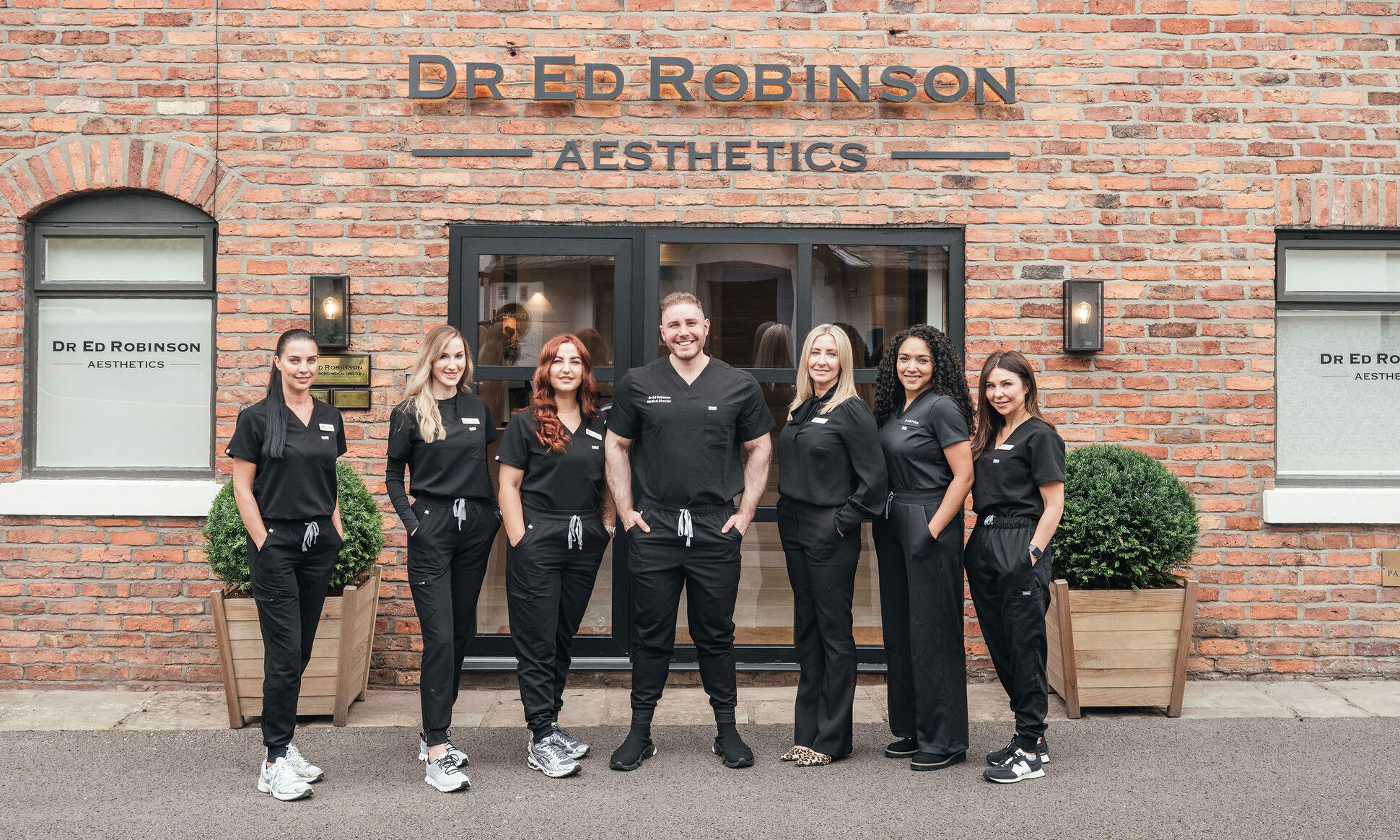
Dr Ed Robinson, a leading aesthetic doctor with clinics on Harley Street in London and in Cheshire, is known for his medically led, natural approach to non surgical treatments. With a background as an NHS anaesthetist and advanced expertise in facial anatomy, ultrasound guided procedures and regenerative techniques, his work sits at the intersection of science, precision and long term patient care. Here, he shares why the future of aesthetics lies in working with the biology of ageing rather than trying to fight it.
1. Who are you and what do you do?
I’m Dr Ed Robinson, a non surgical cosmetic doctor and business owner, and I divide my time between clinical medicine and running my aesthetics practice, Dr Ed Robinson Aesthetics. My work focuses on helping patients look fresher, healthier and more confident in a way that still feels natural and recognisably like them. I am particularly interested in regenerative and evidence based aesthetic medicine, with an emphasis on skin quality, facial harmony and long term results rather than quick fixes.
2. How did you come to it and what was your journey into aesthetics?
My route into aesthetics came through medicine first. I started my aesthetics practice alongside my role as an NHS anaesthetist. I have always enjoyed carrying out procedures, but in anaesthetics we rarely see our patients again, and I felt something was missing professionally without forming long term connections. I have always been interested in the intersection between science, anatomy, psychology and confidence, and aesthetics sits at that crossroads in a really unique way. Over time, I became increasingly drawn to the precision of the field, while also appreciating how my anaesthetics background provided a significant niche through the use of ultrasound and nerve blocks in my practice.
It takes a great deal of experience to understand the face, the ageing process and how to work with patients in an individualised way. What appealed to me most was that it is not just about appearance, but about helping someone feel more like themselves again. As my experience grew, so did my interest in combining medical knowledge with artistry and a strong ethical framework.
3. “Anti ageing” feels almost old fashioned now. You talk about skin longevity instead. Can you explain what that is and why it matters?
I do think anti ageing is starting to feel outdated, because ageing itself is not the enemy. Skin longevity is a much more constructive way to approach things. It is about preserving the health, resilience and function of the skin over time, rather than chasing the idea of looking artificially young.
That shift is important because healthy skin will always look better than over treated skin. If you invest in collagen quality, pigmentation control, barrier function, sun protection and overall skin health, you are building a stronger foundation for the future. It is not just about how your skin looks today, but how it behaves and ages over the next five, ten or twenty years. Modern aesthetic medicine is moving towards prevention, regeneration and maintenance rather than correction alone.
4. GLP 1 drugs like Ozempic started as a pharmaceutical story and are now part of the aesthetics conversation. What impact are you seeing on the skin?
What we are seeing is that GLP 1 medications have entered the aesthetics conversation because of the speed and scale of weight loss some patients experience. The issue is not the drug damaging the skin, but the rapid loss of fat and soft tissue support, which can leave the face looking more hollow or tired, particularly in patients who are already experiencing collagen loss with age.
The skin can appear looser and fine lines may become more visible because the underlying structure has changed. In clinic, that means taking a more holistic approach that looks at skin quality, collagen stimulation and energy based treatments, alongside subtle structural support where appropriate. If someone is using these medications, it is important to think about their skin and face proactively, not just the number on the scales.
5. What are the most popular treatments right now and what do you think is next?
Anti wrinkle treatments remain very popular and continue to be a mainstay because they are effective, preventative and, when carried out properly, very natural. There is also strong demand for treatments that improve skin quality rather than simply adding volume, including laser resurfacing, medical grade skincare and biostimulatory treatments that encourage collagen production.
Looking ahead, I believe the future belongs to treatments that improve tissue quality, support collagen production and work with the biology of ageing rather than simply masking it. Patients are becoming more informed and more selective. They are looking for results that are subtle, healthy and sustainable. We are also seeing a move towards combination treatment plans where injectables, devices and skincare are used together in a more strategic way.
6. What do you love and what do you not love about your work?
What I value most is the human aspect of the work. When it is done well, aesthetic medicine can have a genuinely positive impact, whether that is helping someone feel more confident or simply more like themselves again. It is also an evolving field, which means there is always more to learn across anatomy, technology, skin science and patient care.
What I find more challenging is the level of misinformation that still exists within the industry. Social media has made aesthetics more visible, but not always more accurate. It can create unrealistic expectations and normalise poor practice. It is also frustrating that some patients only seek out a qualified medical practitioner after something has gone wrong elsewhere, when ideally they would have had safe, appropriate treatment from the outset.
7. There are still practitioners with minimal training offering injectables. Where does regulation fall short and what would you change?
Regulation in the UK does not go far enough. It is concerning that invasive procedures can still be carried out with limited training and oversight, particularly when complications can be serious and require medical intervention.
If I could change one thing, it would be to ensure that injectable treatments are restricted to properly trained and regulated healthcare professionals, with clear standards around education, prescribing, consent and complication management. Patients should also have far greater transparency so they can understand who is treating them, what their qualifications are and what support is available if something goes wrong. Aesthetic medicine should be treated as healthcare when it involves healthcare level risk.
8. What is your advice to someone considering their first aesthetic treatment in 2026?
Choose your practitioner more carefully than your treatment. The most important decision is not whether you have toxin, filler, laser or skincare, but who is guiding you through that process. A good practitioner will assess you properly, set realistic expectations and prioritise safety, and they will also be honest if the best option is to do nothing at all.
The most effective aesthetic work leaves you looking refreshed, healthy and confident rather than obviously treated. If it is your first experience, start conservatively, ask questions and look for someone whose approach aligns with your values as well as their results.