
You’ve optimized your schedule and dialed in your sleep. You have your nutrition tight. You take your strength and conditioning serious But if you’re ignoring your gut, you’re leaving significant performance on the table — cognitively, physically, and hormonally.
This isn’t woo. This is some of the most compelling science in modern performance biology. And for high performers chasing every competitive edge, the gut-brain axis may be the most underrated system in your body.
What Is the Gut-Brain Axis?
The gut-brain axis is a bidirectional superhighway connecting your gastrointestinal tract and your central nervous system through neuronal, hormonal, and immunological signaling pathways. Your gut isn’t just digesting food — it’s producing neurotransmitters, regulating inflammation, modulating blood flow, and sending real-time signals to your brain via the vagus nerve.
You have approximately 100 million neurons in your enteric nervous system — more than in your spinal cord. This is why scientists call it your “second brain.” And unlike your first brain, it never sleeps.
For high performers at Thumos, understanding this system isn’t academic. It’s the difference between operating at 80% and operating at your true ceiling.
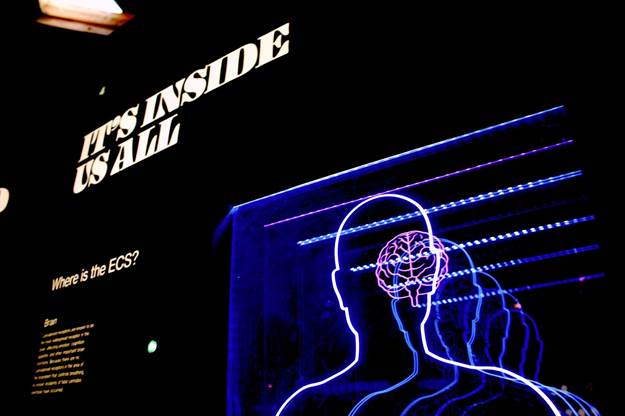
Cognition: Your Gut Is Building Your Brain Chemistry
The mental edge — focus, decision-making under pressure, emotional regulation, recovery from setbacks — doesn’t live entirely between your ears. A significant portion of it is manufactured in your gut.
Research published in Cureus (2024) confirms that gut health has a significant and measurable association with cognitive performance in adults, with gut microbiota influencing brain health through neural, endocrine, and immune pathways. The bacteria in your intestinal lining are directly involved in the synthesis of serotonin, dopamine, and GABA — the neurotransmitters that govern mood, motivation, focus, and stress response.
Altered microbiome composition has been linked to impaired memory, slower processing speed, and heightened anxiety. The inverse is also true: a robust, diverse microbiome correlates with sharper cognition, stronger emotional resilience, and faster mental recovery.
For Thumos athletes and high performers, this means your morning mindset isn’t just a product of your sleep or your meditation practice — it’s also a product of what’s living in your gut.
Blood Flow: The Circulatory Link You’re Not Training
Here’s a mechanism most performance coaches don’t talk about: the gut microbiome’s role in circulation and vascular efficiency.
Research from the Gatorade Sports Science Institute shows that short-chain fatty acids (SCFAs) — metabolites produced by beneficial gut bacteria — are strongly linked to peak oxygen uptake (VO2 max) and cardiorespiratory fitness. One study found that the abundance of key butyrate-producing bacteria correlated directly with VO2 max in human subjects.
There’s a darker side to this, too. During high-intensity exercise, blood is redirected away from the gut toward working skeletal muscles — a process called intestinal ischemia. This sharp reduction in gut blood flow can increase intestinal permeability, allowing bacterial endotoxins to leak into the bloodstream, triggering systemic inflammation and degrading both performance and recovery. Athletes who neglect gut health are unknowingly amplifying this cycle.
The Thumos performance model is built on resilience under load. Optimizing your gut is optimizing your vascular engine.
Immunity: Your First Line of Defense Lives in Your Gut
Approximately 70% of your immune system resides in the gut-associated lymphoid tissue. This is not a coincidence — it’s an architectural design. Your microbiome and your immune system co-evolved to defend your body together.
A landmark 2021 Stanford University study published in Cell demonstrated that diets rich in fermented foods significantly increased microbiome diversity and measurably reduced markers of immune activation. Diverse microbiome = stronger, more calibrated immune response.
For elite performers, immune suppression is one of the most common and most career-disrupting consequences of overtraining. Intensive training periods trigger stress responses that can inhibit both immune and circulatory function. A high-performing gut microbiome serves as a buffer, helping your immune system stay regulated and responsive even when training load is high.
Thumos is about building the kind of strength that doesn’t break. Gut health is a fundamental piece of that durability.
Inflammation: The Silent Saboteur of Peak Performance
Chronic low-grade inflammation is one of the most insidious performance killers — slowing recovery, degrading cognitive function, accelerating biological aging, and undermining hormonal output. And its origin story frequently begins in the gut.
Research published in Frontiers in Microbiology (2025) confirms that the gut-brain axis regulates inflammatory signaling through endocrine, humoral, metabolic, and immune-mediated pathways. When gut integrity is compromised — through poor diet, chronic stress, overtraining, or antibiotic use — inflammatory signals cascade systemically.
The reverse is also demonstrable: a 2024 multi omics study published in the journal Gut Microbes found that nonagenarians (people who live into their 90s) had significantly elevated levels of anti-inflammatory metabolites and neuroactive compounds produced by their gut microbiome compared to their peers. These were not random outliers. They were people whose gut ecosystems were still producing the chemistry of resilience.
For Thumos practitioners, reducing chronic inflammation isn’t just about recovery. It’s about staying in the fight longer, harder, and sharper than everyone else.
Longevity: The Microbiome of People Who Win at Life
The connection between gut health and longevity is one of the most compelling frontiers in longevity science.
That same 2024 multi omics analysis — one of the most comprehensive studies of its kind — compared 83 nonagenarians against a matched cohort and found 438 significantly different gut metabolites between the groups. The long-lived individuals showed gut microbiomes enriched with species linked to neuroactive metabolite production and anti-inflammatory compounds. Their gut-brain axes were, by measurable biological standards, still winning.
Research published by Microbial Champions (2024) further demonstrates that the gut microbiome in athletes functions as an endocrine organ, secreting serotonin, dopamine, and GABA — the same neurochemical toolkit that drives motivation, mood, and the relentless forward movement that defines the Thumos mindset.
Living well for a long time isn’t luck. It’s systems. And the gut is one of the most powerful systems you can train.
How to Optimize Your Gut-Brain Connection
For high performers, gut optimization isn’t about trendy cleanses. It’s about building a microbiome that performs. Here’s what the research points to:
1. Eat for microbial diversity. Fermented foods (kefir, kimchi, sauerkraut, Greek yogurt), prebiotic fibers (oats, garlic, leeks, chicory), and a wide variety of colorful plants feed the bacterial species that produce your performance chemistry. The Stanford fermented food study found measurable immune and microbiome improvements in as little as 10 weeks.
2. Protect your gut lining during intense training. During high-output training blocks, pay specific attention to gut-supportive nutrition around workouts. Glutamine, zinc carnosine, and probiotic supplementation have evidence behind them for reducing intestinal permeability during high-stress periods.
3. Time your eating strategically. Research indicates that eating late — particularly after 7:00 p.m. — can interfere with the body’s melatonin cycle and disrupt the circadian rhythms that govern gut microbiome health. Align your feeding window with your performance window.
4. Manage stress as a gut variable. Anxiety measurably increases stomach acidity and dysregulates the gut environment. Chronic psychological stress alters microbiome composition in ways that impair both immunity and cognition. Your stress management protocol isn’t just a mental health practice — it’s a gut health practice.
5. Train consistently, recover intentionally. Exercise increases gut microbial diversity and promotes the growth of butyrate-producing species. But excessive training load without adequate recovery triggers the intestinal ischemia cycle that degrades gut health. The dose makes the difference.

The Thumos Edge
Thumos — the ancient Greek concept of spirited, vital, courageous action — is not just a mindset. It’s a biological state. It’s what happens when your nervous system, your immune system, your circulatory system, and your gut are all pulling in the same direction.
High performers don’t just train muscles. They build systems. The gut-brain axis is one of the most powerful systems in your body, and right now, most people are leaving it completely unmanaged.
Own your gut. Own your performance.
Live Thumos. livethumos.com
References
- Hameed, M., Noor, F., Hussain, H., Khan, R. G., Khattak, S., Rashid, H. U., Atiq, A., Ali, H., Rida, S. E., & Abbasi, M. A. (2024). Gut-Brain Axis: Investigating the Effects of Gut Health on Cognitive Functioning in Adults. Cureus, 16(7), e64286. https://doi.org/10.7759/cureus.64286
- Wastyk, H. C., Fragiadakis, G. K., Perelman, D., Dahl, W. J., Merrill, B. D., Yu, F. B., Topf, M., Gonzalez, C. G., Van Treuren, W., Han, S., Robinson, J. L., Elias, J. E., Sonnenburg, E. D., Gardner, C. D., & Sonnenburg, J. L. (2021). Gut-microbiota-targeted diets modulate human immune status. Cell, 184(16), 4137–4153.e14. https://doi.org/10.1016/j.cell.2021.06.019
- Jiao, B., Ouyang, Z., Liu, Q., Xu, T., Wan, M., Ma, G., Zhou, L., Guo, J., Wang, J., Tang, B., Zhao, Z., & Shen, L. (2024). Integrated analysis of gut metabolome, microbiome, and brain function reveal the role of gut-brain axis in longevity. Gut Microbes, 16(1), 2331434. https://doi.org/10.1080/19490976.2024.2331434
- Toader, C., Dobrin, N., Brehar, F. M., Popa, C., Covache-Busuioc, R. A., Glavan, L. A., & Costin, H. P. (2024). From Gut to Brain: Understanding the Role of the Gut-Brain Axis in Neurological and Psychiatric Disorders. Frontiers in Microbiology. https://doi.org/10.3389/fmicb.2025.1577597
- Estaki, M., Pither, J., Baumeister, P., Little, J. P., Gill, S. K., Ghosh, S., Ahmadi-Vand, Z., Marsden, K. R., & Gibson, D. L. (2016). Cardiorespiratory fitness as a predictor of intestinal microbial diversity and distinct metagenomic functions. Microbiome, 4(1), 42. https://doi.org/10.1186/s40168-016-0189-7
- Mohr, A. E., Tierney, A. C., Foote, A., Kassis, A., Sela, D. A., Sweazea, K. L., & Gumpricht, E. (2020). Gut microbiota composition and short-chain fatty acid concentrations in elite, recreational, and sedentary athletes. Frontiers in Nutrition, 7, 535523. https://doi.org/10.3389/fnut.2020.535523
- Lambert, G. P. (2004). Role of gastrointestinal permeability in exertional heatstroke. Exercise and Sport Sciences Reviews, 32(4), 185–190. https://doi.org/10.1097/00003677-200410000-00012
- Madison, A. A., Turroni, S., Duff, A. F., Galley, J. D., Mackos, A. R., & Veerappa, A. (2025). Editorial: Gut-brain axis correlates, mediators, and moderators of stress resilience or vulnerability. Frontiers in Behavioral Neuroscience, 19, 1629472. https://doi.org/10.3389/fnbeh.2025.1629472
- Frontiers in Sports and Active Living (2025). The performance gut: a key to optimizing performance in high-level athletes: a systematic scoping review. Frontiers in Sports and Active Living. https://doi.org/10.3389/fspor.2025.1641923
- Lotti, S., Dinu, M., Colombini, B., Amedei, A., & Sofi, F. (2023). Circadian rhythms, gut microbiota, and diet: Possible implications for health. Nutrition, Metabolism and Cardiovascular Diseases, 33(8), 1490–1500. https://doi.org/10.1016/j.numecd.2023.05.009
- Pfeifer, G., & Cawkwell, S. (2025). Interoceptive ageing and the impact on psychophysiological processes: A systematic review. International Journal of Psychophysiology, 207, 112483. https://doi.org/10.1016/j.ijpsycho.2024.112483
- Winder, C., Lodhia, A., Basso, M., & Cohen Kadosh, K. (2025). Gut microbiome differences in individuals with PTSD compared to trauma-exposed controls: A systematic review. Frontiers in Neuroscience, 19. https://doi.org/10.3389/fnins.2025.1540180
Tags: gut brain connection, high performance nutrition, gut health for athletes, microbiome and cognition, Thumos performance, gut brain axis, inflammation and recovery, longevity and gut health, elite mindset, mental performance, physical resilience, gut health and immunity, Thumos athlete, live Thumos, performance optimization, butyrate and performance, vagus nerve, second brain, gut microbiome athletes