
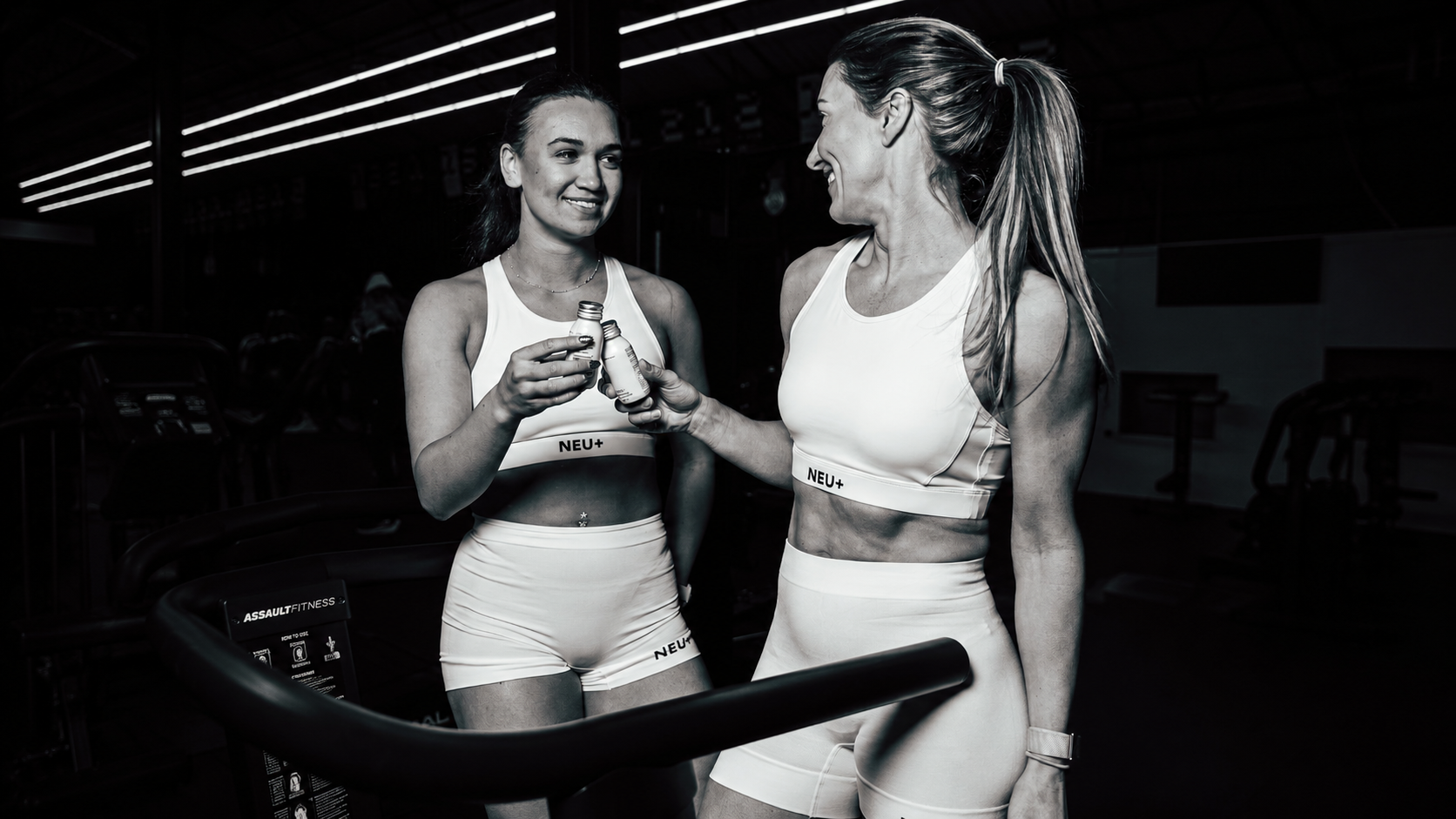
Jak Leese, Founder of NEU+, explores why today’s most ambitious founders, athletes, and professionals are no longer competing to work harder, but to recover better.
For years, the dominant cultural signal of success was simple: exhaustion. The entrepreneur answering emails at midnight; the executive surviving on four hours of sleep; the athlete pushing through injury because stopping meant falling behind. It was all worn as proof of commitment. If you weren’t exhausted, you probably weren’t trying enough. Thankfully, that logic is beginning to collapse.
Across business, sport, and high-performance culture, something more subtle is happening. People are no longer competing on output alone. Burnout is no longer a badge of honour. In fact, increasingly, it’s a sign that the system has failed. The old model treated energy like a moral virtue: work harder, sleep later, push further. Reality is less forgiving. Energy is now understood as biological, not ideological. Biology does not respond well to constant deficit.
The hustle culture hangover
The consequences of overworking are now well documented, but they are also increasingly visible in day-to-day life. Burnout rates continue to rise across professional sectors. Cognitive performance degrades under chronic stress. Decision making becomes narrower, more reactive, less strategic.
Creativity is one of the first casualties of sustained fatigue. It requires cognitive space that overworking steadily removes. At the same time, modern professionals are managing more variables than ever before. Hybrid work, constant connectivity, fitness regimes, family commitments, and social expectations all compete for the same limited resource: attention.
I know this because I lived it. Before I developed NEU+, I was running businesses, training heavily for HYROX, and trying to balance intense physical demands with the pressures of leadership, decision making, and family life. My search for better recovery eventually led me into the emerging world of cellular health and NAD+ support, which later became the foundation for the business.
For a long time, I believed I could simply outwork fatigue. What actually happened was the opposite. As recovery became an afterthought, performance began to suffer across the board. Output without recovery isn’t sustainable performance; it’s borrowed capacity.
Elite athletes discovered the answer years ago
In elite sport, this shift happened long before it entered business culture. The foundational principle is simple. Athletes do not improve during training; they improve during recovery. Training is a stimulus. Recovery is where adaptation occurs. Without sufficient recovery, the stimulus becomes noise rather than signal.
This is why elite programmes obsess over variables that most professionals still ignore: sleep quality, nutrition timing, mobility work, stress regulation, and readiness monitoring. In sport, recovery is not passive downtime; it’s a structured process.
Increasingly, founders and executives are adopting the same logic. Training blocks are no longer separated from work performance; they’re part of the same system. The goal is not maximum output in isolated sessions. It’s repeatable high output over time. That distinction matters. Most failure in high performance does not come from lack of effort. It comes from inability to repeat effort at a consistent level.
Recovery becomes measurable
One of the reasons this shift is accelerating is that recovery is no longer invisible. Wearable technology has changed the loop. Tools such as WHOOP, Oura Ring, and Garmin recovery metrics now quantify sleep quality, strain, heart rate variability, and readiness. Once recovery becomes visible, it becomes harder to ignore.
A poor night of sleep is no longer a vague feeling of fatigue; it’s a measurable drop in readiness. A stressful week is reflected in physiological data. A consistent routine shows up as stability in metrics over time. This turns recovery from a conceptual wellness idea into a performance input.
When something can be measured, it can be managed. When it can be managed, it becomes part of optimisation rather than afterthought.
The rise of the recovery economy
This data-driven awareness is feeding a broader cultural shift. Recovery is becoming an industry in its own right, but also a behavioural category. What’s interesting is that much of the innovation isn’t coming from entirely new science. It’s coming from attempts to make existing science more accessible and easier to integrate into daily life. That trend spans everything from wearable technology to recovery-focused nutrition and newer products built around cellular health and longevity.
Run clubs are replacing traditional nightlife in many urban centres. Alcohol free socialising is no longer niche. Cold water exposure, breathwork, structured sleep routines, and supplementation have moved into mainstream conversation among professionals.
Wellness, in this context, is changing definition. It’s less about aesthetics and more about function. The emerging consumer behaviour is not escape driven; it’s resilience driven. People aren’t only trying to feel better in the moment. They’re trying to perform better tomorrow. That distinction is subtle but important. One is short term relief. The other is long term capacity building. It’s also creating demand for products and services that prioritise consistency over intensity, including newer approaches to recovery support such as NAD+ supplementation.
Why recovery is becoming a competitive advantage
In high performance environments, recovery is increasingly becoming a differentiator. Better recovery improves decision making. The cognitive load of complex problems is easier to manage when the nervous system is not under chronic strain. Emotional regulation improves under stable recovery conditions. Reaction times sharpen. Strategic thinking becomes more consistent rather than episodic. Energy levels also become less volatile.
Instead of peaks and crashes, performance stabilises across the day and across the week. Perhaps most importantly, recovery improves consistency and consistency is what ultimately compounds into results.
This is where the competitive advantage emerges. The highest performers are not always the ones working the longest hours. They are the ones who can maintain output without degradation. In practical terms, that means building systems that allow performance to be repeated, not just achieved once.
Recovery is what makes repetition possible. Without it, ambition becomes short lived.
The new definition of ambition
There is a cultural redefinition happening quietly in the background of modern work and sport. For a long time, ambition was measured by intensity. How much you could do, how hard you could push, how little you could stop.
Now it is beginning to include sustainability. How long you can perform at a high level without breakdown. How well you understand your own limits. How deliberately you manage energy rather than simply spend it. The status symbols are changing.
The founder who sleeps properly is no longer seen as less committed. The athlete who prioritises recovery is no longer seen as less driven. The professional who structures their week around energy management rather than constant availability is not disengaged.
They are operating with a different model of performance. In a culture that spent decades rewarding exhaustion, recovery is starting to look like discipline. And in some cases, it may be the most ambitious choice available.