
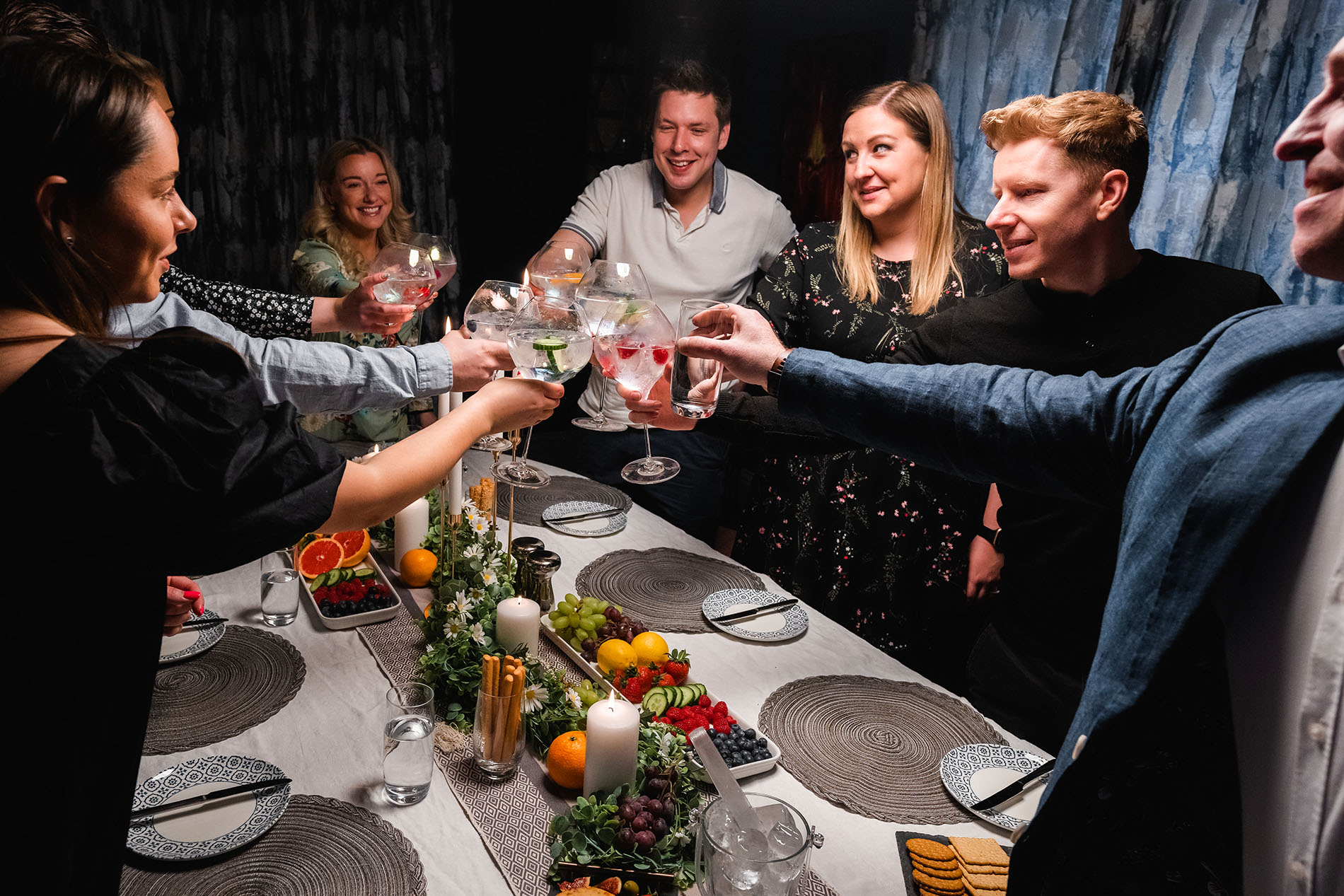
Every major sporting tournament offers a snapshot of who we are as a nation. Of course football matters, but so do the rituals that surround it; where we gather, what we eat, what we drink and how we choose to celebrate together.
This summer’s World Cup reveals something particularly interesting about Britain. While the tournament itself remains a collective national experience, the spaces in which we are choosing to experience it are changing dramatically.
New research from The Ice Co shows 71 per cent of Britons now prefer hosting friends and family at home to watch the World Cup rather than gathering in the pub. That figure has risen significantly from 57 per cent during the 2018 tournament, when the same poll was undertaken.
More than a cost-of-living story
At first glance, it is easy to attribute this shift to economics. Rising costs have undoubtedly played a role. Three in ten people say increasing pub prices make home hosting a more affordable option.
But reducing this trend to a cost-of-living story misses the bigger picture.
What we’re seeing is part of a much broader redefinition of British social life. The desire to come together hasn’t weakened. If anything, it has become more intentional. What has changed is where people believe they can create the most meaningful shared experiences.
The living room becomes Britain’s new social hub
For generations, the pub served as Britain’s communal living room. It was where neighbours met, friendships formed and communities gathered around moments of national significance. Yet increasingly, many of those functions are migrating into the home.
The modern living room is becoming a social hub in its own right. It is where people watch football, celebrate birthdays, host dinner parties and gather for cultural moments that once might have happened elsewhere.
This isn’t just a football phenomenon though. Recent research from Mintel found seven in ten UK adults now host social gatherings at home, with rising restaurant and hospitality costs helping to make at-home entertaining an increasingly attractive option.
This reflects a wider shift in consumer behaviour. Across food, hospitality and entertainment, people are increasingly seeking experiences that feel personal, curated and reflective of their own identities. Rather than purchasing a ready-made experience, they want to create one themselves – and home hosting gives them that opportunity.
Hosting as an experience
Watching a World Cup match at home is no longer simply about putting the television on and opening a few drinks. For many people, it has become an event. Hosts are creating themed menus, preparing special drinks, decorating their spaces and carefully considering every detail of the guest experience.
What’s particularly fascinating is that many of the small details people prioritise reveal something important about contemporary hospitality. The Ice Co data shows more than half of Britons say having properly chilled drinks is one of the most important aspects of hosting, while simple, easy-to-prepare serves are preferred over complicated cocktails.
That may sound trivial, but it points to a larger cultural truth. Modern hospitality is increasingly about effortless generosity. People want gatherings to feel special, but they don’t necessarily want them to feel formal or labour-intensive. The most successful hosts today are often those who create comfort, ease and a sense of occasion rather than elaborate displays of entertaining prowess.
A new generation of celebration
At the same time, younger generations are reshaping what celebration itself looks like. For decades, major sporting occasions were often associated with heavy drinking. Yet Millennials and Generation Z are steadily rewriting those rules.
Four in ten Millennials and nearly as many Gen Z adults say they plan to serve low-alcohol drinks, mocktails or soft drinks during late-night World Cup matches. This is backed up by recent Drinkaware research which found that 44 per cent of UK drinkers now use alcohol-free or low-alcohol drinks to moderate their consumption.
This isn’t evidence of a generation rejecting celebration – quite the opposite. What we’re witnessing is the separation of sociability from alcohol. Younger consumers still want the atmosphere, excitement and connection that comes from gathering together. They simply feel less attached to the idea that intoxication must be central to the experience.
This trend is visible far beyond football. Across restaurants, bars and retail, demand for alcohol-free and low-alcohol options continues to grow. Younger consumers increasingly view moderation not as a restriction but as a lifestyle choice that allows them to balance enjoyment with wellbeing. The result is a new model of socialising that feels more flexible, inclusive and adaptable to modern life.
New communities, new rituals
We’re already seeing this play out in the kinds of gatherings that are emerging across the UK. Morning raves, often held in coffee shops, community halls and other unexpected spaces, are replacing alcohol with music, movement and connection. At the same time, analogue social events centred around activities such as crafting, bead threading and paper folding are attracting younger generations looking for screen-free ways to spend time together. What unites these seemingly different trends is a desire for shared experiences that feel meaningful, participatory and real.
As traditional social spaces decline, new forms of community are emerging to fill the gap. Whether it’s a grief collective, a wellness gathering or a dawn dancefloor, people are increasingly seeking connection through shared interests, emotions and experiences rather than simply meeting for a drink. The need for community hasn’t disappeared. It’s simply finding new homes.
Blurring the boundaries between public and private
The World Cup also highlights another important shift. The boundaries between public and private life are becoming increasingly blurred. Technology allows us to participate in national events from our homes while still feeling connected to a much larger audience. Whether through social media, group chats or live coverage, people can experience collective moments without physically gathering in public spaces.
This creates new forms of community that would have been difficult to imagine a generation ago.
Yet there is also a note of caution here – the decline of traditional communal spaces matters. Pubs have historically played a unique role in British life, bringing together people from different ages, backgrounds and social groups in ways that private homes often cannot. They have functioned as civic spaces as much as commercial ones.
As more social activity moves into the home, we must consider what might be lost alongside what is gained.
The future of social connection
The future is unlikely to be a simple choice between pubs and living rooms. Instead, we are witnessing an evolution in how community is expressed. The pub is no longer the automatic centre of social life it once was, but neither is it disappearing. Rather, it is becoming one option among many.
What seems clear is that the home has acquired a new cultural importance. It is no longer merely a place of retreat.
Increasingly, it is where people choose to celebrate, connect and create memories together. The World Cup has simply made that shift impossible to ignore.
Football may or may not be coming home this summer. But perhaps Britain’s social life already has.