
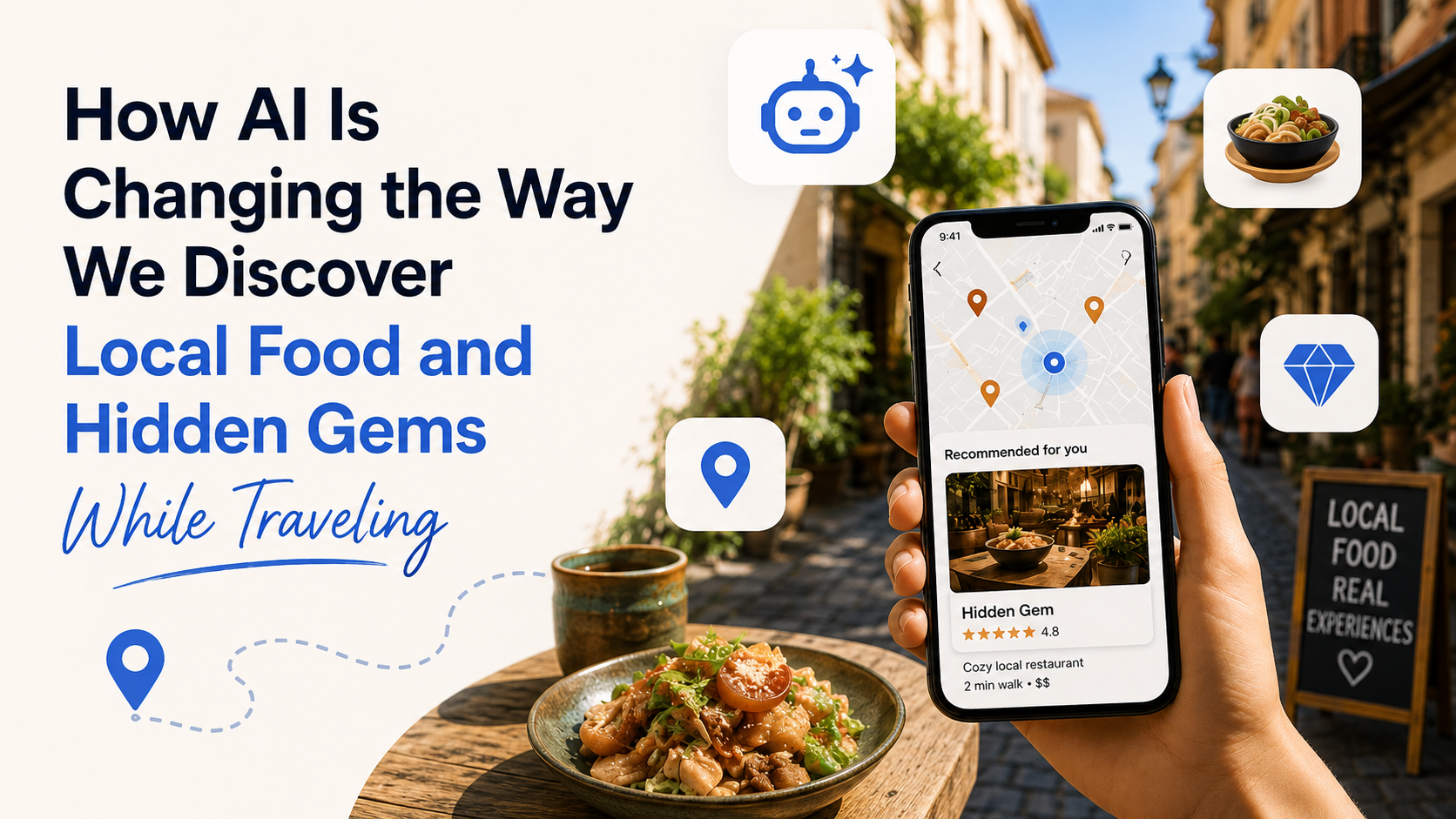
Since people have traveled, they have always searched for new experiences kind of like being excited about finding a quiet spot with good food that isn’t in guide books, for example. Before now finding was usually based on luck or asking someone from the area or hours spent researching that particular type of trip/activity.
Just like technology has changed our lives in multiple ways over the years, there is evidence that travel will continue to change as technology progresses. By using AI powered apps, traveler can be assisted and guided through their travels with tailored experiences compared to just receiving simple recommendations such as where to eat or what to do while on vacation.
In the content below, we will discuss how Artificial Intelligence is changing the way we discover our destinations and what this means for the future of adventurers/travelers around the globe.
From Guidebooks to Smart Suggestions
A few years before today, travelers used guidebooks, blogs, and websites to find information. All three types of resources can be great, but they have their downsides:
- They can go out of date quickly
- They tend to highlight the same popular places over and over again
- They do not take into consideration your personal preferences.
AI has solved this by analyzing massive amounts of up-to-date data such as reviews, social media, current trends, and user activity so that travelers receive suggestions that match their individual requirements.
Instead of asking “Where can I eat?”, travelers are now asking, “Where can I eat that fits my taste, budget, and mood?”.
Software development also demonstrates the same trend, with the use of AI-based methods by companies such as Cleveroad assisting start-ups in developing their products more quickly and with a stronger emphasis on the needs of real customers. Cleveroad, as a full-cycle partner for software development, assists start-ups throughout the primary phases of product discovery, UX/UI design, minimum Viable Product development, and scaling.
As a practical matter, an engineer can combine their knowledge and skills with AI tools in several ways including conducting market research, creating prototypes, generating code, testing code and analyzing performance. By incorporating AI into various processes, teams will have an increased speed at completing routine tasks, a greater quality of decision-making, and an ability to iterate on their concepts at an accelerated pace.
While the addition of AI is very helpful, the human element is still vital to ensure code is of high quality, secure and can grow over time. Together these two factors enable startups to efficiently transition from concept/idea to minimum viable product (MVP) to fully functional and scalable products without any additional complexity being created.
Personalized Food Discovery
1. Get Recommended Foods Based Upon Taste
Through an AI system, your tastes/likes will be saved for future reference including but not limited to: Types of Food (Street vs. Fine Dining); dietary restrictions (Vegan=NO; Gluten-Free=NO; Halal=YES); How much do you have to spend on your meal? (Low vs. High Price); How do you like to eat (Quick Snack vs. Extended Meal)? Based upon your preference combinations, the AI will recommend restaurants you would like to go to so you can eat instead of the “tourist traps.”
2. Suggestions that Take Into Consideration Your Situation
AI Not only takes into consideration who you are, AI Takes Into Consideration Your Current Situation, including but not limited to: Time Of Day; Current Location; Weather Conditions; Number Of People Around You; etc. For example: If you are looking for a restaurant but the most well-known restaurant in the city has an approximate 2-hour wait, the AI will recommend a lesser-known bistro-style restaurant that has similar food to the well-known restaurant and no wait.
3. Recommendations Based Upon Current Choices
As your travel plans change in real-time or as you make spontaneous decisions while traveling, the AI will quickly find you an alternative restaurant if that restaurant is closed; will find you an alternative restaurant to the same one if you are running late; or will find you an alternative restaurant to the same one based upon your last-minute decision; and so on and so forth.
Uncovering Hidden Treasures
1. Extracting Local Data
The AI Tool will look at local reviews in their own language, check-ins in social media accounts and geolocation on photos & videos to identify places that aren’t showing up in traditional search but that are highly frequented by locals.
2. Overcoming Language Challenges
Language has always been a barrier when it comes to identifying (authentic) places to visit. AI enabled translation has enabled travelers to read and comprehend local reviews, understand what is served, and communicate with the staff. Once you are able to comprehend the language the potential of new opportunities become available.
3. Identifying Trends Before They Become Trends
AI can detect up-and-coming hotspots before they become overcrowded by: Monitoring rapid growth in local engagement; Identifying what food trends have gone viral; Spotting incoming business that are being become increasingly popular. This gives travelers the opportunity to visit places when they are still “hidden”.
Smarter Travel Planning
1. AI Travel Assistants
AI systems can provide a better travel experience through:
- Creating personalized itineraries
- Offering restaurant suggestions on your way
- Scheduling trips efficiently to get the most out of your time.
Travelers will receive evolving and constantly updated itineraries instead of a fixed plan.
2. Visual Discovery
Using image recognition and generative AI allows:
- Take a picture of a meal and find nearby restaurants that serve similar meals.
- Find locations you want to visit based on how they look (e.g., café with a cozy vibe, rooftop view).
3. Voice and Conversational Search
Instead of typing your question into your device, you can now ask:
- “Where is a local café nearby with good desserts?”
- “Where is a local seafood restaurant?”
AI can interpret the meaning of your question and provide you with very relevant information.
Benefits for Travelers and Local Businesses
For Travelers
- Genuine experiences through authenticity;
- Less time in research;
- Better match to personal preference;
- Lower chance of dissatisfaction at destination.
For Local Businesses
- Small, less-known establishment level playing field – gives them a chance.
- Quality and authenticity will matter more than their marketing budget.
- Local business can be marketed worldwide.
Considerations and Challenges
Even though AI Discovery has benefits, it also has challenges, including:
1. Bias in algorithms
AI’s ability to suggest a place may still result in better reviews; A greater digital presence than others is preferred; Ultimately, this might exclude true “hidden gems”.
2. Over-Tourism Risk
The risk of over-touring is increased by AI’s tendency to continually push the same ‘hidden” places, which can quickly create a crowded environment eroding the site’s allure.
3. Data Privacy
The use of personal data will raise issues of privacy through the recommendation process through (a) collecting personal data and (b) tracking user activity and (c) ensuring users have given permission to have it used.
The Future of AI in Travel Discovery
Travel will become increasingly immersive as a result of the next generation of technology:
- Real-time updates to your travel feed with hyper personalisation.
- Using Augmented Reality, see what you might want to do/see as you walk through an area.
- Be notified in advance of things you might want to see and/or do based on your habits.
- Having a local friend provide ideas and suggestions for your journey via an AI Companion.
Travel will be more about enjoying than planning.
Conclusion
The manner in which we traverse this planet has transformed into an individualized and dynamic process due to Artificial Intelligence. Travelers are empowered through AI by allowing them access to authentic local foods, undiscovered treasures of localities, and new ways of discovering regions that were not possible in the past.
Despite how travel looks now, the fundamental characteristics of what makes travelling so special (curiosity, receptivity and exploring the unknown) has not changed. However, AI is simplifying the process of finding these types of experiences by enhancing our ability to discover these places we may not have found before.
With so many of the best experiences being found at every turn of our world, AI has become the ultimate travel partner. In a world where the best experiences are often hidden in plain sight, AI is becoming the ultimate travel companion.