
Think about the last truly astonishing thing you saw on your phone.
Perhaps it was a city transformed into another world, an impossible physical feat or a scene that, not very long ago, would have required a Hollywood studio and a very large budget to create.
Today, it might have taken someone five minutes and a few prompts. AI has made the extraordinary incredibly ordinary. And yet, five seconds after seeing it, we scroll on.
I’ve spent much of my career thinking about the relationship between what happens on a screen and what happens when you put real people together in a room. I’ve produced international tours for digital creators, developed live versions of entertainment brands and, more recently, created immersive experiences including The Magicians Table.
What fascinates me is that, as the things we see on our screens have become more spectacular, the simplest live experiences seem to have acquired more power.
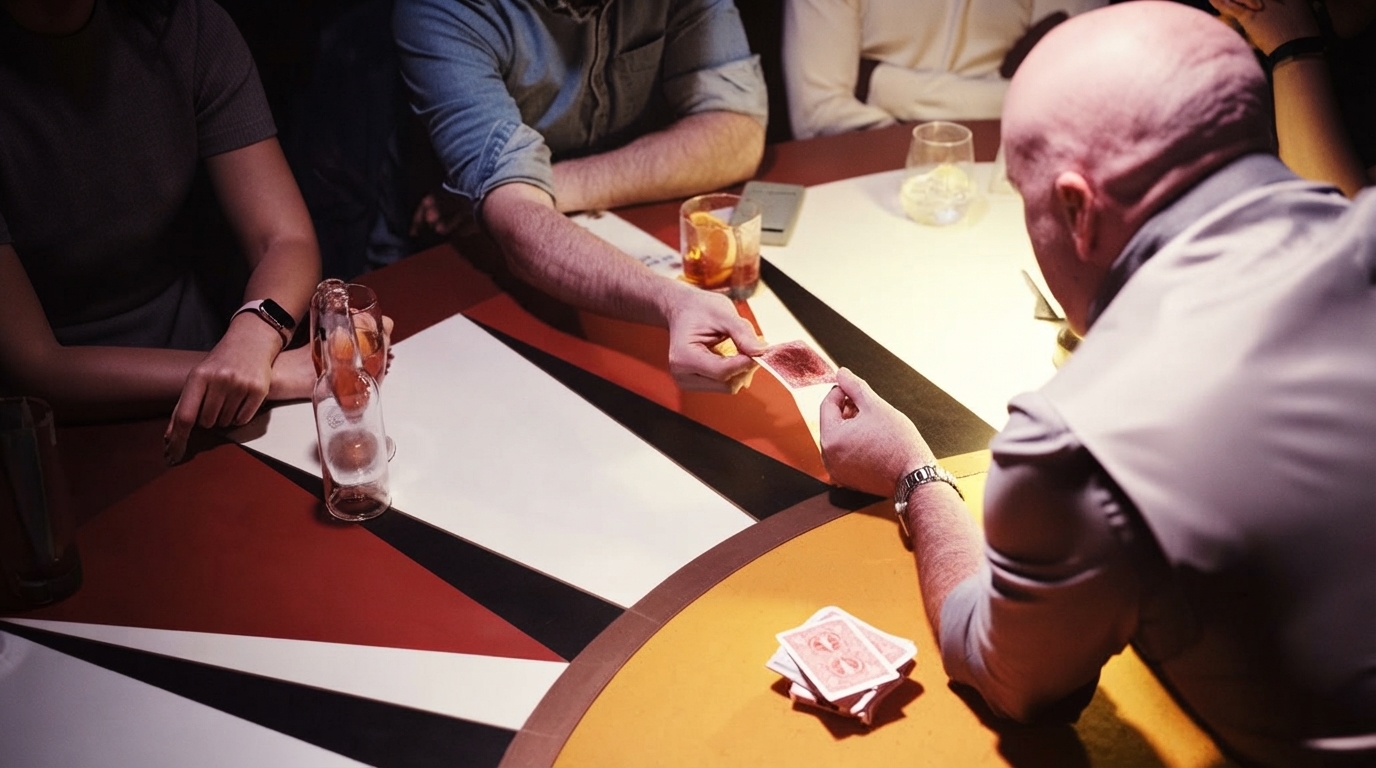
I see it every night with magic.
A playing card changes in somebody’s hand and an entire table erupts. Someone swears. Someone immediately grabs the cards. Another person turns to their friend with a look that essentially says: you saw that too, right?
Technically, what they have witnessed is far less spectacular than a dragon flying over London on their phone. But one of those things happened on a screen. The other happened to them. When anything can be created, what do we believe?
We have become remarkably visually sophisticated. We understand CGI. We know photographs can be retouched and videos manipulated. Now we also know that a completely convincing image may depict something that never existed at all. So our relationship with the extraordinary has changed.
Show us something impossible on a screen and the question is increasingly not “How did they do that?” but “Is that real?”. There is always an explanation available somewhere in the back of our minds: editing, filters, CGI, AI.
Close-up magic removes that comfortable explanation.
There is no screen between you and what is happening. The magician borrows your ring or your watch. You shuffle the cards. You choose one. You hold the object. And then something happens that you cannot explain.
That physical proximity matters. Your brain starts looking for the bit it missed. When could the card have changed? Was I looking somewhere else? How could they possibly have known that?
That gap between what you saw and what you can explain is where astonishment lives. Adults don’t get to spend much time there. The increasingly rare pleasure of not knowing. Children encounter things they don’t understand several times before breakfast, where adults become rather good at knowing what happens next.
Experience teaches us the patterns. We know how restaurants work, how films are constructed, how adverts are trying to manipulate us and, increasingly, how the extraordinary images put in front of us might have been made.
Magic briefly takes that certainty away. When we created The Magicians Table, we didn’t want magic to exist as something audiences simply sat and watched from a distance. The entire experience was built around proximity: small groups, magicians performing inches away, objects passing between performers and guests, cocktails being served at the table, conversation happening around it.
The audience isn’t incidental to what happens. It is part of what happens. And I’ve come to think that’s increasingly important; wonder works better when somebody else sees it too
Watch a table immediately after a magician has performed something genuinely baffling and something interesting happens. People talk.
One person announces that they know exactly how it was done. Someone else immediately points out why their explanation is impossible. People compare what they saw, accuse the magician of cheating, laugh and occasionally become quite determined to inspect whatever object has been left behind. The trick may have lasted two minutes. The conversation it creates can last much longer.
Digital entertainment operates very differently. A video might be watched by 20 million people, but those 20 million people are largely experiencing it separately, often while doing something else. Close-up magic might be experienced by ten. But those ten people experienced that particular moment, together, once.
You can film it. People frequently do. But watch the recording afterwards and it rarely explains why everyone around the table apparently lost their minds. You had to be there. That phrase used to be mildly irritating, but increasingly, I think it describes something rather valuable.
Perhaps presence is the new luxury? For a long time, our idea of luxury was primarily about things: expensive watches, cars, hotels, clothes. But scarcity creates value, and some of the things becoming scarce now aren’t objects at all. Privacy. Silence. Time. Undivided human attention.
Even spending two uninterrupted hours with a group of people is becoming surprisingly unusual. There is nearly always another conversation taking place simultaneously through a screen in somebody’s hand. The best live experiences interrupt that. Not by instructing people to be present, but by giving them something happening in front of them that is more interesting than whatever is waiting on their phone.
I’ve spent years creating live entertainment from things that began in other mediums, from gaming and YouTube to television brands. Again and again, the interesting question has been: what can happen here that couldn’t happen on the screen?
With magic, the answer is unusually clear – it needs you. It needs your attention, your presence and, quite often, your hands. The luxury of something that cannot be reproduced
The Magicians Table has now travelled beyond London to audiences in the US, and one of the things I’ve found most interesting is how consistently people respond to that intimacy. The setting changes. The audience changes. The magician changes. But that moment when a room collectively encounters something it cannot explain remains remarkably universal.
That makes me think the appeal isn’t nostalgia. Live magic isn’t valuable because it belongs to some more innocent, pre-digital age. Nor does it require us to pretend technology hasn’t transformed entertainment for the better. Its value may actually be clearer because of technology.
The more extraordinary our screens become, the more unusual it feels to encounter something extraordinary without one. The more experiences can be replicated, streamed, edited and generated on demand, the more valuable something becomes that can only happen in a particular room, at a particular time, with a particular group of people. And perhaps that is why magic still works.
The real luxury isn’t believing that the impossible has happened. It’s having a few moments in which you genuinely have no idea what just happened.