
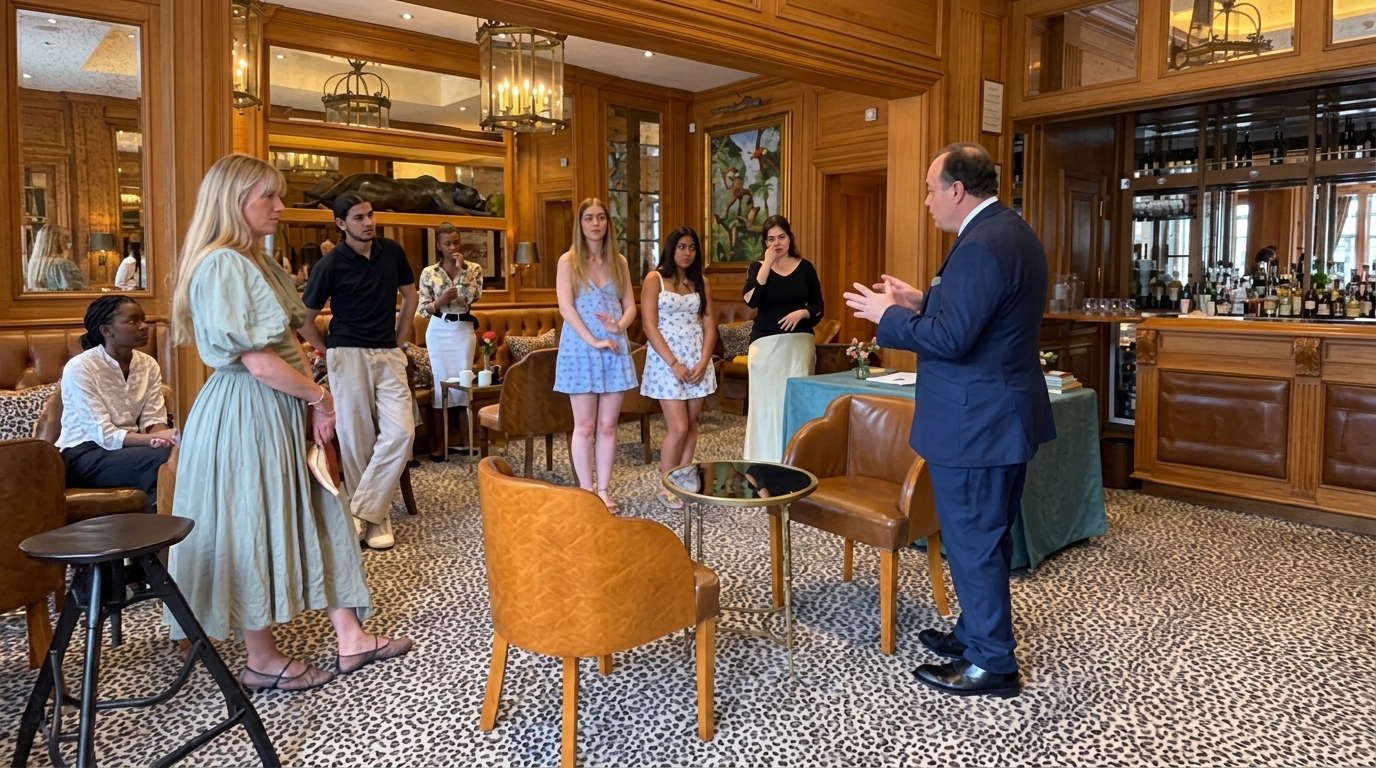
Parents are turning to a former royal butler to teach their children basic manners, from how to enter a room with confidence and introduce themselves properly to making conversation and behaving at the dinner table.
Julius F. Smith, founder of Regal Afternoon Tea, who spent 35 years in private service and served Her Majesty Queen Elizabeth II on numerous occasions, is being approached by parents for his private one-to-one etiquette lessons for their children.
One father told Julius he had seen a major improvement in his son after just one online session.
In another request, a wealthy American mother asked Julius to work with her nine-year-old daughter because she dreams of her marrying a duke one day.
Julius, who has become a regular commentator on modern manners and etiquette, is now offering his unique etiquette training course.
He says some of the interest has come from parents who have seen or heard his etiquette commentary and want their children to learn the same skills he regularly talks about.
Julius teaches everything from introductions, eye contact and remembering names to conversation, posture, dining etiquette and how to conduct yourself confidently in social situations.
He believes parents are realising these everyday skills cannot be taken for granted.
Julius said: “I’m being approached by parents who want me to teach their children etiquette, and some have come to me because they’ve followed my commentary on manners and like the way I approach it.
“I recently had a one-to-one lesson with a young boy, and afterwards his father came back to me and said he had seen a major improvement in him.
“That was wonderful to hear because I’ve always believed etiquette is about kindness. It isn’t simply about knowing which fork to use at a grand dinner. It’s about how you make other people feel.
“Can you introduce yourself properly? Can you look somebody in the eye when you’re speaking to them? Do you know not to interrupt? Can you sit properly at a table and have a conversation with an adult?
“These may sound like very simple things, but they matter enormously.”
Julius believes the way children communicate has changed significantly, with more of their interaction now taking place through phones, tablets and social media.
He says that makes teaching face-to-face social skills even more important.
He said: “Children communicate very differently today. So much of their lives can happen through a screen, but eventually they have to put the screen down and speak to another human being.
“You can have the finest education in the world, but if you can’t walk into a room, introduce yourself properly and hold a conversation, you’re going to struggle in certain situations.
“I’m certainly not blaming children. They’re growing up in a completely different world to the one their parents and grandparents knew.
“But we shouldn’t assume they’ll pick these things up. Sometimes they need to be taught.”
Julius says etiquette can also help children become more confident, rather than making them frightened of doing or saying the wrong thing.
He said: “I don’t want to turn children into little robots. Children should be children.
“Good etiquette is about making the people around you feel seen, valued and at ease. It is also about giving a child the confidence to know how to conduct themselves.
“If a child knows how to greet someone, what to do when they’re invited to somebody’s home or how to speak to somebody they’ve never met before, they don’t have to feel nervous because they know what is expected of them. That gives them confidence.”
Julius believes those skills become even more valuable as children grow older and eventually begin navigating interviews, work and adult situations.
He said: “Parents quite rightly put enormous effort into giving their children the best education they can, but manners are an education as well.
“A child who can walk into a room, introduce themselves properly, speak confidently to people of different ages and treat everyone with courtesy has been given something enormously valuable.
“I spent 35 years working in households where etiquette and good manners mattered tremendously, but the most important lessons I learned were actually very simple.
“Treat people with respect. Acknowledge people properly, and know how to behave around others.
“Good manners cost absolutely nothing, but they can take you a very long way in life.”