
The more artificial intelligence learns to create, the more valuable human craftsmanship becomes.
That may seem counterintuitive. AI can produce stunning images in seconds, write convincing copy and generate endless creative variations at virtually no cost. Yet as digital creation becomes abundant, authenticity becomes scarce. And scarcity has always been the foundation of value.
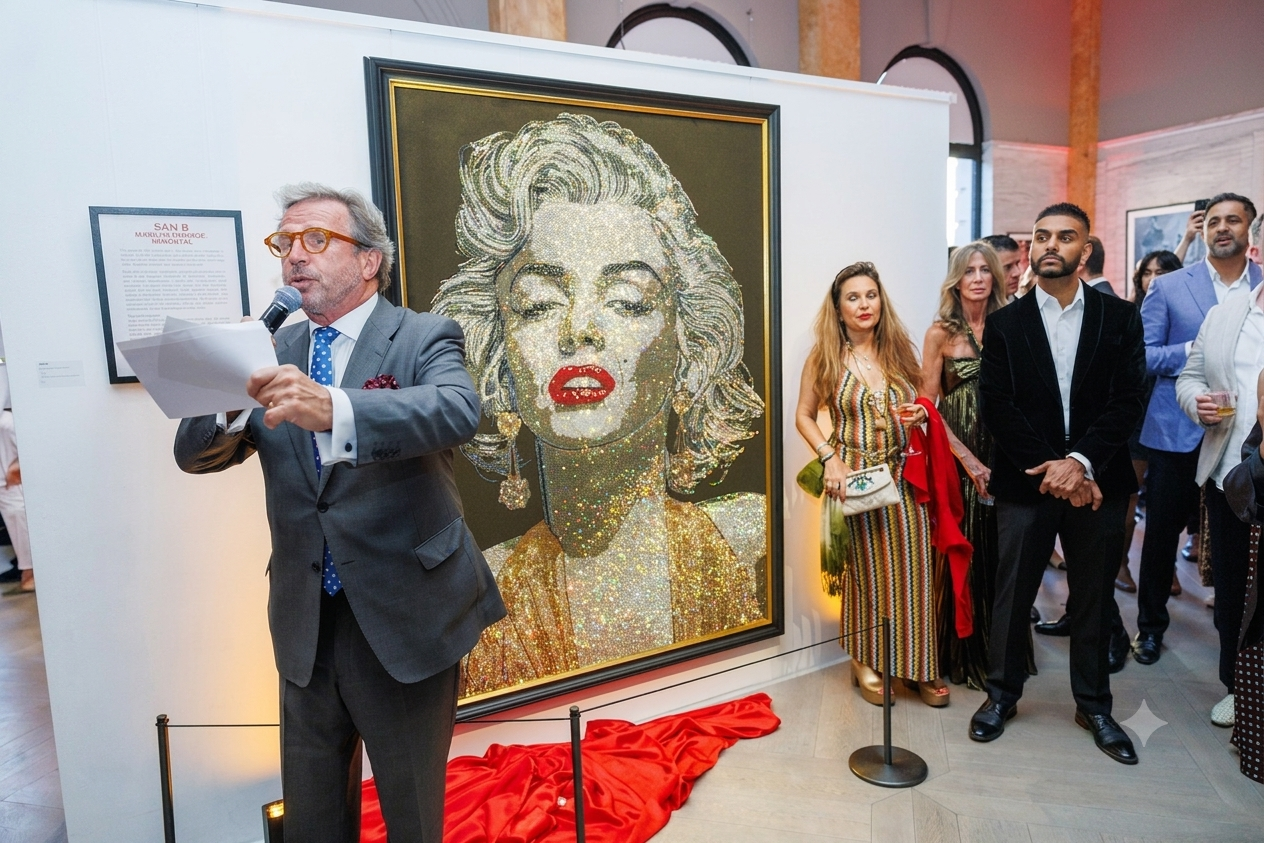
That is why a crystal portrait of Marilyn Monroe selling for £350,000 in London is about far more than celebrity, luxury or nostalgia. It is a signal that the economics of culture are changing.
The sale of Marilyn Monroe: Immortal, a one of one work officially approved by the Marilyn Monroe Estate, reflects a growing appetite for works that cannot simply be recreated. In an age of infinite digital reproduction, craftsmanship, provenance and meaning are becoming luxury’s defining assets once again.
For years, luxury was largely defined by scarcity. Today, scarcity alone is no longer enough. Collectors increasingly seek works that carry a compelling narrative, demonstrate extraordinary craftsmanship and occupy a genuine place in cultural history. The object still matters, but increasingly it is the story behind it that creates lasting value.
Few figures embody that intersection of commerce and culture quite like Marilyn Monroe.
Nearly a century after her birth, Monroe remains one of the world’s most recognisable faces, not simply because of her films, but because she came to represent something much larger. She became the embodiment of fame itself. Glamour and vulnerability. Confidence and insecurity. Public adoration and private loneliness. Every generation rediscovers Marilyn because every generation sees something different in her.
That is why artists continue to return to her image. Not because they lack imagination, but because Monroe remains an unfinished conversation. She asks questions that feel even more relevant today than they did during her lifetime. Who are we beneath the persona? What happens when the image becomes more valuable than the individual? Can vulnerability coexist with extraordinary success?
It is against that backdrop that British artist San B’s work becomes particularly compelling. Raised in East London and influenced by a background in architecture, his creative process combines technical precision with emotional storytelling. His flagship work, Marilyn Monroe: Immortal, measures two metres by one and a half metres and consists of 150,000 Swarovski® crystals, each individually hand placed over more than 1,000 hours. Two lab created diamonds sit within Monroe’s eyes, not simply as symbols of luxury, but as a deliberate reminder of permanence within a life defined by impermanence.
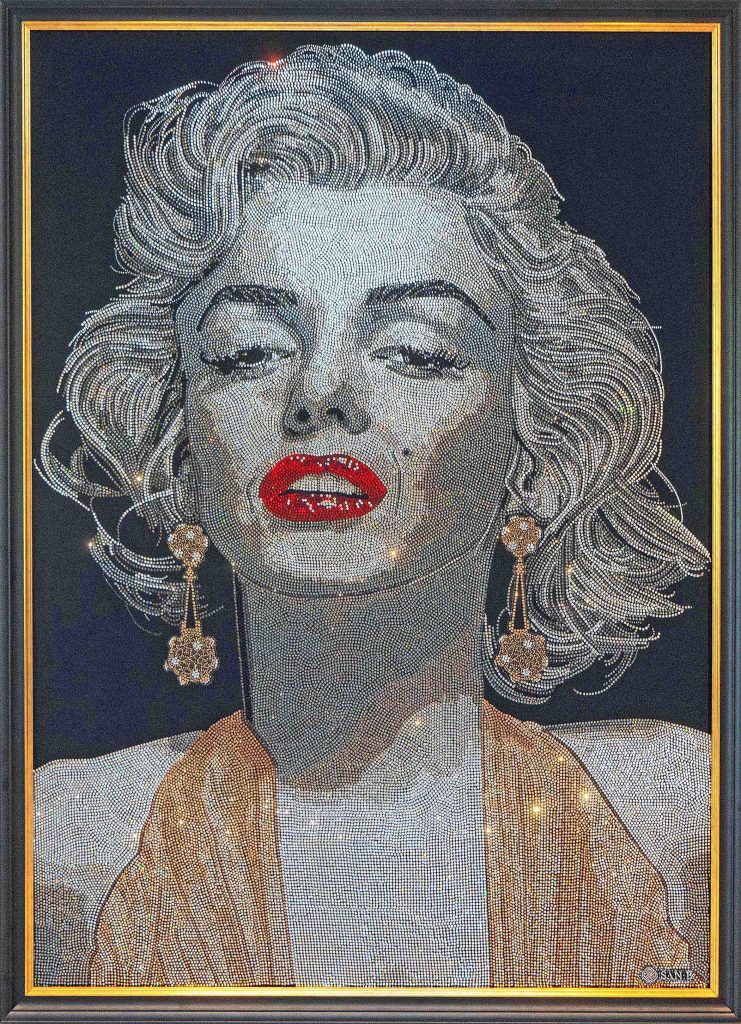
The remarkable aspect of the piece is not simply the materials or the scale of the undertaking. It is the way the artwork changes as the viewer moves around it. Light refracts differently across its surface. Expressions subtly evolve. New details emerge with every angle, encouraging viewers to spend time with the work rather than simply consume it.
That feels particularly significant in an era increasingly defined by speed. Artificial intelligence is transforming creative industries in extraordinary ways. It is making creativity more accessible, accelerating workflows and reshaping how art is produced. Yet its greatest unintended consequence may be the renewed appreciation of patience.
When almost anyone can generate an image, mastery lies not in creation alone but in devotion to the craft. Time itself becomes part of the artwork. Every hour invested, every decision made and every imperfection preserved contributes to a story that no algorithm can replicate.
This shift extends well beyond the art market. Across luxury, fashion, hospitality and design, consumers are becoming less interested in acquiring expensive objects for their own sake. They increasingly want provenance, authenticity and cultural relevance. Ownership is becoming participation in a story rather than possession of a product.
The London auction reflected that evolution. A percentage of the proceeds will support the work of Caudwell Children and Caudwell Youth, organisations helping disabled and neurodivergent children alongside young people facing significant challenges. Philanthropy was not an afterthought. It became part of the artwork’s continuing legacy, reinforcing the idea that modern luxury increasingly derives its value from purpose as much as prestige.
Perhaps that is the defining characteristic of today’s most enduring works. They are no longer judged solely by their craftsmanship or their price, but by the conversations they inspire, the values they represent and the impact they continue to create long after the auction concludes.
Marilyn Monroe understood, perhaps better than anyone, the difference between being seen and being understood. Her image became universal. Her humanity remained elusive. That tension continues to fascinate audiences decades later. It is also what gives Marilyn Monroe: Immortal its resonance.
From a distance, the work dazzles. Up close, it reveals thousands upon thousands of individual decisions, each insignificant in isolation yet essential to the whole. It reminds us that behind every icon lies a person, behind every masterpiece lies relentless discipline and behind every truly valuable object lies a story worth preserving.
The £350,000 sale was never simply about acquiring a portrait of Marilyn Monroe. It was a reminder that in an age of artificial intelligence, the greatest premium may no longer be placed on what technology can create, but on what only human hands, human vision and human perseverance can achieve.