
Artificial intelligence is quickly becoming one of fashion’s most powerful new creative tools, capable of generating campaign concepts in seconds, producing hyper-realistic models who have never existed, and opening up possibilities for speed and scale that the industry has never seen before. On the surface, it looks like a natural evolution of fashion advertising, but the real question is not whether AI belongs in this space, but rather what we allow it to replace, because that distinction is where most of the current debate tends to fall short.
We’ve Been Here Before: The Airbrushing Era
We have, in many ways, been here before.
Airbrushing began as a relatively modest form of correction, used to smooth skin, adjust lighting and remove distractions from photographs of real people who had actually stood in front of a camera. Over time, however, those small adjustments quietly accumulated into something much more significant, until entire bodies were reshaped, imperfections were erased and images were created that no longer reflected the people who were originally photographed, and yet still became the standard against which real audiences began to measure themselves.
No one explicitly set out to create distorted beauty standards. It simply happened gradually, campaign by campaign, until the edited image became normalised.
From Editing Reality to Replacing It Entirely
The critical difference with AI is that it does not begin with a real image at all. Instead, it can generate the model, the environment, the lighting and the entire visual world from scratch, without a single person ever stepping into a studio. This means we are no longer talking about correcting reality, but about replacing it entirely with something that has never physically existed in the first place.
That shift is not just technical; it is philosophical.
What Happens When No One Is in the Room
Because once you remove the need for a real shoot, you also remove the ecosystem that surrounds it, from photographers and stylists to assistants, producers, lighting technicians and all of the freelance roles that depend on the existence of production days. In doing so, you also remove a layer of human friction that has historically acted as a check and balance on creative decision-making.
It becomes much easier to approve something entirely synthetic when there is no crew on set, no model in front of you and no lived experience attached to the image being created.
Where AI Actually Earns Its Place
This is where the conversation becomes more nuanced, because there are absolutely areas where AI has a valuable and legitimate role in fashion advertising, particularly in the more mechanical or technical parts of production that were never really about creative authorship in the first place.
These include extending sets, building backgrounds, localising campaigns for different markets, and rapidly testing visual concepts before a shoot takes place. In these contexts, AI acts as an accelerant rather than a replacement, supporting an idea that has already been formed by human judgement while allowing the creative process to move faster and more efficiently.
The Rise of the Synthetic Model
Where it becomes more uncomfortable is in the idea of AI generating the model itself.
A perfectly constructed, endlessly adaptable figure who does not age, does not require payment, does not negotiate working conditions and does not resist the brief, because they simply become whatever the brief demands. Fashion has spent the last decade slowly moving towards greater representation, more diverse casting and more realistic portrayals of bodies and identities, often in response to public pressure and cultural scrutiny.
A synthetic model does not require that same journey. They can be designed to be anything instantly, without lived experience, without constraint and without the structural realities that human models and human identities bring with them.
That should give the industry pause.
What AI Still Can’t Do: Judgement
At the same time, it is important to recognise that AI is already proving its value in other parts of the creative process, particularly where it helps remove repetitive production constraints. From pre-visualisation and concept development to post-production efficiency and multi-market adaptation, these applications support creative teams without replacing the original idea or the human judgement behind it.
Because despite how sophisticated AI-generated imagery has become, what it still cannot do is understand why one idea resonates emotionally while another falls flat, or why a particular visual feels culturally authentic rather than simply efficient.
Anyone can now generate a technically flawless image. What AI still cannot do is know what makes something meaningful. And that judgement is increasingly what defines strong creative work.
The Industry at a Crossroads
The agencies and brands that will remain relevant are likely to be those that use AI to remove friction from production while still keeping real people, real perspectives and real creative risk at the centre of their work. Efficiency alone does not build cultural impact.
We have seen what happens when convenience quietly reshapes creative norms without enough scrutiny. Nobody explicitly voted for airbrushing to distort an entire generation’s relationship with body image; it simply became normal over time because it was easier, faster and commercially advantageous, until it was too embedded to easily reverse.
AI now sits at a similar inflection point. It has the potential to significantly enhance fashion advertising, but it also has the potential to accelerate a move away from reality entirely.
Whether it becomes a tool for creative expansion or another era of manufactured perfection will depend on whether the industry is paying attention early enough to ask the difficult questions before the answers become irreversible.
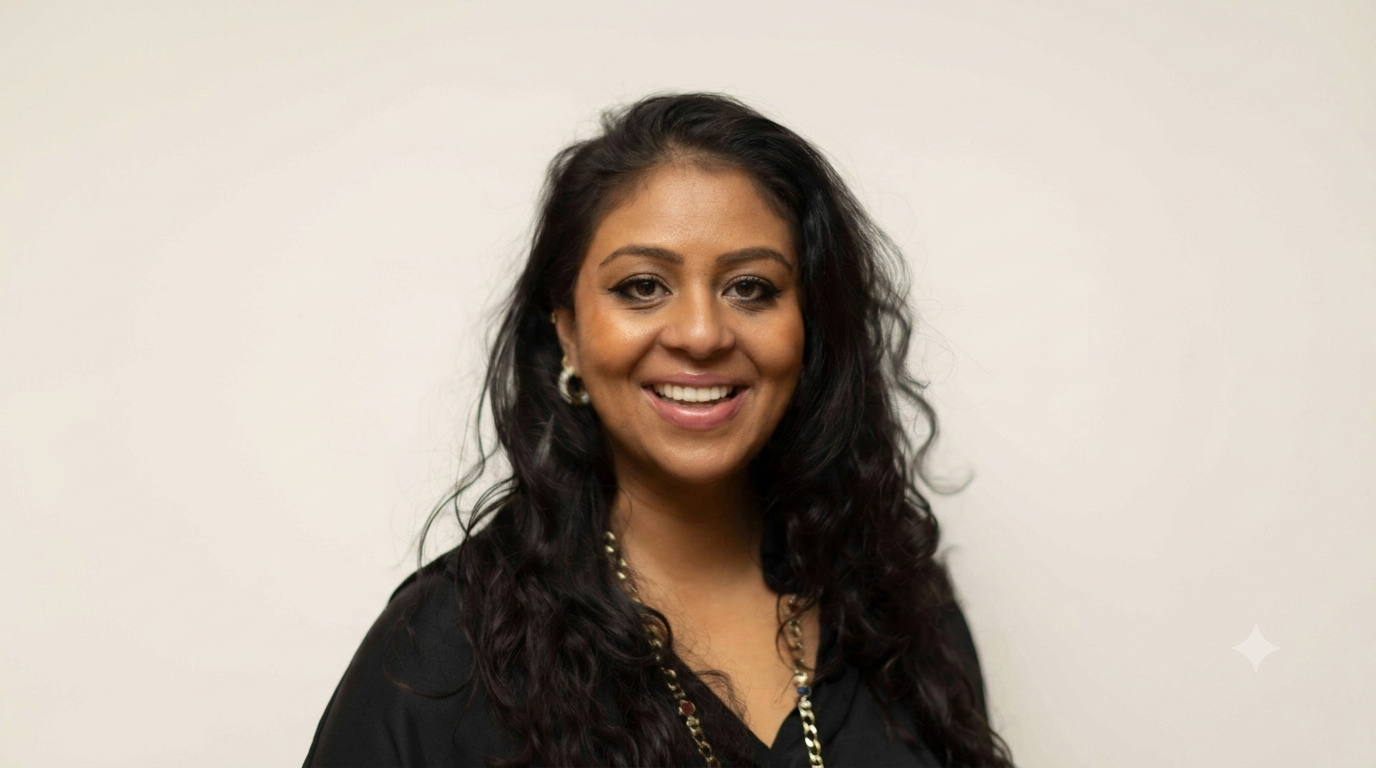
Chantelle-Shakila Tiagi
Founder, TIAGI
https://www.tiagi.com/ | www.agdonhouse.com | www.kin-club.co.uk
Chantelle-Shakila Tiagi is a London-born, South Asian entrepreneur and the founder of Tiagi (a global creative agency), Agdon House (a Clerkenwell studio and event space) and Kin Club (a curated community for ambitious founders and parents).
With over 18 years of experience, Chantelle-Shakila has built Tiagi from a self-funded, one-woman operation into an internationally recognised creative agency with offices in London, LA and Mumbai. Working across production, space and community, she brings people, brands and ideas together across stills, moving image, shows, events and PR activations for fashion, beauty and culture brands worldwide. Clients include Etro, Elemis, De Beers, Byredo, Mulberry, Jimmy Choo, Pandora and Christian Louboutin, alongside titles including Vogue, Dazed, AnOther and The Sunday Times Style. Tiagi’s Mumbai office makes it one of the few Western creative agencies genuinely embedded in the Indian market.
Her event work spans large-scale cultural moments including a three-day presentation, rave and Q&A with Dazed at Copenhagen Fashion Week, the opening of Conor Clinch’s Sanctuary exhibition in Paris, and Patrick McDowell’s A/W London Fashion Week Runway show. Tiagi’s work increasingly sits beyond traditional industry categories, partnering with cultural figures, charities and founders genuinely trying to move things forward.
Agdon House is a studio and event space in Clerkenwell, built for press days, showrooms, activations and productions. Kin Club was founded three months after Chantelle-Shakila returned to work postpartum, when she couldn’t find a room that reflected her reality as an ambitious working parent, so she built one. It brings together founders and professionals navigating careers and family life through curated events, and has become one of the most quietly powerful things she has built.
Chantelle-Shakila began her career at 18, interning at MTV while at university, before going on to work at Liberty, REP and Net-a-Porter. Both Tiagi and Kin Club have been entirely self-funded, built on instinct, relationships and a refusal to do things at anything less than the highest standard.
She was a mentor at SXSW 2026, is currently a Natural Health Awards judge and will be speaking at Ideas Fest 2026. Chantelle-Shakila regularly speaks and sits on panels at industry events including delivering a keynote speech at SGLC 2026. She is passionate about representation within the creative industries, particularly for women and South Asian talent. Her journey reflects the modern balance between building a global business and raising a family, proving that creativity, ambition and motherhood can thrive together.
She builds the rooms she couldn’t find.