
For years, staycations have been seen as a seasonal trend, shaped by school holidays, tighter household budgets or exceptional events such as the pandemic. But changing consumer behaviour suggests a deeper shift is underway.
The findings draw on a survey of 1,000 UK adults, with a deeper analysis of respondents earning £75,000 or more.
Our recent research found that 35% of these higher earners are cutting back on overseas holidays this year, instead choosing smaller, more frequent experiences closer to home. Rather than one major annual trip abroad, consumers are increasingly spreading their discretionary spend across the year in ways that feel more manageable, more frequent and more emotionally rewarding.
Among those reducing foreign travel, 28% are spending more on affordable UK mini breaks, 22% on casual dining, 15% on luxury restaurant experiences, 13% on luxury UK breaks and 8% on wellness experiences such as spa days and personal training. Luxury hasn’t disappeared from the picture; it is simply being redistributed into everyday life.
We’re witnessing the rise of the ‘micro luxury’. A premium dinner, a spa day or a short break can feel more attainable, repeatable and emotionally valuable than a costly long-haul holiday. Increasingly, consumers are not saving luxury for a single moment in the year but building it into their routine.
The rise of the sleepcation
One of the clearest expressions of this shift is the rise of the sleepcation.
Almost a quarter of all Londoners (22%) in our research said they have booked a hotel stay purely to catch up on sleep, compared with a national average of 11%. The trend is particularly strong among millennials, with 18% of 35 to 44-year-olds saying they have booked a stay for this reason.
Sleep is becoming a core motivation for booking. Hotels are increasingly being used not only for leisure or location, but as spaces to reset, recover and prioritise wellbeing.
Among higher earners, this shift is even more pronounced. 22% say they sleep better on holiday than at home, while 14% have booked a UK break specifically to catch up on sleep. A further 15% are actively creating hotel-inspired ‘sleepcation’ bedrooms in their own homes, designed to improve rest and recovery.
In an increasing stressful world, sleep is becoming a form of luxury in its own right.
Luxury is in the details, not distance
As consumers look for smaller, more frequent moments of indulgence, the quality of the hotel bedroom is becoming increasingly important.
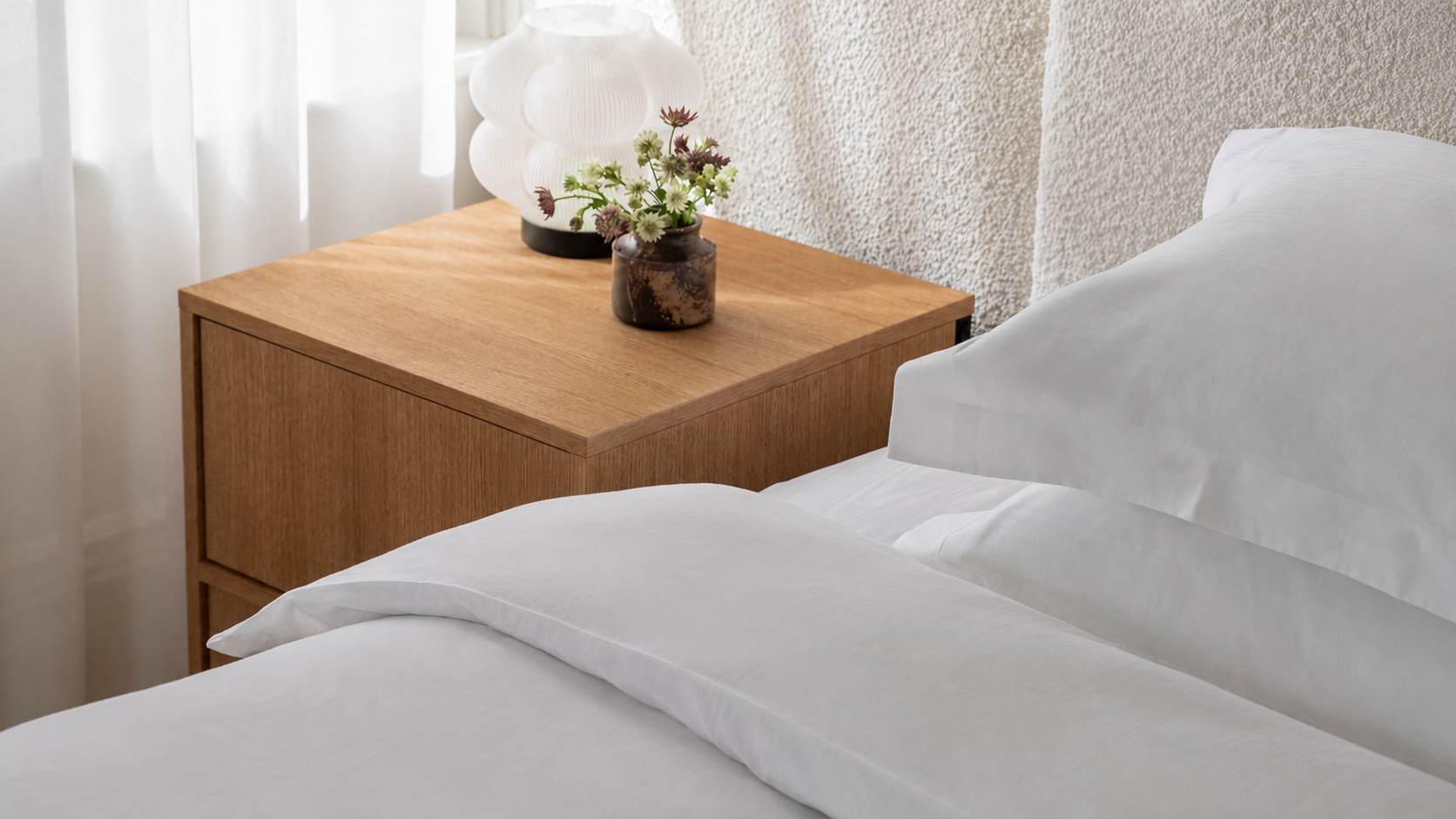
The feel of the sheets, the weight of the duvet and the quality of the pillows all contribute significantly to how rested a guest feels. Bedding and towels are the textiles guests interact with most directly, making them a key sensory part of the experience. How they feel, not just how they look, plays a major role in shaping relaxation and memory.
These details may appear operational, but to the guest they are emotional. They determine whether a stay feels restorative, memorable and worth repeating.
As stays become shorter and more frequent, these touchpoints carry even greater weight. There is less time for the experience to unfold, which means every element has to deliver from the moment a guest arrives.
Home, hospitality and the blurring of comfort
The expectation of comfort is no longer limited to hotels.
There is a growing lack of confidence in some areas of alternative accommodation. Almost a third (31%) of those choosing rental properties over hotels say they would bring their own bedding, while 23% would also bring bedding for their pets. This suggests that consistency and reassurance are becoming just as important as aesthetics or location.
At the same time, hospitality is increasingly influencing how people design their homes. Among higher earners, 42% are planning home renovations this year, with many focused on creating more restful, hotel-inspired bedrooms. A further 15% are specifically designing their sleep paces intended to replicate the comfort of a luxury hotel stay.
This reflects a broader blending of hospitality and domestic life. The standards experienced while travelling are increasingly shaping expectations at home, particularly around sleep quality and wellbeing.
A year-round opportunity for UK hospitality
Consumers are not reducing their appetite for luxury experiences; they are changing how and when they consume them. Instead of one large annual trip, many are choosing multiple moments of rest, indulgence and escape throughout the year.