
I wish, when I had started out as a writer, that I’d had the confidence to ask for help. I thought I was supposed to do it all alone: to research and draft a novel, and, crucially, to judge when it was done. Over time, and through a long series of painful rejections, I learned that helpful specialists, kind outside eyes, and really good questions can make all the difference between process and product.
Working solo
I’m a theatre-maker by trade and I’ve always worked in teams. Why did I think writing a novel would be different? I bought into a myth of my own making, that writing was a mysterious, solitary activity. Or perhaps I was just shy. And I spent years travelling in circles around my own editing loop. Of course, as an avid reader I recognise a beautifully crafted narrative on other people’s pages, but absorbing best practice from my favourite authors while establishing my own unique voice proved a monumental task. I was terrified of seeming obvious, patronising or shallow. I didn’t yet know the difference between mystery and obfuscation, between a tantalising hook and an irritating absence of information. When I finally plucked up courage to speak my ideas aloud to the right people, the gentle interrogation of my listeners exposed everything I needed to clarify on the page.
Timing is everything
For experienced writers, collaboration might begin only when the manuscript goes to their agent or editor. For others, the support of beta-readers, book doctors or family sounding boards at the right moment can help pull a submission into shape.
My own first attempt at sharing a novel-in-progress was a sobering experience. A friend sent it to five aspiring literary agents tasked with critiquing a novel for a job application. Little did I know this was not the way to share a first draft – they shredded it. It was a tough experience, and my confidence was shaken, but I’m grateful. It taught me the importance of finding the right reader in the right moment. I also learned a significant craft lesson: the difference between accuracy and credibility. To research this story, I’d travelled from London to Glasgow on local buses. Call it my Method Acting approach to writing: three days going (literally) around the houses, A-roads, supermarkets and city-centre bus stations. Hawk-eyed, I recorded everything. When I reproduced some overheard dialogue in the novel, the critique was brutal: inauthentic, cliched, a southerner’s reductive impression of northern speech. I was stunned. How could it be inauthentic when I’d recorded it word for word?
Creating a consistent universe
How naïve I was, not to realise that fiction is not a perfect copy of life, but a reinterpretation, filtered and interpreted through an artist’s imaginative vision. As if I didn’t know this. In theatre, it’s known as convention: the worldbuilding that means an audience can accept that we’re all living in the past, or on the moon, or whatever location the play calls for. As long as the conventions are consistent, audiences can suspend their disbelief and enter the world of the story. Once I recovered, I began again with a new novel. This time I drew consciously on my theatre background and treated my writing as a rehearsal process – experimenting, embracing failure, holding my darlings lightly. And I looked for my team. I learned to check how words on the page might sit with different readers, what was clear, what was missing. I learned to apply the same precision I used with actors when asking for feedback: “Where exactly did you want to stop reading?” or “When did you decide you dis/like the character?” are questions a reader can answer without falling into generalisations or inactionable critique.
Confidence in creativity
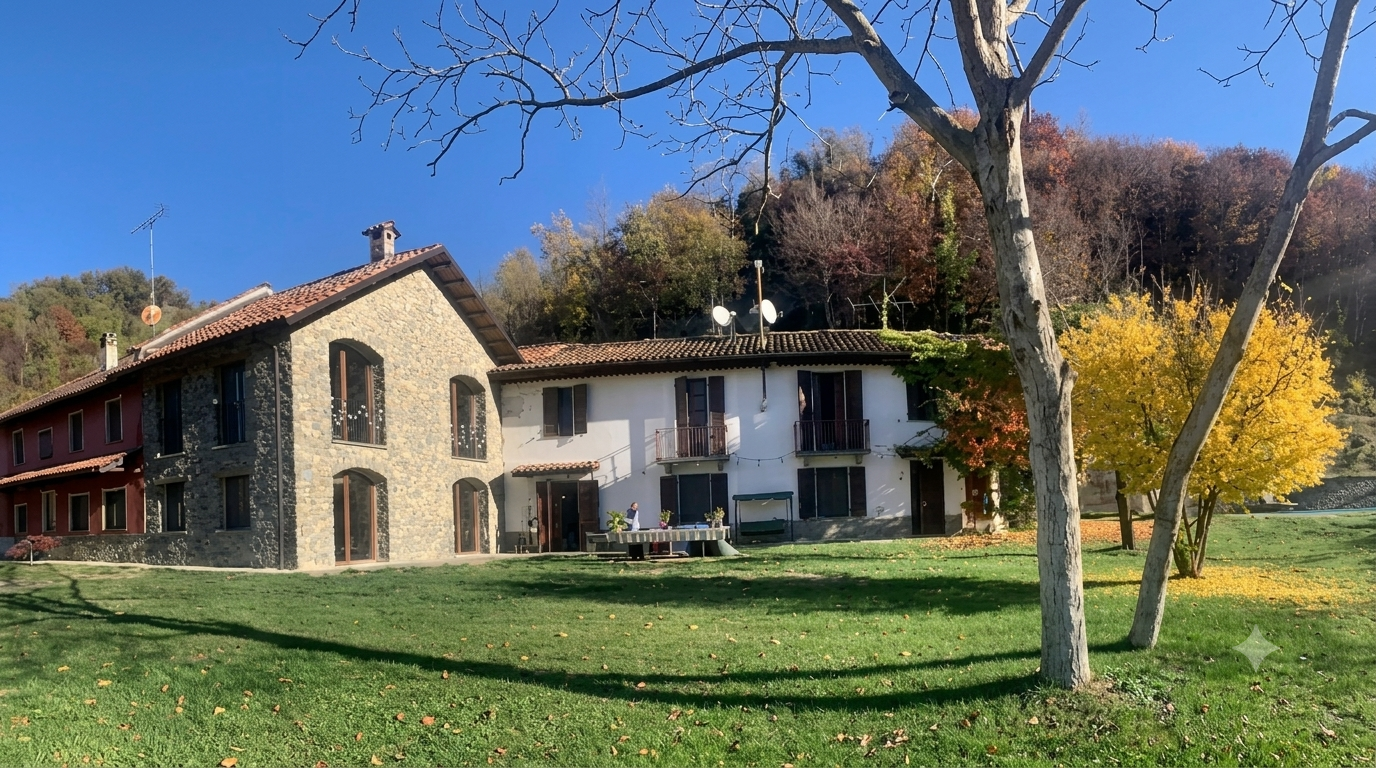
When I founded the retreat centre at Casa Luna, it was to bring writers together in a space that could support them safely, without some of the missteps that have characterised my own journey. Confidence needs to flow for an author to maintain the stamina they need to draft and redraft a novel. I wanted to share my own learning, not only on creative topics, but also how to handle rejection and develop teamwork and support.
Writers’ retreats engage the senses and open up new creative possibilities, all of which give emerging writers the confidence to seek new depth and inspiration in their work without fear of failure. I have come to believe in the experience of writing in the company of other humans to stimulate ideas, support with kindness and challenge without judgement.
Can AI help?
I am increasingly asked about the use of AI as a research tool. The authors I’ve consulted offer a wide range of views; some use AI for time-consuming administrative tasks, such a organising their bibliographies, or checking for unhelpful repetition across a series. Some don’t know exactly where it begins and ends. (Google search? Instagram? Spell-checker?) Others have turned it off, and do their best to avoid it altogether.
Most of us know the ethical and moral issues surrounding AI: it is essential that users inform themselves, and inevitably there is a broad spectrum of well-reasoned arguments and responses.
The potential for AI ‘hallucinations’ is well documented too. AI cannot be trusted to speak truth. It is capable of bias, and error, presented with the supreme confidence of a machine. As one writer puts it “it’s really just predictive text.” Writers who are aware of this know that the quality of their research questions will determine the accuracy of AI’s response. But is AI research a waste of time, when it still requires detailed fact-checking? Or might we be tempted to cut corners and take what it gives us at face value?
Data expansion
I recently did a quick reverse research exercise on my novel Broken Horses, completed before AI existed. Over the twelve years it took me to write Broken Horses, the availability of online material on my topic (Southern Patagonia in 1921) has expanded and changed exponentially. This is true even on a non-tech level: when I first started my research, the key historical text that quickly became my go-to source was available only in Spanish and German. In 2018, Rebellion in Patagonia by Osvaldo Bayer was translated into English. As a native English speaker reading a dense and complex work of over 1000 pages, this development facilitated my work enormously, and I am eternally grateful.
AI referencing AI
I was curious to see what other facilitation I might have been grateful for, had AI existed when I was starting out. I don’t have paid AI, so I tried some clear and specific questions on Google. I started with “What scholarly articles should I use to research agricultural practices in Southern Patagonia in 1921?” and was delivered a coherent list of sources which more or less matched my earliest high-level investigations. So far so good. When I asked about the rural workers’ strike which lies at the heart of my novel, Rebellion in Patagonia was at the top of the list. However, a few casual clicks down the rabbit hole led me to Grokipedia, an AI generated encyclopedia. Grokipedia helpfully assured me that police accounts of the strike I was investigating were accurate and verifiable, whereas historian Osvaldo Bayer’s interviews and findings were not. For the avoidance of confusion, Bayer’s account of the strike led to his exile from Argentina, then a right-wing dictatorship, leaving only the official evidence provided by the police. Bayer’s left wing views were unacceptable in Argentina for decades. Clicking on the only link provided to Bayer himself led me to a German manufacturing company.
Detecting bias
Obviously I can use plenty of other search engines, and normally I would hightail it out of Grokipedia at once. I can imagine readers of this article shouting that everyone knows better than to trust such a source. Still, I wonder what effect this casual glance into an online encyclopaedia might have had at the beginning of my research enquiries when I still knew little about my subject. Would I have detected the right-wing bias? Or would the seed of an idea that Bayer’s work was inaccurate have taken root?
Some AI tools are more ethical than others; the paid ones are more reliable. Also, my personal opinion is based entirely on my circumstances: I am privileged to have access to writing companions, beta readers, book doctors, libraries and bookshops, and my perspective reflects this position. For some writers, AI may provide a means of levelling the playing field. I choose not to turn to AI for research purposes, because I believe the process requires the writer to confront failure, rejection and above all, discomfort.
No fast-tracking
I am not looking for artificial means to fast track me through some of the necessary painful experiences of learning to write better – what a writer friend has called “the compression of thought time.” I don’t want to outsource the challenges of searching for information, any more than I want to forgo the sometimes painstaking and lengthy process of reading, annotating, turning down pages, or underlining an important discovery. I want to sit with what Keats called negative capability, that is, “being in uncertainties, mysteries, doubts, without any irritable reaching after fact and reason.” Writer Milly Jenkins references the Greek philosophical state of aphoria, or ‘being without a path.’ No out-sourcing of the tedious or time consuming. I want to spend time in the weeds, with the discomfort of hovering at the crossroads, or wandering anxiously through the woods. I learned the hard way in my early writing, when I tried to reproduce copied conversations as fiction without filtering them through my own imagination. I missed a step. The dialogue seemed perfect, and certainly it was correct – I heard it with my own ears – but that’s the point, it was too perfect: correct, but not sensory. Here lies my problem with using AI for anything other than the most administrative tasks: the danger of skipping the percolation process, the painful part, the bit that hurts and yet, when it heals, creates something knotty and scarred, and therefore far more interesting. When we struggle, we reach deep for the resources we need to make our work. Isn’t that at the heart of pretty much every story we’ve ever valued?
Safety in the human
As TS Eliot wrote in The Hollow Men: ‘Between the idea and the reality… falls the shadow.’ How we sit with the shadow defines our approach to the creative process. We need to feel safe enough to make mistakes and look foolish. Safe enough to experiment and rehearse. For this reason, I encourage authors to talk to other humans, to take advice and solace from writing communities. At Casa Luna, our writers experience the confidence that comes from being supported. They remain connected to us and to each other, held by real writers and real arms.