
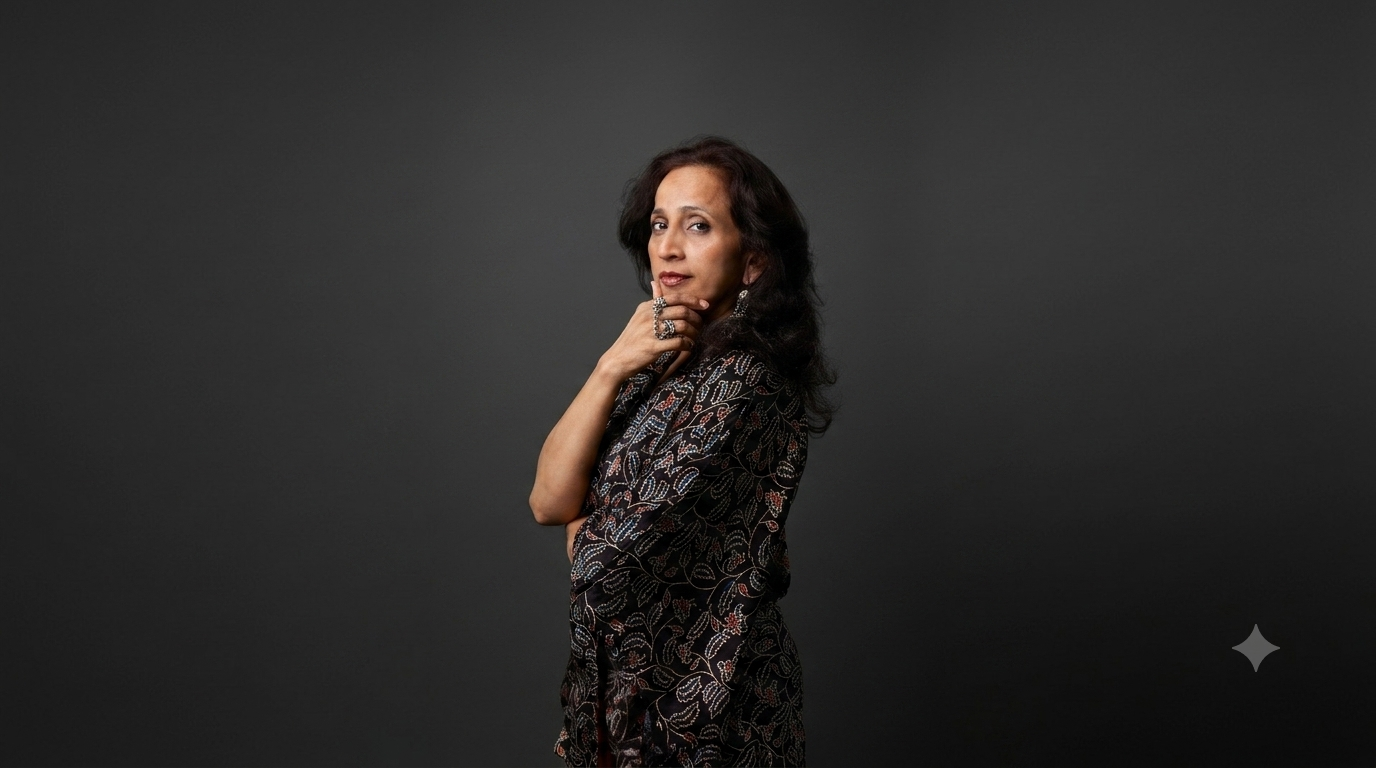
For many years, whenever people have asked me about Kathak, one of India’s major classical dance styles, the conversation has followed a familiar path.
How do we preserve it?
How do we protect it?
How do we ensure younger generations don’t lose touch with it?
They are understandable questions. But increasingly, I think they are the wrong ones.
The future of tradition does not lie in preservation.
It lies in continuity.
Preservation suggests placing something safely behind glass, protecting it from change. Continuity asks something far more demanding: how do we allow a practice to remain recognisable while giving it permission to evolve? How do we ensure that what is passed on is not simply choreography or technique, but curiosity, responsibility and a way of thinking?
These questions have shaped my work far more than any individual performance.
As the founder and Artistic Director of Pagrav Dance Company in the UK, I have spent over two decades navigating the space between classical practice and contemporary life. During that time, I have realised that my role has become less about making dances and more about creating the conditions in which dance can continue to matter.
That distinction is important.
Because while audiences see performances, organisations spend most of their lives doing something else entirely. They are teaching, mentoring, fundraising, governing, supporting artists through illness and parenthood, helping young practitioners discover confidence, creating employment, nurturing relationships and holding communities together.
None of this is usually described as artistic practice.
I believe it should be.
Tradition Was Never Meant to Stand Still
Classical art forms have survived for centuries not because they remained unchanged, but because every generation quietly renegotiated its relationship with them.
Kathak itself has travelled extraordinary distances. It has moved between temples, royal courts, public stages, television, universities and now digital platforms. Every shift required artists to respond to changing societies without abandoning the essence of the form.
If previous generations had simply repeated what came before them, Kathak would never have become what we recognise today.
Yet somewhere along the way, many culturally specific art forms have become burdened with an expectation that their greatest achievement is faithful preservation.
This can create a dangerous misunderstanding.
When preservation becomes the goal, innovation begins to feel like risk rather than responsibility. Younger artists inherit practices they are afraid to question, organisations become increasingly occupied with protecting legacy, and institutions start rewarding certainty over curiosity.
Living traditions cannot survive like this.
Their strength has always come from adaptation, not imitation.
Institutions Were Never Part of the Original Design
There is another challenge that receives far less attention.
Many traditional art forms were never designed to exist inside modern organisations.
They were transmitted through families, gurus, communities and long-term relationships. Knowledge was embodied rather than documented. Learning happened over years, often through observation as much as instruction.
Today we ask these same practices to operate within charities, funding systems, governance frameworks, safeguarding policies, strategic plans and impact reports.
None of these structures are inherently wrong. Many are essential.
But they inevitably change the ecology of an art form.
Artists who once devoted themselves primarily to practice now find themselves becoming fundraisers, managers, employers, trustees, advocates and administrators. Success increasingly depends on navigating institutional systems that previous generations never encountered.
This creates a tension that many culturally specific organisations quietly carry.
How do you remain rooted in lineage while building an organisation capable of surviving in the twenty-first century?
For me, this has become one of the defining leadership questions of our time.
The Institution Should Serve the Practice – Not Replace It
Over the years I have come to believe that organisations are not the destination.
They are vessels.
The purpose of an institution is not to preserve itself. Its purpose is to create the conditions in which artistic practice, people and communities can flourish.
That means investing in artists rather than simply productions.
It means understanding that teaching is as significant as performance.
It means recognising that relationships are not an administrative function but part of the artistic ecosystem itself.
Some of the most important work within Pagrav has happened away from the stage. It has happened in conversations after rehearsals, in supporting artists through major life transitions, in watching students leave and return years later with new perspectives, and in creating opportunities that allow people to imagine futures for themselves within the art form.
These moments rarely appear in annual reports.
Yet they are often where the future is being shaped.
The Missing Conversation Is Succession
Across culturally specific dance forms, we speak often about nurturing the next generation.
We speak much less about creating somewhere for them to go.
The challenge is not simply producing talented artists.
It is building an ecosystem that allows those artists to become teachers, researchers, producers, artistic directors, commissioners, policy makers and leaders.
At present, those pathways remain fragile.
Too often, leadership succession becomes dependent on individuals rather than systems. Organisations rely on extraordinary commitment instead of sustainable structures. Experienced leaders struggle to step aside because there are too few opportunities beyond the organisations they have built, while emerging leaders find too few routes into positions of meaningful responsibility.
This is not a failure of ambition.
It is the absence of an ecosystem.
If we are serious about safeguarding culturally specific art forms, then succession cannot begin when someone retires. It must begin decades earlier by creating meaningful progression throughout an artist’s career.
Continuity is built long before leadership changes hands.
Beyond Preservation
I often think about what we are truly passing on.
It is not simply repertoire.
It is a way of listening.
A way of asking questions.
A way of relating to teachers, audiences and communities.
A way of understanding discipline, generosity and responsibility.
These qualities cannot be archived.
They can only be experienced.
Perhaps that is why I have become increasingly interested in building institutions that remain porous rather than fixed. Organisations that encourage dialogue rather than certainty. Places where research sits alongside performance, where education is valued as highly as production, and where artists are encouraged not only to inherit traditions but to contribute to them.
For me, this is also why the long-term vision extends beyond creating performances. It is about contributing to a future where Kathak has spaces for advanced research, critical discourse and higher learning alongside artistic practice places where the next generation can deepen the form, question it and carry it forward with confidence.
That is not about preserving the past.
It is about preparing for the future.
The Responsibility of Our Generation
Every generation believes it has inherited a tradition.
Perhaps our real responsibility is to leave behind something stronger than we received.
Not by protecting it from change, but by ensuring it has enough confidence to change well. The question, then, is no longer how we preserve our traditions. It is whether we are building the people, the institutions and the cultures that will allow them to continue long after we are gone.
Because traditions do not survive through nostalgia. They survive through people.
And people need places in which to grow.