

Seattle-based matcha company plants first 12,000 tea plants as part of long-term investment in Pacific Northwest tea agriculture
SEATTLE and WHIDBEY ISLAND, Wash., Aug. 31, 2026 /PRNewswire/ — Vale Matcha today announced Vale Farms, a 365-acre property on Whidbey Island. The company has now planted its first 12,000 tea plants as part of a long-term investment in Pacific Northwest tea agriculture.
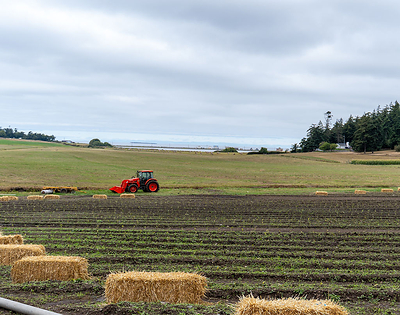
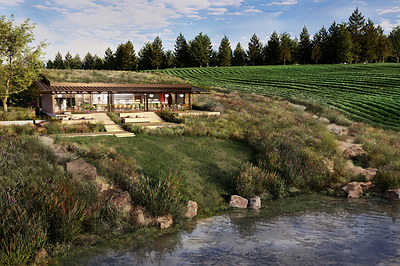
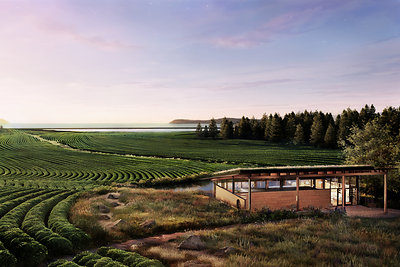
This marks the start of a long-term plan to cultivate approximately 200 acres of tea, or roughly one million plants. Vale is also building a 30,000-square-foot tea production facility in nearby Oak Harbor.
Based on the company’s research, Vale Farms represents the first effort to build an integrated, commercial-scale matcha-growing and production operation in the United States, bringing together domestic tea cultivation, tencha production and milling tencha into matcha.
A desire to better understand the nuances of matcha from cultivation to cup is at the heart of Vale Farms. When Vale opened its first café in Seattle in 2025, a global matcha shortage made it difficult to secure enough high-quality matcha to meet its needs. That experience took the Vale team to Japan, where they began building relationships with tea growers and producers and developing a deeper understanding of the intricacies of tea cultivation, processing and milling.
“We went to Japan looking for exceptional matcha and came away with a much deeper appreciation for everything that has to happen before matcha ever reaches the cup,” said Luke Larson, Founder and CEO of Vale. “We’re not here to solve the matcha shortage. We’re thinking much longer term. Think about wine in Napa Valley. A generation of growers helped demonstrate what that region was capable of, and eventually Napa became synonymous with American wine. We believe the Pacific Northwest has the potential to become a great tea-growing region and, one day, to be known for its exceptional matcha. Tea takes years to establish and decades to truly understand. Vale Farms is our commitment to that future.”
Matcha is a finely milled green tea with deep roots in Japanese tea culture. Unlike steeped tea, matcha is made from tea leaves that are processed and milled into a fine powder, so that the leaf itself becomes part of the drink. Because the leaf is consumed, the tea’s intrinsic health benefits are higher than in most steeped teas. Like coffee, matcha contains caffeine, but it also naturally contains L-theanine and antioxidants. Today, matcha has grown into a global category and an increasingly popular part of the daily routine for a new generation of consumers.
Vale currently sources all of the matcha it sells and serves from producers in Japan and is committed to continuing those relationships independent of what Vale Farms ultimately produces. Vale Farms represents a significant long-term investment in expanding tea-growing capacity in the United States and developing a distinctly Pacific Northwest expression of matcha.
From Hawaii to Whidbey
The first plants at Vale Farms were sourced from the Big Island of Hawaiʻi and trace their origins to Japan – home to storied cultivars like Yabukita and Yamatomidori, which tea growers Eva Lee and Chiu Leong have spent 25 years growing at Tea Hawaii & Company.
Lee and Leong provided the stemstock for Vale Farms’ first planting and have become agricultural partners, sharing the knowledge and experience they have gained over decades of growing tea in Hawaiʻi.
“Growing tea in the United States has always been a collaborative effort, with growers, researchers and agricultural partners sharing what they learn along the way,” said Eva Lee, co-founder of Tea Hawaii & Company and advisor to Vale. “After 25 years of growing tea in Hawaiʻi, I’m excited to bring some of that experience to Vale Farms and help establish this next growing region. The scale of what Vale is building creates a unique opportunity to learn, experiment and contribute new knowledge to the future of American tea agriculture.”
Exploring a Pacific Northwest Expression of Tea
Research is at the heart of Vale Farms. This includes research already underway at Washington State University exploring the potential for tea cultivation in the Pacific Northwest.
“Our research at Washington State University has shown that tea can be successfully grown in the Pacific Northwest,” said Carol Miles, Professor, Department of Horticulture, Washington State University. “Through field trials and propagation research, we’ve found that multiple tea varieties are thriving in this region, making Washington an exciting place to continue exploring tea as an agricultural crop.”
Whidbey Island’s maritime climate, acidic soils and agricultural history made the property a compelling location for Vale to cultivate tea at greater scale. Fife Symington, President of Vale Farms, brings more than three decades of experience developing and operating large-scale greenhouse and agricultural operations throughout North America.
“Tea rewards patience,” Symington said. “We’re at the beginning of this process. Everything we learn, from how individual plants respond to winter conditions to how the soil, climate, pruning and shading influence the leaf, will shape how the farm develops. We’re ambitious about what this could become, but we’re humble about what we still have to learn.”
Building Tea-Processing Capabilities in Oak Harbor
Vale’s investment extends beyond the farm. The company will build a state-of-the-art 30,000-square-foot tea-processing facility in Oak Harbor to process future harvests from Vale Farms.
Vale is working with Terada Seisakusho, a Japanese manufacturer of tea-processing equipment, on the equipment and processing systems for the facility. Once operational, freshly harvested tea leaves will travel from Vale Farms to Oak Harbor, where they will be steamed, dried and processed into tencha.
The tencha will then travel to Vale’s manufacturing facility in Seattle’s SODO neighborhood, where Vale already precision-mills imported Japanese tencha into matcha. In the future, the facility will also mill tencha produced from Vale Farms. Together, the farm and processing facilities will give Vale the ability to manage the journey from cultivation to cup.
A 130-Year Connection
Exactly 130 years ago, on August 31, 1896, the Miike Maru arrived in Seattle carrying Japanese tea and other goods, on the inaugural voyage of Japan’s first regular steamship service to Seattle. By announcing Vale Farms on August 31, we hope to honor this historical connection between our city and Japan.
The Vale Farms property was later owned by Capt. James Griffiths, a prominent Seattle shipping agent whose life and business were closely connected to the growth of Pacific Northwest maritime trade.
Today, Vale envisions the farm as a home to a growing community of tea cultivators and researchers.
“There’s an idea I love about the song of the nightingale. One begins singing, another hears the melody and joins, and eventually one song becomes a chorus,” said Larson. “That’s our hope for Vale Farms. We’re not simply trying to build one great tea farm. We want to help demonstrate what this region might become and inspire others to grow tea and produce matcha here, in the Pacific Northwest.”
About Vale
Vale is a Seattle-based matcha company headquartered in Pioneer Square. The company sources matcha from producer partners in Japan and serves it through cafés, mobile matcha bars, direct-to-consumer products and wholesale partnerships. Vale brings together culinary craft and technology to create fresh, consistent matcha experiences at scale.
Vale is expanding across the Seattle region while investing in the long-term future of tea through Vale Farms, a 365-acre property on Whidbey Island where the company plans to cultivate approximately 200 acres of tea over the coming years.
More information is available at valematcha.com.

 View original content to download multimedia:https://www.prnewswire.com/news-releases/vale-matcha-announces-vale-farms-with-plans-to-grow-one-million-tea-plants-on-whidbey-island-302865207.html
SOURCE Vale Matcha
