
Having spent nearly 20 years at Nisa Retail, followed by senior leadership roles supporting independent retailers, I’ve seen how much pressure convenience retailers face to get their pricing, promotions and stock decisions right. Margins are tight, customer expectations are high, and household budgets are under increasing pressure. Every promotion needs to work hard, and every pricing decision matters. But one part of the process still deserves far more attention: what happens when the customer reaches the shelf.
A price can need changing because of a promotion, a competitor’s offer, stock levels or a product approaching its use-by date. Getting that change onto the shelf might still involve printing tickets, finding products, and relying on someone in the store to make the physical change.
That creates a disconnect in a sector that has invested heavily in the systems behind pricing and promotions. Retailers can hold extensive product, stock, and pricing information, but the shelf is often still treated as the final, manual part of the process. The information exists within the business; the challenge is getting it in front of the customer quickly enough to make a difference.
That gap matters even more when shoppers are watching what they spend. A promotion might be designed to offer genuine value, but if the shelf price doesn’t reflect the offer, or the saving is not clear when the customer makes a decision, the retailer risks losing the sale and the shopper misses out on the intended benefit. Getting the pricing right is not just an operational issue. It affects whether a promotion delivers on its promise.
Consider a product approaching its use-by date. A retailer may have an opportunity to reduce the price and sell it rather than see it go to waste, but that opportunity shrinks with every passing hour. There is another possibility, too: the full-price version on the shelf could direct customers towards a reduced version in the appropriate section. That gives shoppers a reason to look for a lower-priced option, while giving the retailer another chance to sell stock that might otherwise be discarded.
This changes what we should expect from the shelf. It doesn’t have to be a passive display of product names and prices. It can help retailers communicate offers, direct shoppers towards available value and respond to what is happening in the store. The same principle applies when a product needs shifting, stock levels change, or a retailer wants to introduce a promotion at short notice.
Weather provides another example. A change in the forecast can alter demand, creating opportunities to promote products suited to the conditions. A retailer might want to respond to a sudden spell of good weather or adjust its approach when rain changes shopping patterns. If every change depends on printing, distributing and replacing tickets, the technology supporting the business is moving faster than the customer-facing store.
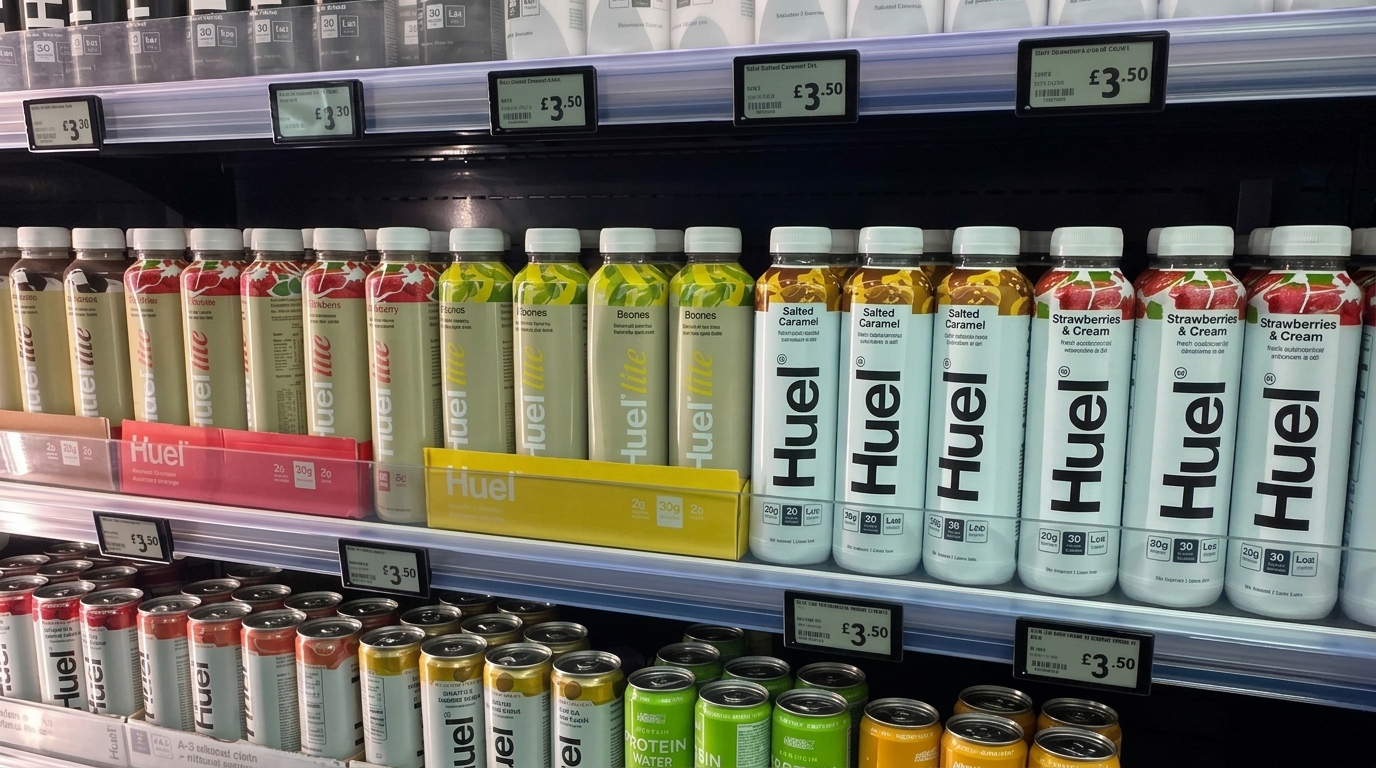
The shift to electronic shelf-edge label hardware has been an interesting addition to the shop floor. In my opinion, ESLs, connected to the retailer’s pricing and product information, offer one solution to close that gap. But I don’t believe all retailers are utilising them to their fullest. Their value goes beyond replacing printed tickets with digital displays. Granted, you need additional software, but it can help ensure that the information customers see reflects the decisions the business is making, while creating opportunities to communicate relevant offers and respond to changing priorities. The important point is not the display itself, but the connection between the commercial decision and what happens at the shelf.
I saw this first-hand with Laurels Service Station, a SPAR store with 1,500 electronic shelf labels managed through ShelfTalker’s software. This, in my opinion, is a brilliant example of how this works in practice. The store created branded templates for promotions and meal deals, alongside bespoke designs for local produce. It’s that creative thinking that really makes the existing technology work to its fullest.
There’s also a wider commercial cost to getting this wrong. A promotion that isn’t reflected accurately at the shelf can undermine customer confidence. A reduction that’s implemented too late can leave a retailer with stock it could have sold. An offer that’s difficult to spot can fail to attract the attention it was designed to earn. These are not necessarily problems that can be solved by planning promotions further in advance, because some decisions only become apparent once a product is in store and its performance becomes clear.
Retailers need to think about the shelf as part of their pricing and promotional strategy, rather than the final administrative step after a decision has been made. If the systems managing prices, promotions, stock, and product information are already in place, the customer-facing shelf should be able to reflect those decisions without unnecessary delay.
Grocery retail, particularly convenience retail, will always be shaped by changing demand, competitive pressure and shoppers’ need for value. As household budgets come under greater pressure, retailers need their promotions to reach customers at the right time and their prices to be accurate when shoppers make a choice. The opportunity is to make the physical store more responsive to the decisions already being made behind the scenes. Technology is most useful when it helps retailers act on those decisions in time to make a difference, both to the business and to the customer.