
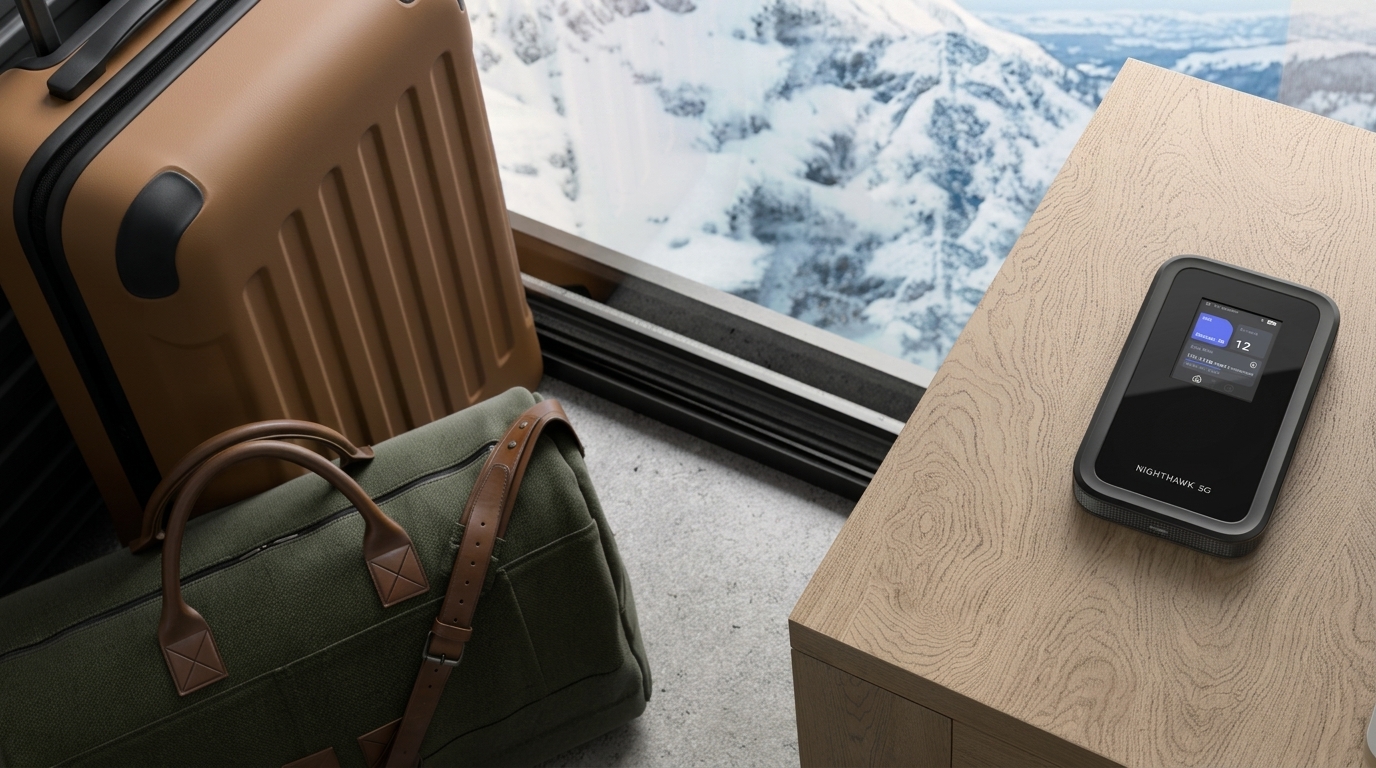
Families now travel with more connected devices than at any previous point: phones, tablets, laptops, smartwatches, and often a games console or two for good measure. At home, that technology sits behind networks and routines people rarely think twice about. On holiday, those same devices are handed over to networks nobody has vetted, in places outside anyone’s control, often without the habits that would normally apply.
The result is a widening gap between how carefully people manage their digital lives at home and how loosely the same habits get treated while travelling. Banking apps, work email and family photo libraries all travel in someone’s pocket, yet the caution that protects them at home rarely makes the trip in the same way.
Free WiFi isn’t the same as safe WiFi
Airport lounges, hotel lobbies and poolside cafes have trained travellers to treat a Wi-Fi symbol as a green light. Research from Virgin Media O2 found that 79% of British travellers connect to unfamiliar networks while abroad, and nearly half had no idea doing so could put their privacy and devices at risk. The convenience is real, but the infrastructure behind it typically isn’t built with any individual user’s security in mind.
Public networks are shared by design and often unencrypted, which means anyone else using the same connection has a theoretical line of sight to unprotected traffic. Avoiding public Wi-Fi altogether isn’t realistic for most families, so the more useful habit is choosing what happens on it. Banking, work logins and anything sensitive are best saved for a connection with a bit more accountability behind it.
The tools to close that gap already exist in most households. A Forbes Advisor poll found that 49% of UK adults already use a VPN on at least some of their devices, encrypting the connection between a device and the internet regardless of which network it’s sitting on. The bigger question is whether that protection makes it onto the device actually being used at the airport gate or the hotel lobby, rather than sitting switched off until it’s needed.
The convenience settings that work against travellers
Most phones and laptops are set to reconnect automatically to networks they’ve used before, a convenience most people never think to turn off. Security researchers have long documented how this can be exploited through so-called evil twin networks, where an attacker sets up a hotspot using a familiar name, such as “Airport Free WiFi”, to intercept anyone whose device connects without asking. A phone left on automatic reconnection doesn’t check who is actually running a network before it joins.
Turning off auto-join before a trip puts that decision back with the person holding the device. It’s a change buried in a settings menu that takes under a minute, and one most travellers have simply never gone looking for.
One password covering too much ground
Password habits tend to slip fastest under time pressure, and holiday planning rarely leaves much room for it. Around 80% of people admit to reusing passwords across multiple accounts, with roughly one in eight using a single password across every account they hold. Extrapolated across the population, that suggests more than six million people in the UK could be relying on one password to protect everything from email to online banking.
A single compromised account rarely stays contained to itself. When the same password covers email, banking and shopping accounts, one breach can cascade straight into the others.
The devices children use need the same precautions
Long airport delays and quiet dinners abroad have a way of turning a tablet into the easiest form of childcare available. That trade-off usually means giving a child access to whatever network is available, without the parental controls that would normally apply at home. Apps get downloaded and platforms get switched without anyone really tracking what’s connecting to what.
Public networks make no distinction between an adult checking email and a child downloading an app, so the same lack of encryption applies either way. Setting basic restrictions on a child’s device before a trip, rather than mid-flight, is a five-minute task at home that removes a lot of the guesswork later.
Preparation that should happen before the case is packed
Software updates have a habit of appearing at the worst possible moment, usually the night before a flight, which is exactly why so many people put them off until they’re home again. Those updates often close the exact security gaps that make older, unpatched devices easier targets on unfamiliar networks. Running them a few days before departure, rather than the night before, leaves time for everything to install properly without holding up the packing list.
A lost or stolen device carries more risk than the cost of replacing it. Insurance2go found that 41% of British people have had a phone stolen while on holiday, and most phones stay logged into email, banking apps and saved Wi-Fi networks by default. Backing up before departure protects the data. Locking screens, enabling remote wipe and logging out of sensitive apps before a trip protects everything that device still had access to.
A holiday doesn’t pause digital life, it just moves it
A holiday no longer means stepping away from digital life but carrying it somewhere less familiar. The good news is that closing most of these gaps takes minutes, not planning, and none of it asks anyone to give up the parts of travel that make it enjoyable.
Turning off auto-join, saving sensitive logins for trusted connections, updating devices in advance and setting basic restrictions on any device a child will be using unsupervised all take minutes. None of it asks anyone to give up the parts of travel that make it worthwhile. A private mobile connection, whether that’s a personal hotspot or a travel SIM, is also worth considering for anyone doing genuinely sensitive work on the move.
The families who manage this well tend to treat it the way they treat a passport or travel insurance – a habit built into how the trip gets prepared rather than something remembered at the airport.