As summer crowds thin and temperatures cool across the Sierra Nevada, Yosemite enters its most celebrated climbing season. October, or ‘Rock-tober’, brings crisp, dry days, golden light on the granite and a real buzz in Yosemite Valley as climbers from around the world arrive to take on El Capitan, Half Dome and hundreds of routes in between. Whether you want to try climbing for the first time, watch big wall ascents from the valley floor or simply explore one of the sport’s most storied landscapes, here’s why autumn is the time to visit Yosemite and the surrounding foothills of Mariposa County.
Why October is Prime Time on the Granite
Summer heat can make Yosemite’s sun-baked walls punishing, while winter brings snow and storms to the High Sierra. Autumn sits in between, with cooler temperatures and more settled weather that make it one of the busiest and most rewarding times of year for big wall climbing. For visitors, it also means quieter trails, falling leaves and a valley floor glowing with autumn colour beneath some of the world’s best-known rock faces.
Walk in the Footsteps of Climbing Legends
Yosemite is widely regarded as the birthplace of American rock climbing and big wall climbing, and autumn is steeped in that history. The first ascent of El Capitan’s iconic Nose route was completed in November 1958 by Warren Harding, Wayne Merry and George Whitmore, after 47 days of climbing spread over 18 months. Today the 3,000-foot granite monolith remains the ultimate proving ground, from Lynn Hill’s landmark first free ascent of the Nose in 1993 to Alex Honnold’s ropeless ascent of Freerider in 2017, immortalised in the Oscar-winning documentary Free Solo. At the heart of it all is Camp 4, the walk-in campground below Yosemite Falls where generations of climbers have gathered, trained and swapped stories. Listed on the US National Register of Historic Places, it is also home to some of the most famous bouldering in the world.
Trying Climbing for the First Time
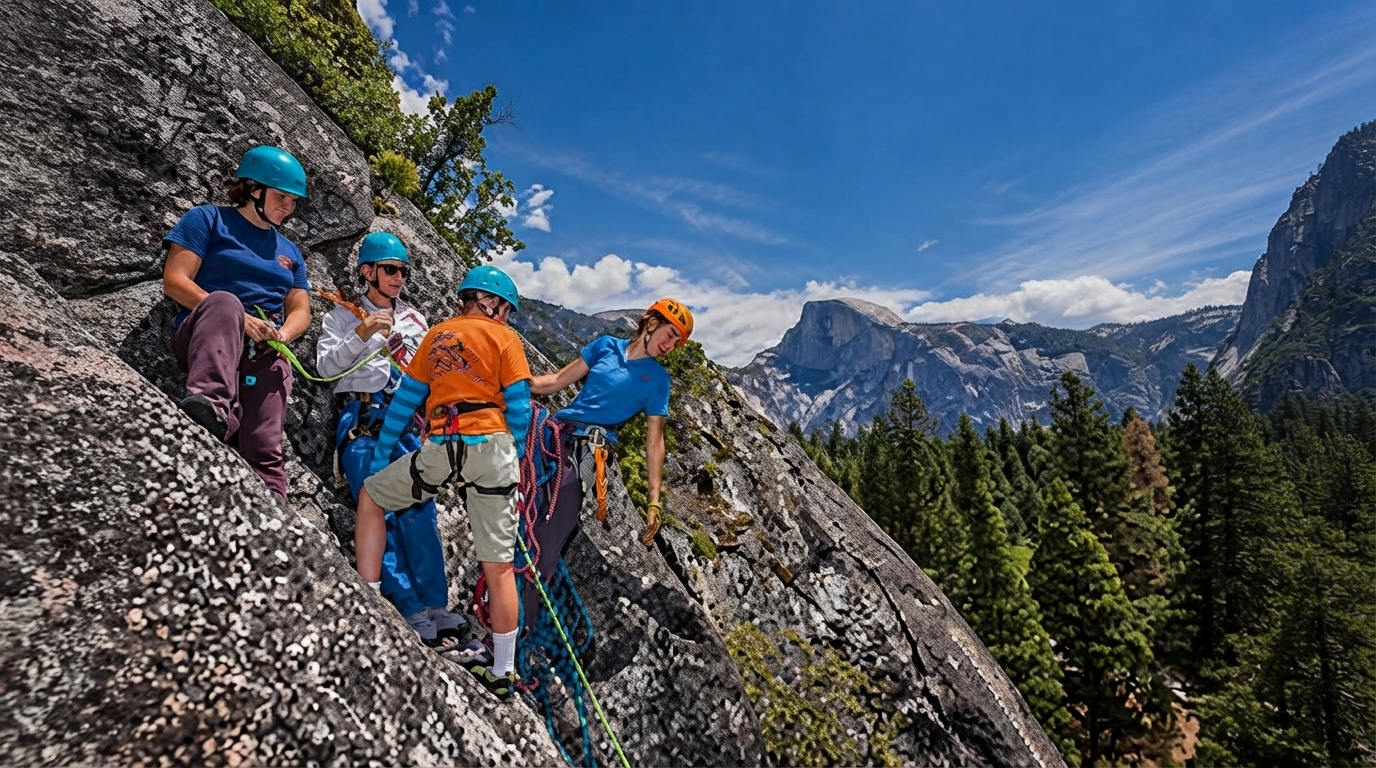
While scaling El Capitan may be for the experts, Yosemite’s granite is not only for seasoned climbers. First-timers should always climb with a qualified guide, and guided instruction is available within the national park through its authorised guide service. Courses typically progress from introductory sessions covering basic movement, belaying and safety through to more technical skills such as crack climbing and building anchors, with private and adaptive options for climbers with physical limitations. Starting on smaller crags on the valley floor is the best way to get a feel for Yosemite’s distinctive smooth granite before setting sights on anything bigger.
Watch the Climbers from El Capitan Meadow
You don’t need to leave the ground to experience Yosemite’s vertical world. Through the free Ask a Climber programme, a partnership between the National Park Service, Yosemite Conservancy and the non-profit Yosemite Climbing Association, experts set up telescopes near El Capitan Bridge so visitors can watch climbers inching their way up the wall, see climbing gear up close and get answers to the questions everyone asks. Do climbers really sleep on the rock? How long does it take to climb El Capitan? Binoculars from El Capitan Meadow work well too. Look for colourful haul bags first, as they are easier to spot than the climbers themselves. After dark, the headlamps of climbers camped on the wall twinkle across the granite like a second night sky.
Yosemite’s Climbing Heritage
Yosemite’s climbing story stretches back well beyond the big wall era, to the first ascent of Half Dome in 1875. Much of that history is preserved locally, with a permanent climbing exhibit at the Yosemite Valley Visitor Center and further collections in the gateway town of Mariposa. Together they trace how Yosemite became a testing ground for new techniques and equipment, from the pitons and ropes of the first big wall ascents to the clean climbing movement of the early 1970s, which encouraged climbers to protect the rock rather than damage it.
Give Back to the Park
That ethic of care lives on today. Founded in 2004 by Yosemite climber Ken Yager, Yosemite Facelift is the largest annual volunteer clean-up event in any national park. Held each September in partnership with the National Park Service, the free five-day event brings together climbers, families, locals and visitors to care for Yosemite after its busiest season, removing litter, restoring trails and protecting wildlife habitat. For travellers planning an autumn trip in future years, it’s a meaningful way to begin a Rock-tober adventure.
Planning an Autumn Climbing Trip
October days in Yosemite Valley are typically mild and sunny, but nights can be cold and conditions change quickly at higher elevations, so pack warm layers alongside climbing gear. Autumn is a popular time with climbers, so it pays to plan accommodation and campsites well in advance, whether staying inside the park or in the gateway communities of Mariposa County. Wherever you climb, follow Leave No Trace principles, stay on established approach trails and check current park conditions before setting out.