
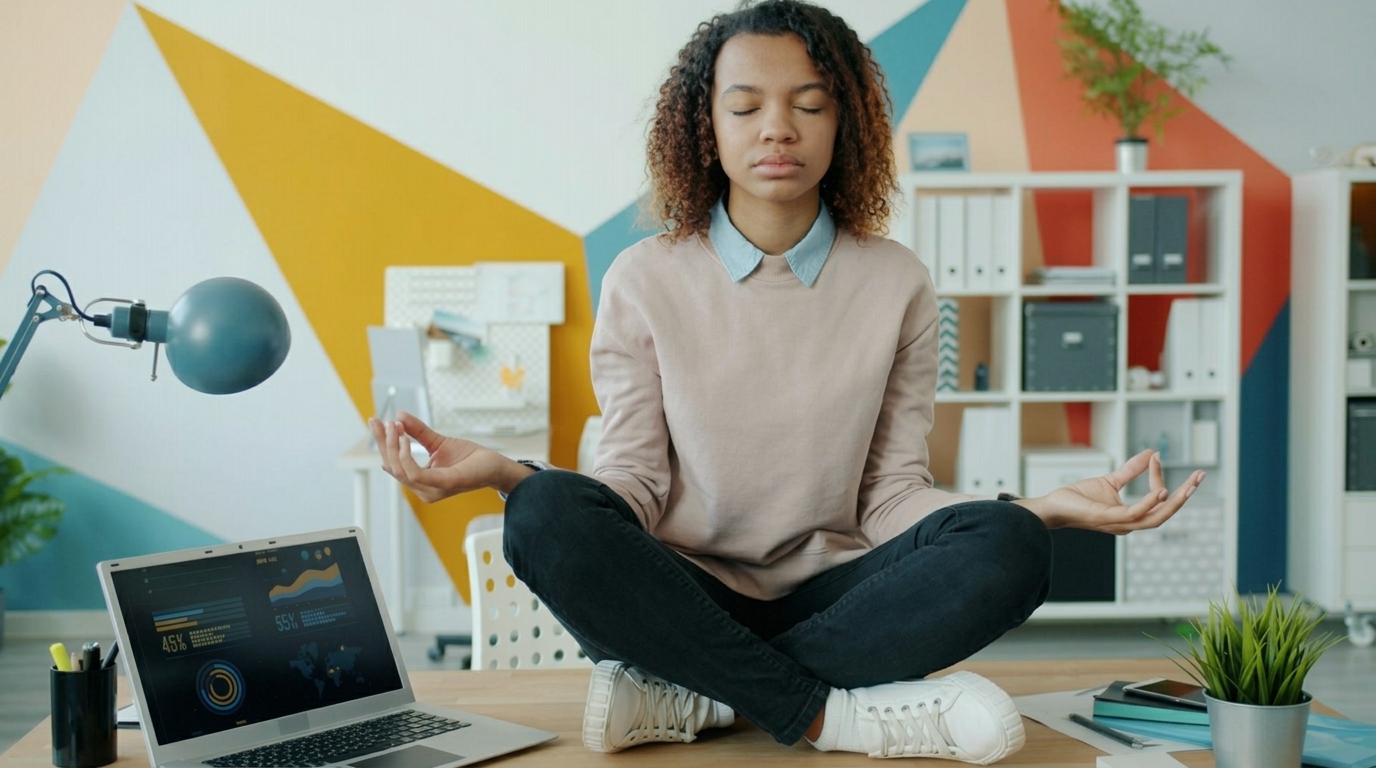
Meditation is one of the best ways to take time away from your day and re-centre yourself. With workplace stress and burnout levels being at an all-time high, the Founder of Oriental Wisdom Academy and one of Asia’s most influential business educators, known for bridging Eastern philosophy with modern leadership and management thinking, Professor Oliver Yue Zhao, has shared easy ways to start meditating at work.
Schedule a daily pause
One of the easiest ways leaders can model wellbeing is by normalising short mental breaks. This is one of those things that is viewed as a luxury in many workplaces, but is seen by the best leaders as a performance and retention strategy.
You can set aside a short window of just 5-10 minutes to step away from the noise. Making this a consistent daily ritual trains the brain to shift from reactive mode to a more grounded, relaxed state.
Some people think of meditation as “emptying the mind”, but it’s more about making reliable space to reset during a busy workday.
Start with posture and breath
Trying meditation for the first time is easier than you might think. Sit comfortably with a straight but relaxed spine, cross your legs if possible, and rest your hands gently in your lap. Gently close your eyes and bring your attention to your breaths. This helps signal to your nervous system that it’s safe to slow down, making it easier to distract from stressors.
Observe thoughts without judgment
Often, when you turn your attention inward to relax, you’ll notice thoughts and emotions arising “out of nowhere.” The key is not to suppress them, whatever arises is exactly what needs your awareness. Simply notice each thought as if you are watching clouds pass by. Do not chase, analyse or argue with it, instead, just let it be.
Use the “stay, don’t engage” technique
When a worry or recurring thought pops up, simply notice it’s there. There’s no need to analyse it or get caught up in where it’s leading. Just stay with it for a moment and let it pass on its own time. Over time, this can help break the habit of overthinking and make that constant mental chatter feel much quieter.
Track emotions in the body
After noticing an emotion, try and scan your body for where you feel it. Do you feel tightness in your chest? Heat in your stomach? Tension in the shoulders? Softly focus on that physical sensation without trying to change it. Acknowledging the body’s signals is a powerful way to process stress before it accumulates.
Practice “friendly acknowledgment”
When difficult feelings come up, try not to push them away. Instead, quietly acknowledge them by saying to yourself, “I know you’re here.” Simply recognising how you’re feeling can help you stop fighting against it. Often, that’s enough to take some of the weight out of the moment.
End with gratitude and intention
Before opening your eyes, bring a small smile to your face and silently thank yourself for being present in this moment. Offer a positive affirmation, such as “I am moving forward with courage and kindness”, to carry that calm energy into the rest of your day. This closing remark helps reinforce the sense of purpose in mediating.
Remember: stillness reveals inner light
Even a few minutes of quiet can help you step back from the noise of the day and see things more clearly. The more regularly you meditate, the easier it becomes to find that sense of calm when you need it most – whether you’re dealing with a difficult conversation, a stressful deadline, or simply feeling overwhelmed.
Taking that pause can also help you respond more patiently and thoughtfully, making it easier to work well with others, especially in busy or hybrid workplaces.