
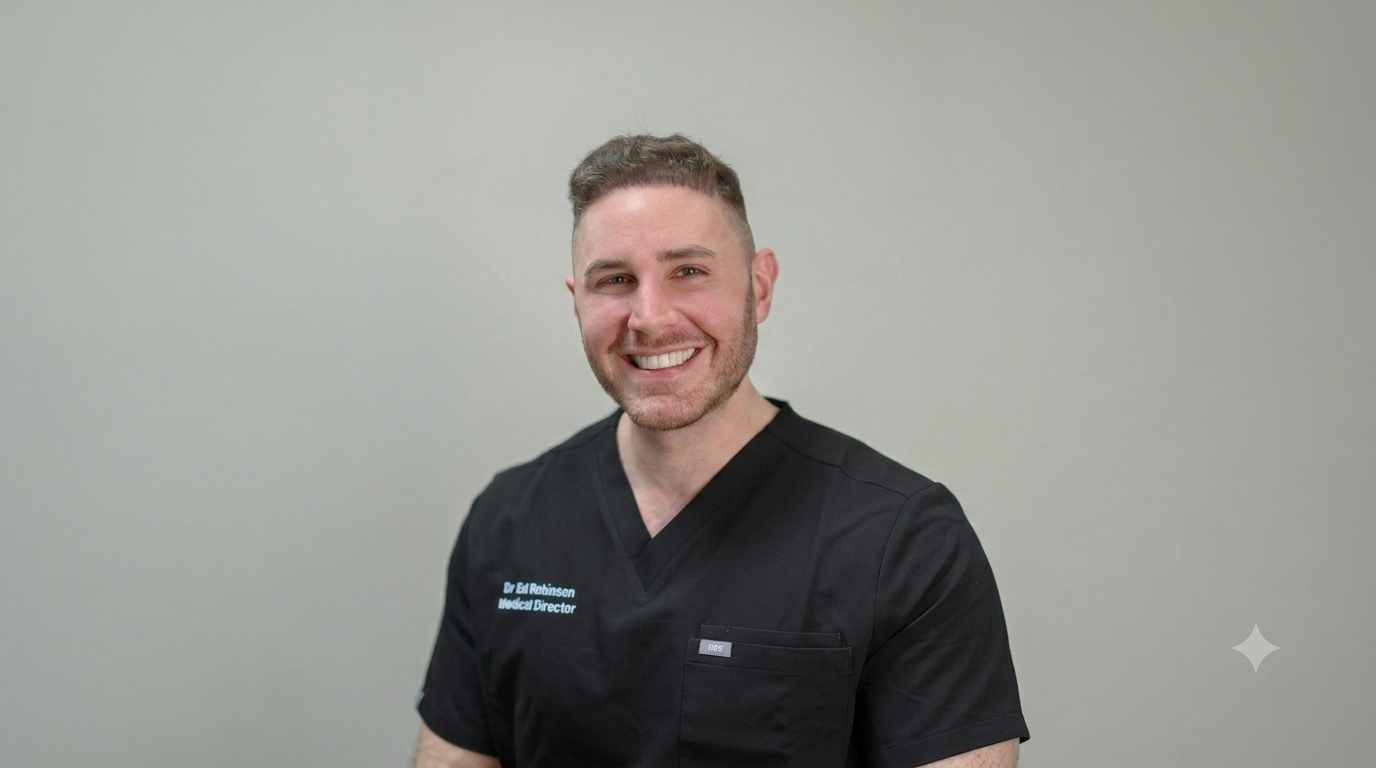
Aesthetic medicine has grown rapidly over the past decade, but the debate around safety, regulation and standards has too.
To some, it is an industry driven by trends, social media and quick fixes. To Dr Ed Robinson, it should be treated like every other branch of medicine, with clinical judgement, patient safety and evidence guiding every decision. That belief has shaped his career.
Dr Ed trained and worked as an NHS Anaesthetist, a role where precision isn’t optional, and every decision holds responsibility. In 2021, he brought those same standards into aesthetic medicine when he founded Dr Ed Robinson Aesthetics, believing patients deserved to be treated by a medically qualified doctor whose approach was grounded in science, safety and evidence.
Dr Ed said: “I wanted to open a clinic where patients could trust that every recommendation was being made for the right reason.
“My medical training has shaped every decision I’ve made, and I never want to compromise those standards.”
Dr Ed built his clinic around the principles he learnt in hospital medicine. Every treatment begins with a consultation. Every recommendation is evidence-based. Every patient is treated as an individual rather than a list of procedures.
He said: “People usually think aesthetic medicine is about changing the way someone looks. I’ve never believed that. The best treatments are the ones that leave people looking like themselves, just fresher and more confident.”
That philosophy has helped the clinic grow from a single practice into an established name with clinics in Cheshire and a growing presence on London’s Harley Street. Although he has since left the NHS to focus on his clinic, the principles he developed there are still at the heart of everything he does.
Thanks to his background in anaesthetics, Dr Ed is qualified to administer nerve blocks, allowing many procedures to be carried out with less discomfort, a technique few aesthetic doctors can offer.
For Dr Ed, however, aesthetic medicine extends well beyond injectables.
He has invested heavily in skin health, regenerative medicine and advanced laser technology, with his Cheshire clinic offering advanced Sciton laser treatments and the latest Ultherapy Prime technology. The clinic is also investing in an AI mole mapping device and has expanded its specialist team with the addition of a dermatologist.
While the technology is impressive, he is quick to point out that good results do not just come from technology.
He said: “Technology can do incredible things, but it will never replace good clinical judgement. Every patient is different, so every treatment has to be tailored to the individual.”
That same belief has led him to become a regular commentator on patient safety within the aesthetics industry.
As aesthetic treatments have become increasingly accessible, so have the risks. Dr Ed has used his platform to speak about the dangers of poorly regulated procedures, the importance of choosing appropriately qualified practitioners and the need for higher standards across the profession. His expertise has been featured in publications including The Times, GQ and the Daily Mail, where he has discussed everything from unsafe beauty treatments to the growing demand for male cosmetic procedures.
Dr Ed said: “One of the reasons I speak to the media is because there’s still so much misinformation around aesthetic treatments.
“Patients deserve honest advice so they can make informed decisions.”
Alongside treating patients, Dr Ed regularly shares his expertise with fellow practitioners and continues to promote evidence-based practice within the industry. He is an associate member of the British College of Aesthetic Medicine and believes the future of aesthetics depends on stronger clinical standards and better patient education.
That commitment to higher standards has defined his career from the beginning.
Not just helping people look their best, but helping to ensure aesthetic medicine earns the same trust and credibility as every other area of healthcare.
Dr Ed said: “I’ve never wanted to build a clinic that’s known for doing the most treatments. I’d rather build one that’s known for doing things properly. If patients leave feeling more confident and knowing they’ve been looked after safely, then we’ve done our job.”