Study finds infants’ immune systems respond very differently to the two viruses, with important treatment implications.
MEMPHIS, Tenn. and FARMINGTON, Conn., Feb. 25, 2026 /PRNewswire/ — Young infants hospitalized with respiratory syncytial virus (RSV) often become much sicker compared to those infected with SARS-CoV-2, the virus that causes COVID-19. In a study published today in Science Translational Medicine, scientists from St. Jude Children’s Research Hospital and The Jackson Laboratory (JAX) report that the two respiratory viruses trigger different immune responses. Those differences might explain why these two diseases have different clinical outcomes and require different treatment strategies.
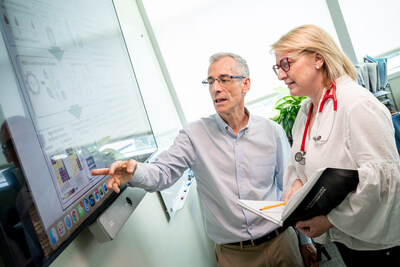
During the COVID-19 pandemic, physicians observed that infants admitted with RSV infection often had more severe symptoms than those hospitalized with SARS-CoV-2, despite both being respiratory RNA viruses. To understand these differences, the researchers compared the immune responses of infants hospitalized with either virus to those of healthy infants at a single-cell level. Measurements of proteins, genes and epigenetic signatures in the blood revealed the specific immune cells and signals central to these differences.
“We showed, for the first time, that two similar respiratory viruses, RSV and SARS-CoV-2, cause very different types of immune dysregulation in young infants,” said co-corresponding author Octavio Ramilo, MD, St. Jude Department of Infectious Diseases chair. “The host response differs depending on the infecting virus at the chemical, cellular and even epigenetic level.”
The researchers found that severe RSV in infants was linked to unexpectedly low levels of systemic inflammation and a poorly coordinated early immune response, primarily by a special set of immune cells called natural killer cells. This pattern contrasts with the hyperinflammatory immune response profile observed in infants with SARS-CoV-2 infection.
“What surprised us most was that the antiviral responses looked similar at first glance, but when we examined how immune genes were regulated, we saw striking differences,” said co-corresponding author Duygu Ucar, PhD, Professor at JAX. “RSV appears to reprogram parts of the infant immune system at the epigenetic level; which are molecular switches that control how genes are turned on or off.”
“These changes may help explain why RSV can lead to more severe disease and possibly influence how the immune system responds in the future,” Ucar concluded.
RSV suppresses immune response, increasing its severity
To find these differences, the researchers compared immune cells and proteins from blood samples derived from 19 infants hospitalized with RSV infections, 30 infants hospitalized with SARS-CoV-2 infections, and 17 healthy age-matched infants. Most infants in the study were around 2 months old.
Comprehensive single-cell analysis of the infants’ immune responses revealed that both viruses cause a similar rise in most interferons, antiviral molecules that interfere with viruses, but the analysis also revealed drastic differences.
“Most strikingly, we saw infants with RSV had significantly fewer numbers of natural killer cells, compared to those with SARS-CoV-2 infections,” said co-first author Asunción Mejías, MD, PhD, MsCS, St. Jude Department of Infectious Diseases. “In those patients, these cells also made less interferon-gamma, a key molecule to defend against viruses, which was strongly correlated with disease severity.”
“Integrating single cell technologies using advanced computational methods enabled us to not only identify immune response signatures in specific immune cell types but also associate gene expression with potential epigenetic regulators,” said co-first author Asa Thibodeau, PhD, Associate Computational Scientist at JAX. “Understanding immune differences at the transcriptional and epigenetic level will guide future studies and better treatments.”
The RSV response was also marked by lower interferon-gamma expression and reduced activity of key inflammatory signals (IL-1B, NF-KB) that normally help fight infection.
Providing clinical guidance through contrast with SARS-CoV-2
In contrast to RSV, SARS-CoV-2 generally causes significant immune dysregulation across multiple cell types. The researchers observed a significant increase in many pro-inflammatory molecules in these infants, such as TNF alpha and NF-κB activity. Clinically, this may explain why anti-inflammatory treatments, such as steroids, help some patients with severe COVID-19, while they have not helped patients with RSV, and may even be harmful.
“One very practical implication of our work is that we should not routinely give steroids to infants with RSV,” Mejías said. “RSV is already immunosuppressive; giving steroids that also suppress immunity may further impair the natural killer cell response combating the virus.”
RSV remains the primary cause of infant hospitalizations and the number two cause of infant mortality worldwide. The study’s results and methodology provide a blueprint for better understanding infant immunity in general.
“Globally, five million children die before the age of 5, half occurring in the first months of life due to infection, before vaccines are given,” Ramilo said. “With the tools we have developed, we have shown that we can start to uncover what’s happening in that early immunological window to begin improving those odds.”
Authors and funding
The study’s other co-corresponding author is Jacques Banchereau, of The Jackson Laboratory. The study’s other authors are Djamel Nehar-Belaid, Radu Marches, Giray Eryilmaz and Silke Paust, The Jackson Laboratory; Zhaohui Xu, Steven Josefowicz and Virginia Pascual, Weill Cornell Medicine and Bart Jones and Marie Wehenkel, St. Jude.
The study was supported by grants from the National Institutes of Health (U01 AI131386, U19 AI168632 and U01 AI165452) and the American Lebanese Syrian Associated Charities (ALSAC), the fundraising and awareness organization of St. Jude.
St. Jude Children’s Research Hospital
St. Jude Children’s Research Hospital is leading the way the world understands, treats, and cures childhood catastrophic diseases. From cancer to life-threatening blood disorders, neurological conditions, and infectious diseases, St. Jude is dedicated to advancing cures and means of prevention through groundbreaking research and compassionate care. Through global collaborations and innovative science, St. Jude is working to ensure that every child, everywhere, has the best chance at a healthy future. To learn more, visit stjude.org, read St. Jude Progress, a digital magazine, and follow St. Jude on social media at @stjuderesearch.
About The Jackson Laboratory
The Jackson Laboratory (JAX) is an independent, nonprofit biomedical research institution with a National Cancer Institute-designated Cancer Center. JAX leverages a unique combination of research, education, and resources to achieve its bold mission: to discover precise genomic solutions for disease and empower the global biomedical community in the shared quest to improve human health. Established in Bar Harbor, Maine in 1929, JAX is a global organization with nearly 3,000 employees worldwide and campuses and facilities in Maine, Connecticut, New York, California, Florida, and Japan. For more information, please visit www.jax.org.
 View original content to download multimedia:https://www.prnewswire.com/news-releases/differing-immune-responses-in-infants-may-explain-increased-severity-of-rsv-over-sars-cov-2-302697674.html
SOURCE St. Jude Children’s Research Hospital