

Gen Z has a word for almost everything now, and travel hasn’t escaped it. After sleepmaxxing and looksmaxxing comes travelmaxxing: the art of squeezing every possible experience out of a trip, more cities, more nights out, more memories made, all within the same limited time and budget. Research from Arival* in 2023 anticipated this shift, noting that 58% of Gen Z and Millennial travellers prioritised spending on experiences over things.
Apply that same instinct to a single destination: getting the absolute most out of one city. Take a leaf out of Gen Z’s book and call it citymaxxing, optimising your city experience. Packing in as many activities, tastes, sights and memory-making moments as you can, in the shortest possible timeframe.
The catch of course is that doing more often requires spending less somewhere else, and increasingly, that somewhere else is the hotel room. Taking London as an example, if you ask most people what they want from a day or night out in the UK capital, it’s not about the hotel room amenities. They want to be close to the restaurant they’ve been dying to try, the private karaoke room for the group hang, the friend’s birthday drinks that will definitely run past midnight. The room itself is simply where the night ends.
The minimal room built for a maximal trip
That shift in priorities is exactly what’s driving demand for a new breed of hotel: sleep-focused, design-led, and built around location rather than luxury.
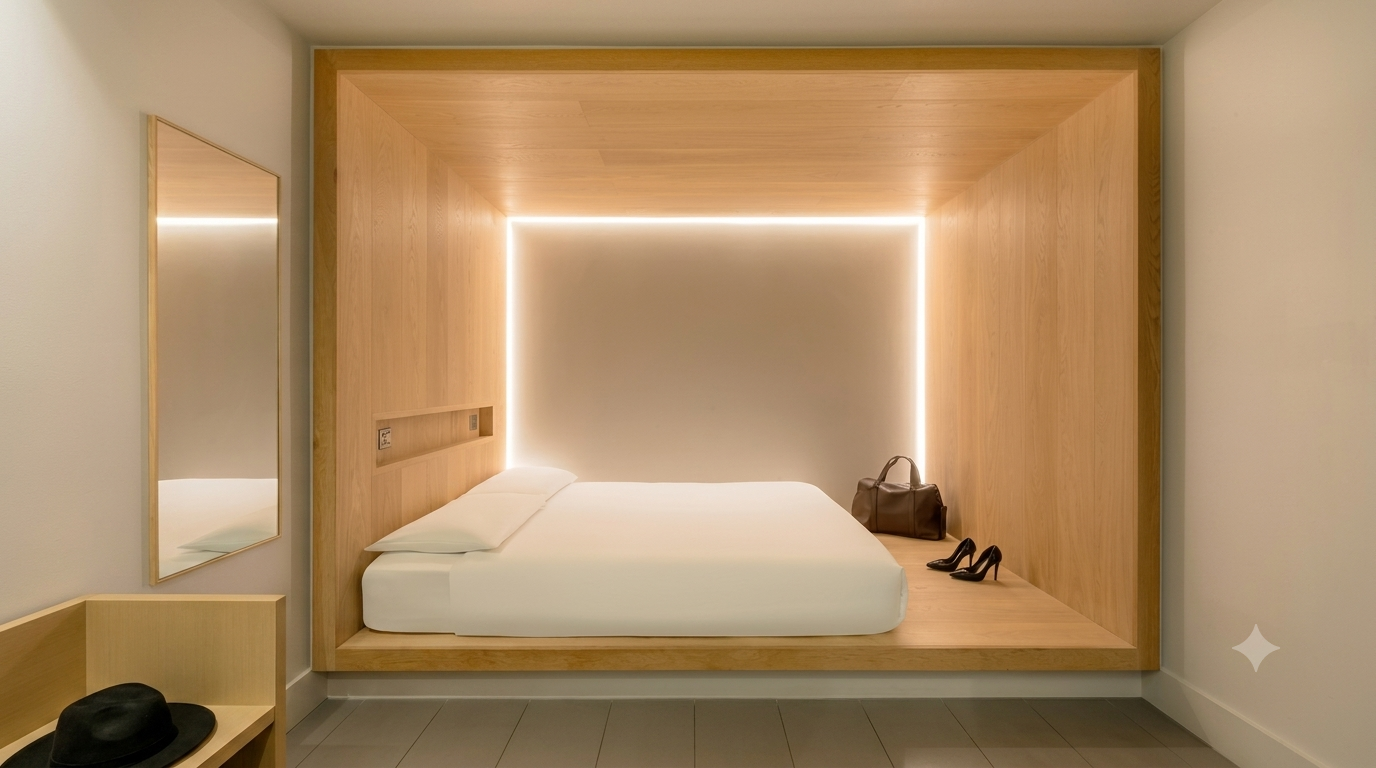
Zedwell Hotels have taken a minimalist approach, stripping the hotel room back to what really matters, and reinvesting into the two things guests value most: where they are, and how well they sleep. The group recently opened the world’s largest capsule hotel directly above Piccadilly tube station in central London. Each capsule is private, fully enclosed and sound insulated, with a Hypnos mattress and Egyptian cotton sheets doing the quiet, unglamorous work of a restful night. There’s no wasted space, no unnecessary amenity, nothing guests are paying for but not using. What there is, is a proper bed in the centre of London, steps from some of the best restaurants, theatres, bars and clubs the city has to offer, at a fraction of the price of a conventional hotel room in the same postcode.
That combination, savviness without compromise, flexibility without a premium price tag, is the real story behind the concept. Originally made popular in Japan, it’s a model that is gaining traction in European cities, with hotels offering pod and windowless rooms popping up in big cities across the UK, Sweden and the Netherlands.
It isn’t a downgrade dressed up as a trend; it’s a simply smarter way to spend a night away, or a night out, in some of the world’s most expensive cities.
A better answer to the last train home
For Londoners themselves, the appeal is arguably even sharper. Anyone who has cut a good night short to make the last train, or watched a taxi app quietly triple in price at midnight, knows the real cost of a big night out often has very little to do with the night itself. It’s the getting home that hurts.
A private, central, affordable place to sleep changes that equation entirely. Instead of racing for a train or absorbing a surge-priced fare home, visitors can stay in town, sleep properly, and wake up minutes from wherever the day takes them next. It’s a small decision with an outsized effect on how much of the evening actually gets enjoyed.
Good for visitors, good for the city
The knock-on effect of that shift benefits far more than the traveller. When accommodation costs less, spending doesn’t disappear, it moves. Research from the Centre for Cities** shows that overnight visitors typically spend around twice as much locally as day-trippers do. Every guest who chooses to stay over rather than rush home is, in effect, choosing to spend more of their evening, and their money, in London’s restaurants, bars, theatres and late-night venues.
That’s a meaningful shift for a city whose hospitality and nightlife businesses depend on exactly this kind of spend. Affordable, central accommodation doesn’t just serve the traveller looking to make their budget go further; it quietly supports the wider economy of the city they’ve come to enjoy.
Minimal isn’t the compromise, it’s the hack
For years, the measure of a good hotel stay was size: bigger rooms, bigger beds, bigger price tags to match. The instinct across hospitality has long been to add more. More space, more amenity, more cost, to justify a higher price. But ask most people what they actually want from a night in London and the answer rarely starts with square footage.
Travellers are getting savvier about where their money goes, and increasingly, that means spending less on the room and more on making the most out of where they are.
The smartest way to get more out of a city visit might just be asking less of your hotel room.
*Source: https://arival.travel/article/why-travelers-book-some-experiences-last-minute-and-others-in-advance/