As ski resorts across North America prepare for another busy winter, most travelers are thinking about fresh snow, new gear and getting back on the mountain. Far less visible is the extensive work happening behind the scenes to keep one of the most important parts of the resort experience operating safely and looking its best: the gondola.
Passenger cabins spend years exposed to intense UV, snow, ice, wind, temperature swings and the constant wear of skis, snowboards and thousands of riders. At many resorts, they are also operating far beyond the traditional winter season as mountain destinations expand into hiking, biking, sightseeing and year-round tourism.
Few people understand that lifecycle better than Dominique Bastien, an internationally recognized expert in gondola restoration and founder of The Gondola Shop. For more than 27 years, Bastien has restored and modernized passenger gondola cabins across North America and Europe, developing specialized restoration systems and working with transportation operators and tourism destinations around the world.
Ahead of the coming ski season, WorldLifestyler spoke with Bastien about what happens to gondolas after decades on the mountain, the surprising toll of weather and passenger traffic, why some aging systems are better candidates for restoration than replacement, and the enormous amount of maintenance passengers never see.
You’ve spent nearly three decades restoring passenger gondola cabins across North America and Europe. As resorts prepare for ski season, what are the biggest issues you tend to see in cabins that have been in service for years?
The biggest thing is that gondola cabins age slowly, so sometimes people working around them every day do not notice how much they change over the years, as they are looking at the technical components more than the aesthetic ones.
Windows are obviously a big one. They get scratched, hazy, and damaged by UV and humans. But when you look closer, you also start seeing worn door components, damaged rubber, loose or worn hardware, deteriorated seats, and sometimes damage repaired years ago that needs to be looked at again.
When the season is very close to opening, ski resorts do not think about aesthetics. They care about functionality: door mechanism is the biggest issue; they have to maintain it constantly off-season and in-season. They need to make sure it opens the right way and locks when they get out of the terminal. With the weight of skis and snowboards on the door rack, sometimes it’s a very big challenge to adjust those as parts wear out fairly quickly. The gondola is the lift that, in 99% of ski resorts, is used most. It’s right there at the main entrance and is very often the first lift people take to go up the mountain. It has to work perfectly during business hours.
Your work has exposed you to gondola systems operating in very different climates and destinations. How do snow, ice, UV exposure, wind, and heavy passenger traffic affect cabins differently over time?
I have worked on gondolas and trams in very different environments. At high altitude in Switzerland, for example, you deal with cold, snow, ice and very strong UV. On the opposite side, I have worked in Vietnam in a very hot and humid environment, where moisture and sometimes salty coastal air can create completely different problems, especially corrosion.
Gondolas are made of many different materials: aluminum, steel, plastics, paint, rubber, fabric ans sometimes wood. All those materials react differently depending on the environment. High elevation and UV are probably some of the biggest enemies of plastics, paint and rubber. Then you add snow, ice, wind, and huge temperature changes, and these cabins live a pretty hard life. In humid or coastal environments, moisture and salt in the air can be much harder on metal components and connections. Door mechanisms in humid environments don’t do well if not checked regularly.
Passenger traffic creates a completely different kind of wear. Ski boots, skis, snowboards and equipment are constantly hitting floors, doors and interiors. Also human creation – graffitis is a big one. Carving on windows, paint, etc. On a very busy lift, thousands of people can go through the same cabin in a relatively short period of time.
Something else people do not think about is cable grease. Depending on the lift and weather conditions, it can end up on the cabins and windows and become very difficult to remove after years.
Surprisingly though, these cabins can last a very long time when they are well designed and properly maintained. CWA in Switzerland, one of the manufacturers I have worked with for many years, has built some extremely durable products. Just this month, gondolas in Switzerland were retired after 56 years in service. Honestly, I think that says a lot about how long this type of equipment can last when it is properly built and maintained.
Every location is different. I have seen the same model of gondola age completely differently depending on where it operates. That is something you only really understand after seeing cabins that spent decades operating in very different parts of the world.
You’ve worked with both major ski destinations and transportation systems internationally. Are there noticeable differences between North American and European resorts in how they approach gondola maintenance, restoration, and modernization?
Yes, there are differences, but I don’t think one is necessarily better than the other.
Europe has a much larger and older ropeway industry. Gondolas are also used much more commonly as transportation, not only for skiing. Regulations around maintenance can be stronger too. After a certain number of operating hours, cabins and components have to go through specific inspections, sometimes involving the manufacturer. Because the manufacturers are based there and there are so many installations close together, access to parts and specialized knowledge is also very different.
One thing I noticed though, is that European operators generally care a little less about aesthetics. They have so many lifts and gondolas that a scratched cabin, faded paint or graffiti may stay in service much longer. In North America, especially at high-end ski resorts, that would often not be acceptable. The gondola’s appearance became part of the guest experience and the resort’s image.
North America is also much more spread out. Many resorts are operating European gondola systems that are 20, 25 or 30 years old, thousands of miles away from where they were originally manufactured. Shipping cabins and parts across the United States or Canada can become a major part of a restoration project. You cannot always order an old part from Europe and expect it to arrive next week, it takes months.
For maintenance, North American operators follow manufacturer recommendations and applicable regulations. I think this is one reason restoration and fabrication became particularly important in North America. The systems can still be mechanically very good, but keeping older European cabins operating and looking good here requires a different approach.
As more ski resorts expand into year-round tourism, have you seen that change the type of wear gondola cabins experience or how frequently they need restoration?
Definitely. Years ago, many gondolas had a long off-season. Now some systems are operating almost all year, with skiing in winter and biking, hiking, sightseeing, weddings, and tourism during summer. Some resorts are now making more money in the summer than winter.
That means more operating hours, more passengers and much less time for maintenance teams to work on the cabins.
Mountain biking is probably one of the biggest challenges if the resort uses the gondola cabins to transport bikes. Bikes are hard on the interiors. Handlebars, pedals and tires can scratch or damage windows, upholstery, floors and doors much faster than normal passenger use. On rainy days you also have mud, water and dirty bikes constantly going in and out, so the cabins need a lot more cleaning. Mix that with wedding venues and its a bit of a puzzle to organize.
The other challenge is simply finding time to restore them. As resorts become year-round destinations, the maintenance window between winter and summer keeps getting smaller. Sometimes getting the cabins out of service long enough to do the work becomes almost as challenging as the restoration itself.
Much of your work involves extending the life of existing gondola cabins rather than simply replacing them. What factors should a resort consider when deciding whether restoration makes more sense than purchasing new equipment?
The first question should always be: what does the resort actually need from that lift for the next 10 or 20 years?
If they need significantly more capacity, or the electrical, electronic or mechanical systems are reaching the point where major upgrades are required, then restoration may not make sense anymore. At some point you are putting too much money into an old system and a new lift becomes the better decision.
But replacing a lift is a much bigger decision than ordering new gondolas. You may need new terminals, foundations, electrical infrastructure, engineering and sometimes completely different facilities. The cost can become very high very quickly.
Downtime is another major consideration. Depending on the project and location, replacing a major lift can take it out of service for a season and in some cases much longer. For a resort where that lift is critical to moving guests, you also have to calculate what losing that capacity means to the operation and revenue.
On the other side, if the lift is mechanically and structurally good, has enough capacity for the foreseeable future and the main components can still be maintained, restoration can make a lot of sense. Then you look at the condition of the cabins, inspection history, availability of parts and realistically how many more years the operator wants from the system.
People also sometimes think they can simply buy new cabins for an older lift. It is not always that easy. The cabin has to work with the existing hanger, grip, terminals, door opening system and other components. Once you start changing one thing, sometimes you realize you have to change five other things with it.
So I don’t think there is one answer. Sometimes a 25-year-old lift absolutely should be replaced. Other times the lift itself is in very good condition and replacing millions of dollars of infrastructure because the cabins look 25 years old makes no sense. That is where proper inspection, restoration and modernization can give an existing system many more useful years.
After working on gondola cabins for so many different destinations, have there been particular projects that stood out because of the location, history, or importance of the gondola to the visitor experience?
There have been many, but the Peak 2 Peak Gondola at Whistler is probably the installation that blew my mind the most.
I was at Whistler when the Peak 2 Peak was installed, and seeing that project happen was incredible. The span of the cable between Whistler and Blackcomb, the height above the valley and the engineering involved was honestly out of this world to me. Even after being around gondolas for years, there are still installations that make you stop and think about what engineers are capable of building.
I also have a soft spot for older gondolas with history. Some cabins have been part of a resort for 30, 40 or even 50 years. Generations of families remember riding them. At that point the cabin becomes more than transportation. It becomes part of the history and identity of the mountain.
That is probably one of the things I enjoy the most about restoration. Sometimes you are preserving something people have a real emotional connection with.
As skiers and snowboarders return to the mountains this season, what would most travelers be surprised to learn about the restoration and maintenance work that goes into the gondolas they ride?
Probably how much work happens behind the scenes that they will never see.
A passenger gets into a cabin, rides for 8 minutes, and gets out. They do not see everything that happens during the off-season and throughout the year to keep that lift operating.
Beyond the cabins, lift maintenance teams inspect and service the complete system. Towers, sheave assemblies, grips, hangers, cables, bullwheels, brakes, bearings, electrical systems and safety systems all require regular attention. The cable itself has to be inspected and monitored for wear and changes over time. Some inspections are still very hands-on, while newer technologies like drones are also being used to inspect towers and other difficult-to-access areas.
These maintenance teams know their lifts extremely well. They are constantly listening, looking, measuring and checking things that a passenger would never notice. A small change in noise, vibration or wear can tell an experienced lift mechanic that something needs attention.
Then there are the cabins themselves. They are inspected, cleaned, repaired and maintained throughout their life. Windows, doors, hardware, seats, rubber components and many other parts need attention after years of passenger use and mountain exposure.
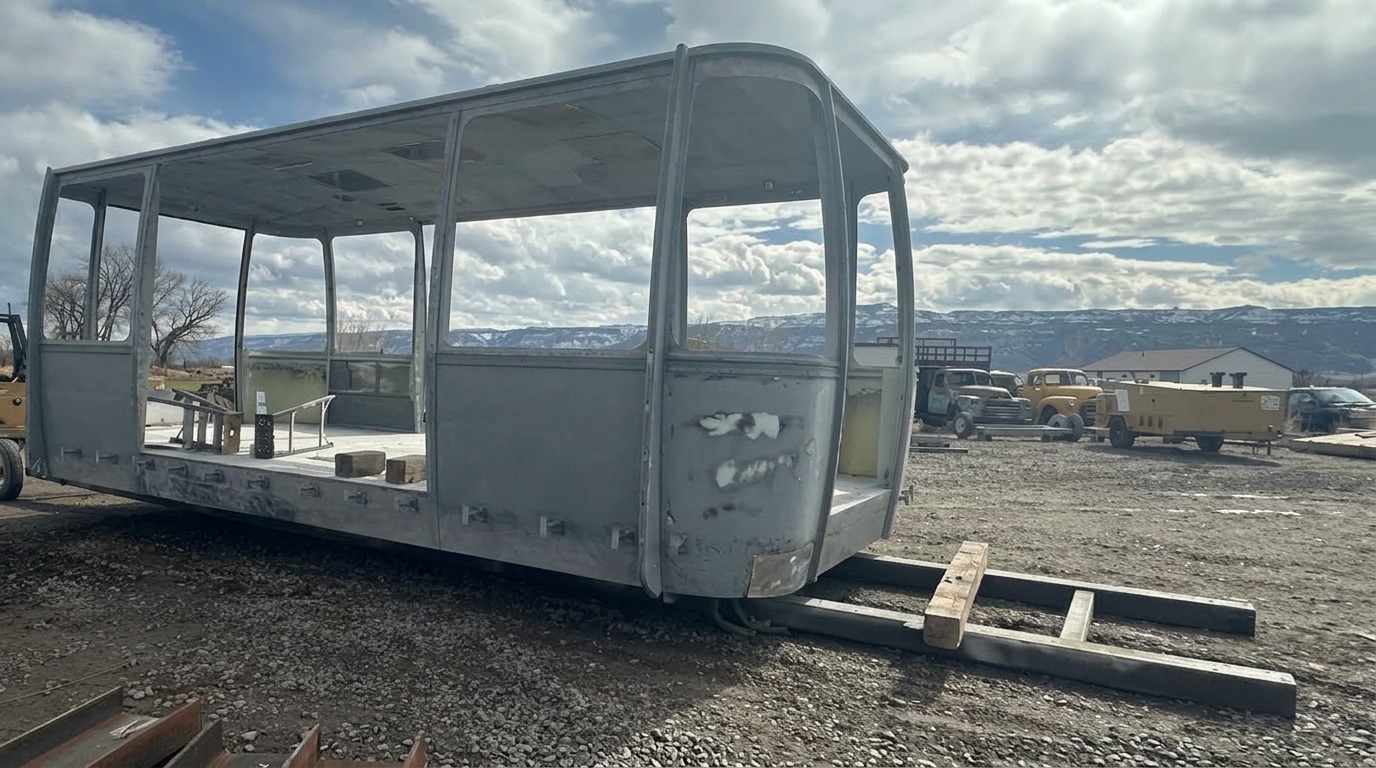
For a full restoration, a cabin can be completely disassembled and rebuilt piece by piece. What looks like a fairly simple box hanging from a cable actually has a lot of components and a lot of engineering behind it.
And that is probably how it should be. If passengers get in, enjoy the view and never think about any of this, everybody behind the scenes did their job.