“For years, adventure travel has been shaped by a familiar assumption that the most challenging trips belong to the young. But the reality we are seeing in 2026 tells a very different story.
At EverTrek, more than half of our customers so far this year are aged 45 and over, while around one in six are aged 60 or above, showing that some of the world’s biggest trekking adventures are increasingly being booked by travellers midlife and beyond.
And these travellers are not necessarily choosing the gentler option.
They are booking some of the world’s most iconic trekking adventures, including Everest Base Camp, Mount Kilimanjaro and the Inca Trail.
For me, this is one of the most interesting developments in adventure travel because it challenges the belief that our appetite for challenge naturally reduces with age.
As the years go by, people may gain something just as important as physical fitness – confidence, perspective and a greater determination to stop putting their biggest ambitions off for another day.
A changing picture of adventure travel
Looking at EverTrek’s 2026 booking data, where age information was available, 54% of our customers were aged 45 or over. Within that group, 58% were male and 42% were female, and 86 is the age of our oldest traveller to date.
Regionally, the 45+ audience is also spread across the UK rather than concentrated in one particular area.
The strongest pockets of demand are in South East England and North West England, both accounting for around 16% of UK-based 45+ bookings. The top three trips booked by this age group are Everest Base Camp, Kilimanjaro and the Inca Trail.
The rise of the over-60 adventurer
Perhaps the most interesting finding in our data is the strength of demand among people aged 60 and over. Around 16% of our customers so far in 2026 are in this age group. Among them, around 66% were male and 34% female.
Everest Base Camp is the clear leader among our aged 60+ travellers, accounting for around 39% of booking demand. Mount Kilimanjaro follows at around 16%.
That represents a slight increase compared with 2025, when 37% of customers aged 60 and over booked Everest Base Camp. This challenges the idea that getting older automatically means looking for quieter or less ambitious holidays.
More time, confidence and freedom
There are several reasons why I believe adventure travel is becoming increasingly attractive to people aged 45 and over. The first is time.
For many people, growing older brings a shift in priorities. Children may be older and careers may be more established. Some people have greater financial freedom than they did in their twenties and thirties, while others are approaching retirement or have recently retired. That can create an important question – if not now, when?
For many travellers, the idea of trekking to Everest Base Camp has been sitting on a bucket list for years, sometimes decades. But work gets busy and family life takes priority – people tell themselves they will do it next year. Then one day, they reach a point where they realise that waiting is no longer particularly appealing.
One of the first things I did after becoming CEO in 2024 was go on these trips myself, with Nepal being the first. I realised very quickly that not everyone has the financial means or time freedom to spend two weeks hiking. That is one of the reasons we have introduced shorter trips at EverTrek, making these destinations and experiences more accessible to people who have families, limited annual leave or tighter financial constraints.
We have seen a 190% growth in our shorter trips between 2025 and 2026, which shows there is a real appetite for more accessible ways to experience adventure. Often, those shorter trips become the driving force for doing something bigger and bolder next time.
Many customers return for more than one adventure, with over 30% going on more than two treks with us. Someone might start with a shorter, more manageable adventure and then realise they are capable of much more.
The second factor is confidence – age can bring experience and self-belief. People in their fifties and sixties often know what they want from a trip and may be less worried about what other people think.
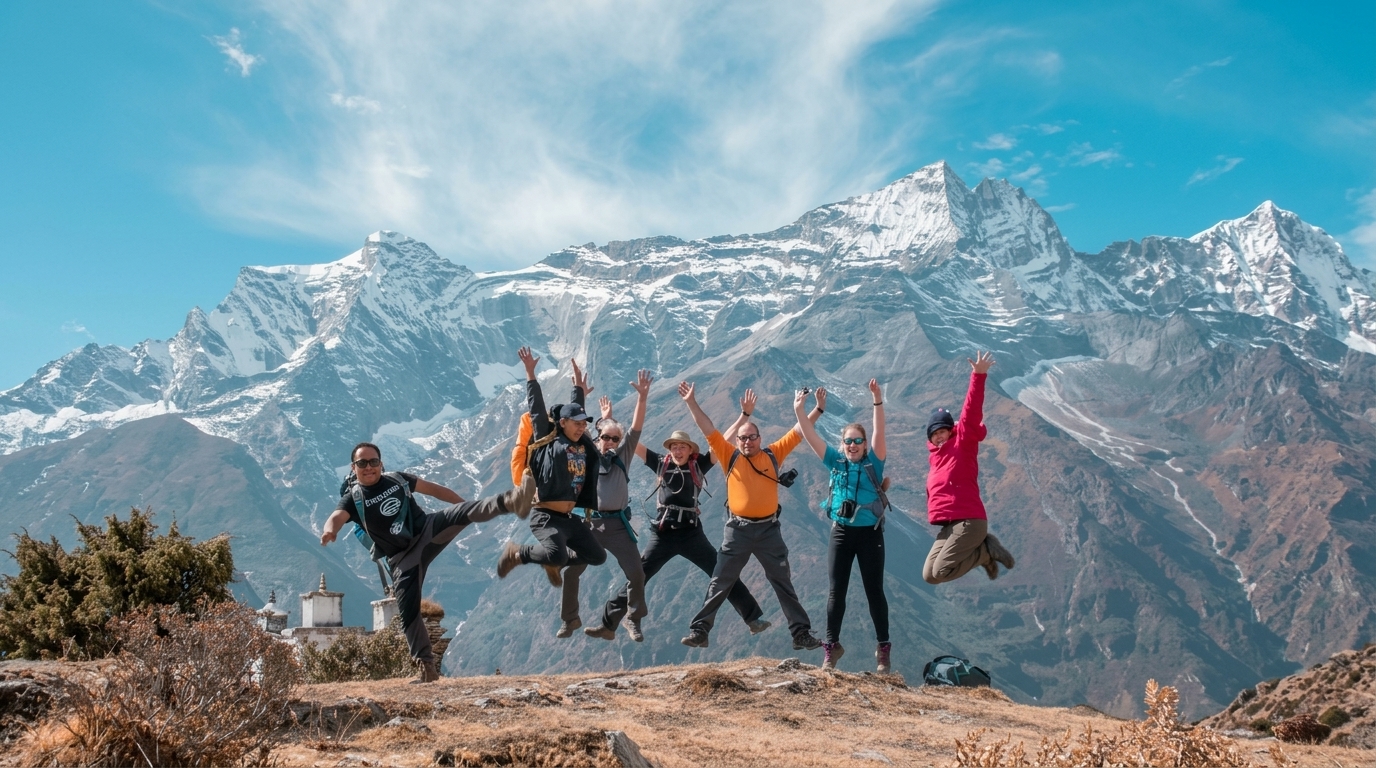
There is something incredibly powerful about standing at Everest Base Camp or reaching the summit of Kilimanjaro and knowing that you earned that moment step by step.
Adventure is increasingly about achievement
I also believe the definition of a great holiday is changing. For a long time, holidays were primarily seen as an opportunity to rest and escape. Increasingly, however, people are also looking for experiences that give them stories, memories and a genuine sense of achievement.
That is one of the reasons adventure travel can be so powerful – the experience does not end when the trip finishes. The confidence and memories that come from completing a major challenge can stay with people for years.
There is also something about having a physical reminder of what you have achieved. You very rarely have photographs on the wall at home of yourself lying on a beach, but you might have one of yourself summiting a mountain. It becomes a talking point among friends, and you can inspire and motivate the people around you to think about what they might achieve themselves.
This can be particularly true for those who have spent much of their lives caring for others, building careers or putting their own ambitions on hold.
Age should not be confused with ability
None of this means age is irrelevant when it comes to adventure travel. Someone aged 65 who trains consistently and prepares properly may be far better equipped for a major trek than someone much younger who assumes youth alone will carry them through.
Preparation, realistic expectations and choosing the right adventure are so important. But age alone does not tell us what someone is capable of achieving. Our 86-year-old who booked with us underlines just how misleading age-based assumptions can be.
Adventure is for every generation
While the growth among older travellers is particularly striking, it is important not to lose sight of the bigger picture. Although more than half of our bookings are now from customers aged 45 and over, that also means 46% are from people under 45.
That is a significant proportion and proves that adventure travel does not belong to one particular age group. Younger travellers are continuing to seek out challenging experiences, while older generations are increasingly refusing to let age define what they can do.
For us, that is ultimately what makes adventure travel so exciting. It can mean different things to different people and can be a first major challenge, a long-held bucket-list ambition or the next step after discovering a passion for trekking.
A nationwide appetite for adventure
Among our 45+ audience, the strongest demand comes from the South East and North West of England. Among the over-60 group, the North West accounts for the largest proportion of UK-based bookings at around 21%.
Our customers come from different parts of the UK and different stages of life, but they have the same desire to do something memorable and push themselves beyond their everyday routines.
Looking ahead, I expect the adventure travel market to become even more diverse. People are living longer, staying active for longer and increasingly questioning old assumptions about what different ages are supposed to look like.
We may be finally recognising that adventure has no age limit.”