
Acne affects more people than most of us realise. Around one in nine UK adults are currently affected, and more than 70 per cent of sufferers are over 24. It is not simply a teenage rite of passage that clears up on its own; for millions of people across every age group, it is a persistent, often demoralising condition. Potent creams and antibiotics may offer short-term relief, but because they treat the surface rather than the root causes, the cycle tends to continue, where the skin clears and the acne returns. That is because many of acne’s root causes are not on the skin at all, they are in the gut.
The gut-skin axis is emerging as one of the most important and underexplored factors in acne at any age. When your gut is disrupted, whether in bacteria, inflammation or digestion your skin tends to be one of the first places it shows. The good news is that gut health is something you can act on, and the effects can be faster than most people expect. Three changes make the biggest difference: eating well (and resetting your diet if needed), reducing chronic stress and cutting out skincare products that contain parabens – addressing all three gives your body a genuine chance to clear your skin from the inside out.
The gut-skin axis
Emerging research suggests the gut-skin axis may play a role in persistent acne. The gut and the skin are in constant conversation, and when the gut senses disruption, those signals can show up on the skin as acne.
When the balance of bacteria in the gut is disrupted, a state known as dysbiosis, it triggers a low-grade but persistent inflammation. The chemical signals behind that inflammation travel through the bloodstream and over time, they reach the skin where it manifests as acne. A healthy gut produces compounds called short-chain fatty acids, which help keep inflammation in check and maintain the integrity of the gut lining. When that lining becomes compromised the now-familiar concept of ‘leaky gut’, where bacteria and waste compounds begin to seep into the bloodstream, sets off a cycle that tends to surface, quite literally, on the skin.
The gut is not simply where food gets processed. It is, in effect, the control centre of the immune system. When it is struggling, the skin tends to be one of the earliest places where those internal shifts become visible.
How what you eat affects your gut
One of the most immediate things people can change is their diet, and the results can be reassuringly fast.
Foods like white bread, pastries and white rice cause a sharp spike in blood sugar that triggers androgens, the hormones responsible for excess oil production. Cutting back on high-glycaemic foods is one of the most impactful changes anyone with acne can make, and results can sometimes be visible within weeks.
An effective starting point is what might be called a period of gut rest: pulling back on sugar, wheat, dairy and ultra-processed foods, giving the digestive system room to recalibrate. This is not about moderation, it is about giving the body a genuine window to repair, free from the foods that have been silently driving the problem. Oily fish, leafy greens, quality protein and polyphenol-rich foods like berries and pomegranate seeds all feed the beneficial bacteria that help dampen inflammation. Omega-3s, found in mackerel, sardines, flaxseed and walnuts, help fortify the skin’s own defensive barrier. To further help the liver detox, supplementing with a high quality source of milk thistle can also be hugely beneficial.
Dairy deserves a particular mention. The association between higher dairy consumption and acne severity in Western populations is consistent enough across the research to warrant attention, particularly with skimmed milk, where the effects appear most pronounced.
Stress and the gut-brain-skin axis
Another major contributor to acne is chronic stress. The gut, the brain and the skin are connected through a two-way network that researchers call the gut-brain-skin axis, and when stress shifts from occasional to sustained, the effects ripple through the whole system. When cortisol rises, the gut lining becomes more vulnerable, and the hormonal cascade that follows tends to surface on the skin. Breakouts are not arbitrary, they are the body’s way of signalling that the nervous system has been running on empty for too long.
Telling someone to simply stress less is, of course, entirely unhelpful. However, prioritising sleep and regular movement can start a genuine shift out of a state of chronic activation. Whether this takes the form of practicing breathwork, medication, yoga, grounding exercises, or vitamin D exposure, small changes have measurable downstream effects on gut health, hormonal balance and skin condition.
The products you use and how that affects your skin
The most consistently underestimated driver of compromised gut health and acne is the role that traditional skincare products themselves play in disrupting the very system they are claiming to repair. Parabens, the synthetic preservatives found in a large proportion of conventional cleansers, moisturisers and cosmetics, are endocrine disruptors. They are absorbed through the skin, accumulate in human tissue, and have been shown to alter the bacterial balance in the gut, interfering with immune function and the hormonal regulation that, when thrown off, drives acne. Someone who is diligently overhauling their diet while still reaching for products full of hormone disruptors, parabens (compounds used as preservatives in pharmaceutical and cosmetic products), synthetic fillers and water (which makes up 50-70% of most formulas), may be inadvertently working against themselves at a biochemical level.
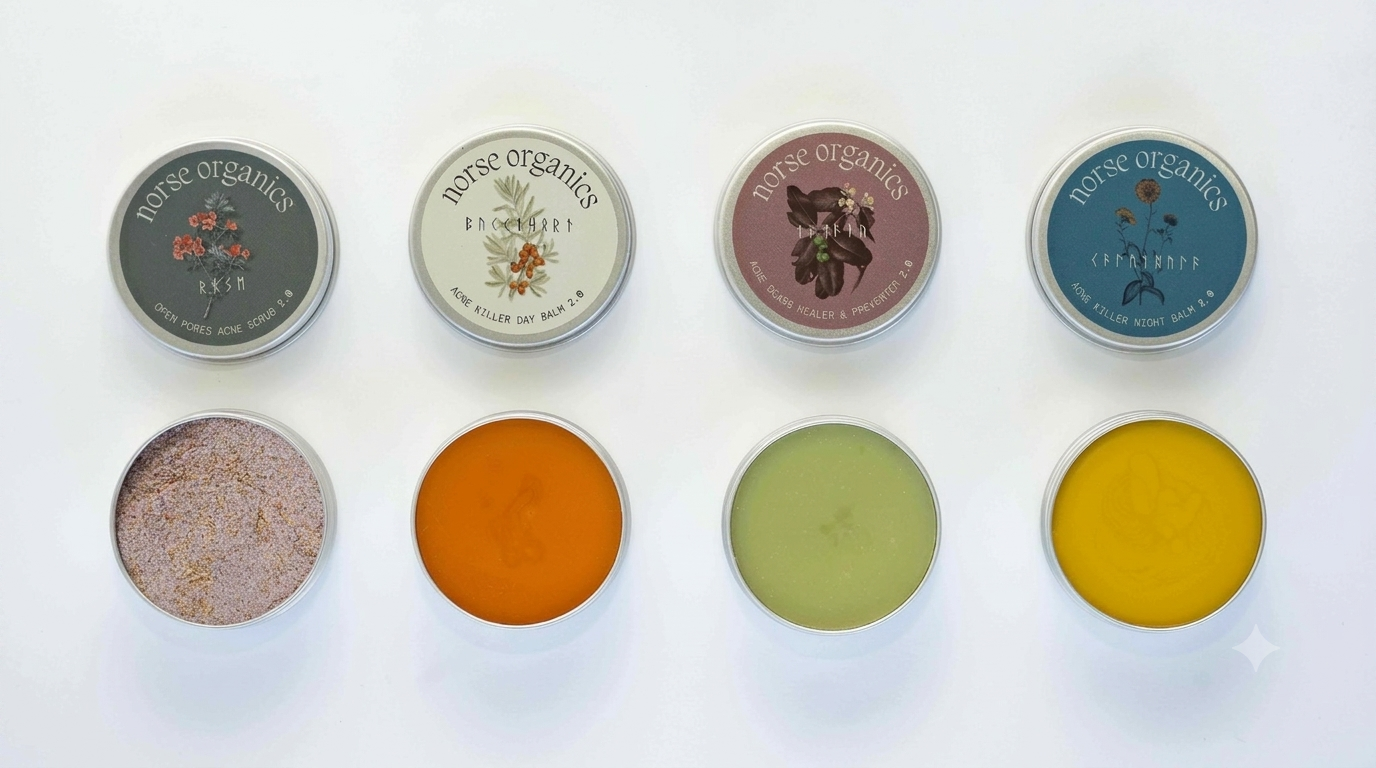
Switching to paraben-free, natural formulations removes a source of quiet hormonal interference from a system already under pressure, in an attempt to restore balance in hormonally changing skin. The best, all-natural, waterless, formulations actively support the skin’s own microbiome rather than stripping it, preserving the barrier function that keeps environmental triggers out and the skin’s immune response properly calibrated.
Addressing the root causes of acne
Persistent acne, whether it arrives in your teens or your forties, never has a single cause, and it rarely has a surface-level solution. Stronger treatments and antibiotics can manage symptoms but often don’t address the underlying causes, may break down the skin barrier and fail to treat acne. Without addressing the root causes, a disrupted gut microbiome, chronic inflammation and hormonal interference, the cycle is likely to continue long after the prescription runs out.
The evidence points consistently in one direction: the gut. Eat well, reduce stress and remove the traditional skincare that is full of hidden hormonal disruptors from your routine, and you give your body the conditions it needs to heal from within. The skin is not failing you. It is communicating. For most people, the fastest way to change what it is saying is to start with what is happening inside.