
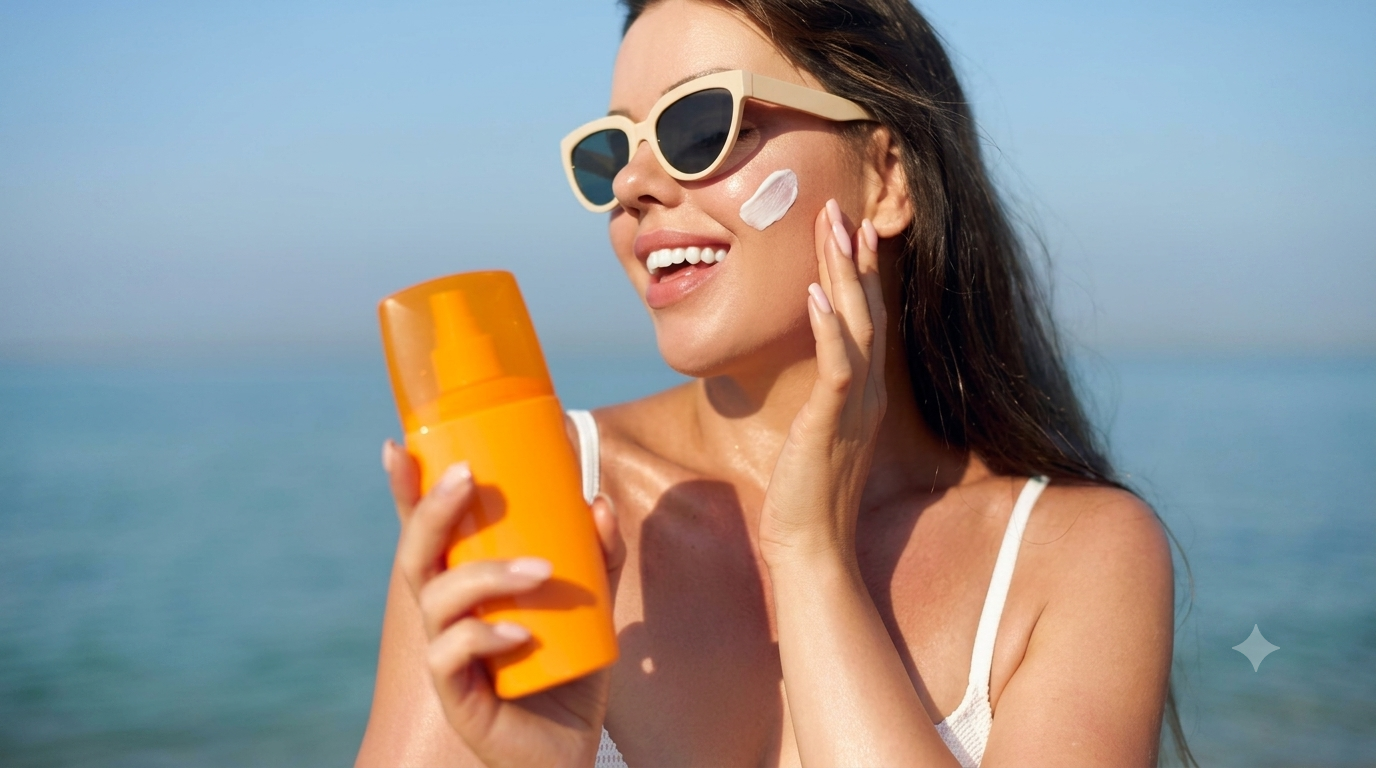
A Viral Health Trend With Real-World Consequences
A growing number of social media posts are encouraging people to reject sunscreen, tan deliberately, or treat sun exposure as harmless if they follow the “right” diet. The claims vary, but the message is often the same, saying sunscreen is supposedly toxic, ultraviolet radiation is being exaggerated, and tanning is being rebranded as a sign of health.
That message is not just misleading. It directly conflicts with decades of public-health evidence showing that ultraviolet radiation damages skin and increases the risk of skin cancer. The World Health Organisation states that both solar radiation and sunbeds are classified as carcinogenic to humans by the International Agency for Research on Cancer.
What UV Radiation Actually Does to Skin
Ultraviolet radiation is invisible energy produced by the sun and by artificial tanning devices such as sunbeds. It can cause short-term damage, such as sunburn, and long-term damage, including premature skin ageing, pigmentation changes and skin cancers.
A tan is not proof that the skin is becoming stronger or healthier. The International Agency for Research on Cancer describes tanning as a response triggered by UV-induced DNA damage, while NHS advice is clear that there is no safe or healthy way to get a tan.
One of the most common arguments made against sun-safety advice is anecdotal: “My father worked outside all his life and never had skin cancer.” Individual experiences matter personally, but they do not overturn population-level risk. Many health risks are cumulative and probabilistic, meaning that not everyone exposed to a hazard will develop disease, but the risk rises across a population.
The “Sunscreen Causes Cancer” Claim Is Not Supported by Evidence
One of the most dangerous myths circulating online is that sunscreen causes cancer. The stronger evidence points in the opposite direction: too much UV exposure is a major cause of skin cancer, and sun protection helps reduce that risk.
Cancer Research UK says that too much UV radiation can cause skin cancer and estimates that up to 9 in 10 melanoma skin cancer cases in the UK could be prevented by staying safe in the sun and avoiding sunbeds.
That does not mean sunscreen should be treated as a magic shield. It means it should be used as one part of a sensible sun-protection routine, alongside shade, clothing, sunglasses and avoiding the strongest midday sun.
Why Social Media Makes the Problem Harder
Health misinformation is particularly effective online because it is often presented with confidence, emotion and personal testimony. A viral video can feel more persuasive than a public-health leaflet, especially when it is delivered by someone young audiences already trust.
A 2026 study in PLOS Digital Health found that most of the highly viewed sunscreen-related TikTok videos it analysed promoted sunscreen use. However, the smaller number of videos criticising or disparaging sunscreen attracted disproportionately high levels of likes, shares and comments.
That distinction matters. The issue is not that every sun-care post online is harmful, but that contrarian claims can travel quickly and be rewarded by engagement-driven platforms.
Young People Are Especially Vulnerable
Teenagers and young adults are often the audience most exposed to beauty trends, tanning culture and influencer-led health advice. When bronzed skin, visible tan lines or “natural sun exposure” are repeatedly framed as aspirational, risky behaviour can start to look normal.
This concern sits within a wider debate about children’s online safety. The UK’s Online Safety Act places duties on platforms to protect children from harmful content, and Ofcom has set out child-safety measures requiring tech firms to act against harmful online experiences.
The UK Government has also announced new rules intended to restrict under-16s’ access to social media and limit harmful features on some online services. Whether people support a ban or prefer other safeguards, health misinformation should be recognised as part of the child-safety conversation.
Vitamin D Does Not Justify Burning or Tanning
Another common anti-SPF argument is that sunscreen blocks vitamin D. Vitamin D is important, but deliberately burning or tanning is not a safe strategy for managing it.
The NHS advises that everyone in the UK should consider taking a daily vitamin D supplement during autumn and winter, and some people may need supplementation throughout the year.
The WHO also recognises that small amounts of UV exposure help vitamin D production, but warns that overexposure can harm the skin, eyes and immune system. In practice, anyone worried about vitamin D deficiency should seek medical advice rather than using online tanning claims as a health plan.
Sunscreen Is Regulated, Not Random
Some online posts imply that sunscreen is an unregulated product category full of hidden dangers. In Great Britain, cosmetic products placed on the market must comply with safety rules under retained cosmetics regulation, and UV filters are subject to assessment and permitted-use conditions.
Ongoing safety review is not evidence that sunscreen is unsafe. It is part of how consumer health protection is supposed to work.
People with sensitive skin, allergies, acne-prone skin or specific medical conditions may need advice on choosing a suitable product. That is different from telling the public to avoid sunscreen altogether.
What Sensible Sun Protection Looks Like
The safest message is also the simplest: protect your skin before it burns. The NHS advises using at least SPF 30, applying sunscreen generously, reapplying regularly and spending time in the shade when the sun is strongest.
Cancer Research UK recommends a combination of shade, clothing and sunscreen with at least SPF 30 and a 4- or 5-star UVA rating.
Broad-spectrum protection matters because SPF mainly reflects protection against UVB, the rays most associated with sunburn, while UVA also contributes to skin ageing and longer-term skin damage. Hats, sunglasses and tightly woven clothing are practical tools, not optional extras.
Sunbeds Are Not a Safer Alternative
Sunbeds are sometimes promoted as a controlled way to tan, but they also expose skin to ultraviolet radiation. Cancer Research UK warns that sunbeds, sunlamps and tanning booths use harmful UV rays and increase the risk of melanoma skin cancer.
Avoiding sunbeds is one of the clearest sun-safety decisions a person can make. If someone wants a tanned appearance, cosmetic fake-tan products are a safer option than UV tanning, although they do not protect the skin from the sun.
The Real Test: Who Benefits From the Advice?
A useful question for any viral health claim is: who is qualified to say this, and what evidence are they using? A confident influencer is not automatically a reliable medical source.
Good health advice should be consistent with established evidence, transparent about uncertainty and careful not to replace medical guidance with ideology. When a post claims that sunscreen is more dangerous than UV radiation, that is a warning sign.
Sun safety is not about avoiding the outdoors or living in fear of daylight. It is about enjoying time outside while reducing avoidable damage to the skin.
Evidence Should Beat Engagement
Social media trends come and go, but UV damage can accumulate over decades. The online glamourisation of tanning may look harmless in a short video, but the consequences of repeated sun damage can be lifelong.
Young people deserve better than medical myths packaged as wellness content. They deserve clear, evidence-based advice: seek shade when the sun is strongest, cover up, use broad-spectrum SPF 30 or higher, reapply it properly, avoid sunbeds and check changing moles or skin lesions with a qualified healthcare professional.
The sun can be enjoyed safely. It should not be treated as harmless simply because misinformation has made that idea fashionable.
World Health Organization — Ultraviolet radiation
International Agency for Research on Cancer — Ultraviolet radiation and cancer
Cancer Research UK — Sun, UV and cancer
PLOS Digital Health — Sunscreen misinformation on TikTok
UK Government — Online Safety Act collection
UK Government — New rules to protect children online
NHS — Vitamin D
UK Government — Cosmetic products regulation, Great Britain
NHS — Sunscreen and sun safety
Cancer Research UK — Sun safety
Cancer Research UK — Sunbeds and skin cancer