

Marler carries one message to the world’s largest food safety conference this week: no rinse, no chlorine wash and no post-harvest process in commercial use will remove Cyclospora from lettuce. The only place to stop it is upstream, in the water.
NEW ORLEANS, July 29, 2026 /PRNewswire/ — The federal government has now named a nine-state Cyclospora outbreak traced to shredded iceberg lettuce from Taylor Farms de Mexico and served at Taco Bell restaurants. As of July 24, FDA and CDC put that outbreak at 1,947 illnesses and 98 hospitalizations across Illinois, Indiana, Kansas, Kentucky, Michigan, Ohio, Oklahoma, Pennsylvania and West Virginia.
The named outbreak does not describe the season. CDC’s surveillance page counted 4,173 laboratory-confirmed domestically acquired cases as of July 21, across 41 states, with 308 hospitalizations — and CDC is aware of more than 7,400 additional cases not yet laboratory confirmed, most of them in Michigan and Ohio. Add what the fifty states are posting on their own dashboards and the floor is roughly 15,500. Michigan alone has reported 8,176 cases and 160 hospitalizations. Michigan normally sees about fifty a year. Over the comparable window last year, May 1 through mid-July, CDC recorded 249 domestically acquired cases nationwide.
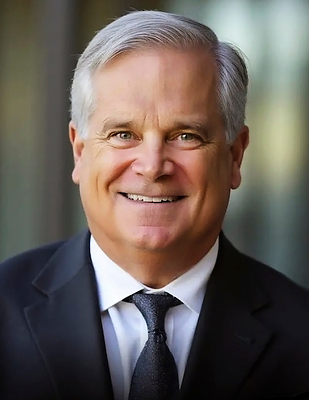
Bill Marler, managing partner of Marler Clark and a food safety lawyer since the 1993 Jack in the Box E. coli outbreak, is in New Orleans this week for IAFP 2026, the annual meeting of the International Association for Food Protection, with a single argument about why this outbreak happened and why it will happen again.
There is no validated kill step for Cyclospora on ready-to-eat produce. Washing is partial at best: a 2021 study in *Foods* found a minute under cold running water removed at least eighty percent of two other parasites but only thirty-nine percent of Cyclospora from raspberries, and no method removed all of it. Chlorine does not work, and that is FDA’s own position, written for farmers: chlorine and other common anti-microbial chemical treatments are not effective against C. cayetanensis. Heat works — and heat destroys lettuce. The parasite cannot be grown in culture, so every industry control built for leafy greens points at bacteria and ends in a chemical intervention this organism swims straight through.
“Every process this industry validated, was validated against bacteria. Cyclospora is not a bacterium, and the chemistry that kills E. coli does nothing to it — FDA says so in its own fact sheet. If you cannot make contaminated lettuce safe, then the entire answer is keeping it from being contaminated in the first place.”
Cyclospora has one reservoir, and it is the human gut. When it turns up on lettuce, human feces reached that lettuce or the water that grew it. That makes water the control point, and it is not being controlled for this parasite. Dr. Mark Moorman, until recently the director of FDA’s Office of Food Safety, told CNN this week that investigators have never definitively identified the cause of a Cyclospora outbreak — not one, in thirty years — and that no law or rule requires a farm to test its irrigation water or its produce for it. Testing is voluntary, and he said FDA does not have that lever. Microbiologist Jennifer McEntire, in the same reporting, put the mechanism plainly: water is the number one route, and the open question is how human waste gets into it — portable toilets emptied in the field, a leaking septic tank, a sewer that overflows after heavy rain.
The California and Arizona Leafy Greens Marketing Agreements, covering better than ninety percent of domestic leafy greens, already require growers using surface water for overhead irrigation to treat that water in the twenty-one days before harvest. Read what the requirement asks for and it is an EPA-registered antimicrobial, validated and verified, with success measured by generic E. coli — chlorine-family chemistry, selected for bacteria, scored by a bacterial indicator. Microfiltration, ozone and ultraviolet treatment, the interventions FDA names for regions where the parasite is endemic, are required of no one. And the field at the center of this outbreak is in Guanajuato, which no LGMA metric reaches at all.
“Water treatment is already mandatory in the leafy greens industry. It is just aimed at the wrong organism. We are testing for generic E. coli, which FDA states will not identify this parasite, while human-specific fecal markers that would identify the exposure sit unused. The mandate exists. It points the wrong way.”
This is not the first time the same facility has been at the center of a national outbreak. FDA traced the 2013 Cyclospora outbreak in salad mix to Taylor Farms de Mexico’s plant at Doctor Mora, Guanajuato — the same facility implicated this summer. The environmental assessment FDA and COFEPRIS conducted then covered the processing plant and five ranches, and its second recommendation told the firm to determine whether Cyclospora was a reasonably likely hazard in that growing region and, if so, to re-evaluate the wash step. Thirteen years later, no public document shows that determination was ever made. Roughly eight hundred feet from that processing building sits Balneario Las Fajanas, a public thermal-water bathing complex with pools, slides, showers and changing rooms, open every day of the year and visible in satellite imagery three years before that assessment was conducted.
None of the underlying science is contested. In 2023 the National Advisory Committee on Microbiological Criteria for Foods delivered FDA a full report on *Cyclospora cayetanensis* in produce stating that the oocysts resist many of the common chemical treatments used against bacterial pathogens in the produce production environment and in agricultural inputs, agricultural water among them. That report has been sitting at the agency for three years. Its subcommittee was co-chaired by the scientist who is now chief science officer of the International Fresh Produce Association.
Marler is asking regulators and the industry for five things: treat pre-harvest agricultural water with microfiltration, ozone or ultraviolet light rather than chlorine chemistry; test irrigation water for human fecal markers instead of generic E. coli; name Cyclospora outright in the pre-harvest agricultural water rule and require importers to document treatment that works on protozoa; close the field sanitation exemption that leaves operations with fewer than eleven hand laborers without a required toilet or handwashing station; and restore surveillance — Cyclospora came out of FoodNet last July, it is not among the targets of CDC’s national wastewater system, and the Food Traceability Rule that would have put lot-level records in FDA’s hands within twenty-four hours cannot now be enforced before July 2028.
“The people I represent ate lunch. They did not have a laboratory, and neither did the restaurant, and neither did the distributor. Somebody upstream had to decide whether the water was safe, and the rules we have written do not require anyone to ask that question about this parasite,” stated attorney William Marler.
Marler Clark represents people sickened in this outbreak and has filed cases naming Taylor Farms entities and Taco Bell as defendants, including Ayyad v. Pacific Bells, LLC and Caruso v. Taco Bell Corporation, et al. in the Northern District of Ohio and Hercula v. Taco Bell of America, LLC, et al. in the Eastern District of Michigan.
Marler will be at IAFP 2026 at the Ernest N. Morial Convention Center in New Orleans through Wednesday, July 29, and is available to reporters.
About Marler Clark
Marler Clark, The Food Safety Law Firm, is the nation’s leading law firm representing victims of foodborne illness. The firm has represented thousands of individuals in claims against food companies whose contaminated products have caused Cyclospora, E. coli, Salmonella, Listeria, Campylobacter, hepatitis A and Shigella illnesses, and has litigated food safety cases in nearly every state. Bill Marler began representing victims of foodborne illness in 1993, when he represented Brianne Kiner, the most seriously injured survivor of the Jack in the Box E. coli O157:H7 outbreak. He founded Food Safety News in 2009 and testifies regularly before Congress on food safety policy.
 View original content to download multimedia:https://www.prnewswire.com/news-releases/nine-state-cyclospora-outbreak-tied-to-taco-bell-and-taylor-farms-now-at-1-947-confirmed-illnesses–and-food-safety-lawyer-bill-marler-says-there-is-no-way-to-wash-the-parasite-off-302838136.html
SOURCE Marler Clark, The Food Safety Law Firm
