
In 2014 I got a job alert email, the first line of which said, “Could you find the price of an apple in Liberia?” It sounded intriguing, so I clicked it. Three weeks later I got the job, and started out as a Data Collector. Ten years, eight passports, and around 100 countries later I retired.
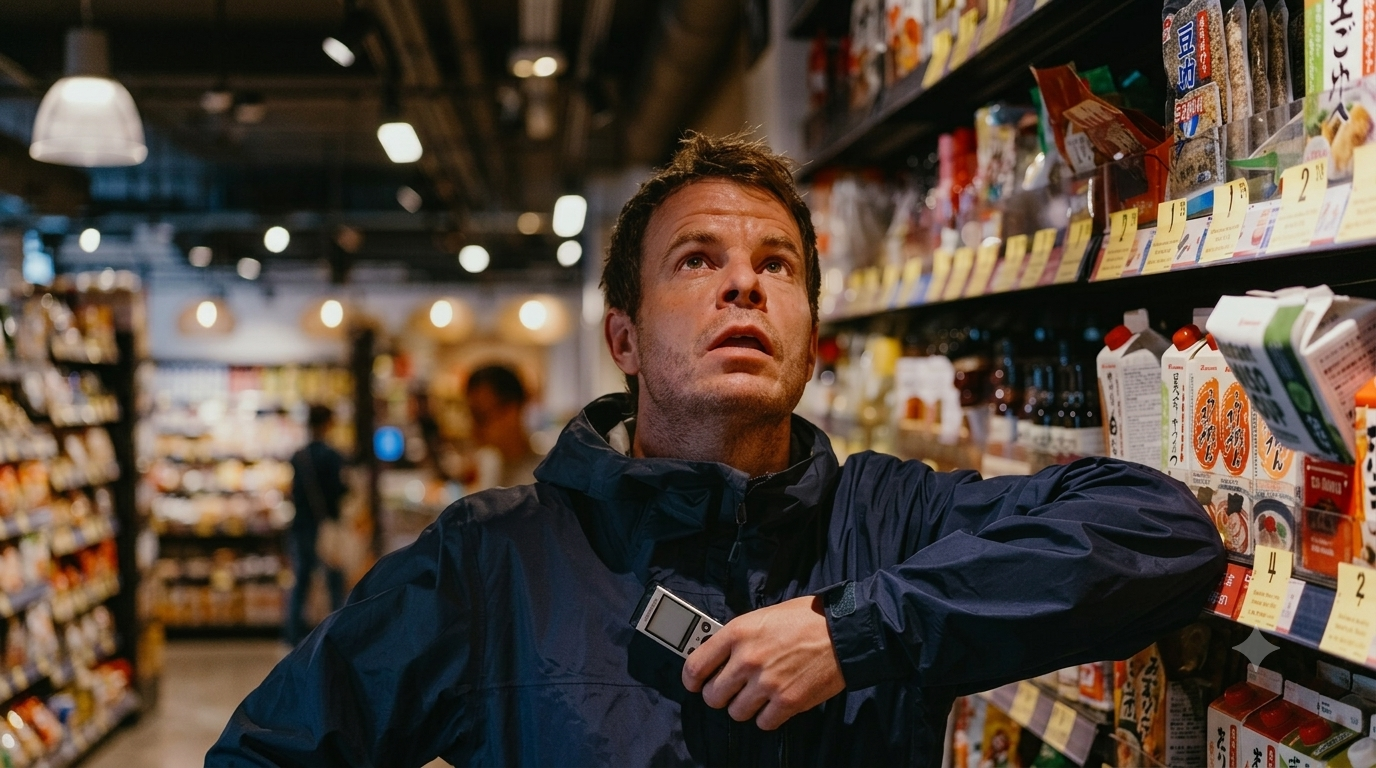
Here’s how it worked…companies move people around the world for work, but how do they accurately calculate employee salaries, particularly in fast-paced economic environments? Well, my job was to travel to major cities around the world and find the prices of day to day goods and services. I’d record all the prices onto a Dictaphone, type them up, and the data would be processed by a team back in London.
Cost of Living Basket
The list of items was called the Cost of Living Basket, and comprised around 160 things. Item number 1 was White Bread, item 2 Brown Bread. Item 32 was olive oil, item 61 was bananas, and item 82 a bar of soap, to give just a few. You could find the first 90 or so in a supermarket. Then there were recreational goods (item 104 tennis balls), electronics (item 123, a Fridge Freezer), clothing (item 134, a blouse), even services (item 144 Gym membership) and meals out. “160 things that make up a life,” I would say.
I’d have about two days per city to collect everything (or everything that was available at least). Then it was onto the next city, and I’d start the process again. The days were long, and mostly spent on my feet. Then when I was travelling to the next location I’d transcribe all the recordings. I’d estimate I’ve got at least a thousand hours worth of recordings of me monotonously listing prices.
Six month stints!
Every six months I’d get a new list of locations to cover which kept the job so fresh. I planned and booked everything myself and would spend hours on itineraries, how to link up the cities efficiently, which routes were possible at which times.
The job forced you to explore. I’d be walking in and out of shops all day often asking for prices or clarifying what services an outlet offered. I’d get haircut prices (for men and women), dip into dry cleaning and shoe repair shops, queue up to ask for the price of a cinema ticket or an airmail stamp. Car servicing prices were often hardest to get, mainly because I didn’t have a car and so would often make one up on the spot.
Siberia to Sudan
For a data collector, the best supermarkets in the world are ones with clear labelling. Without any labelling you’d have to improvise. I remember once in a supermarket in Tajikistan doing farm animal impressions at the butcher counter to confirm which cuts of meat were which. We got there in the end, but beef mince was quite a tough mime.
One of the major perks of the job was being allowed to take holiday in locations I went to for work. I’ve would always try and factor a few days into trips so that I didn’t just see places solely through their major supermarket chains. I’ve taken the Trans-Siberian, got the Artic Ferry up the coast of Greenland, seen the Pyramids of Meroe in Sudan and spent a week travelling through Iran to Persepolis.
A decade on the road, round the world
What did I learn from roving about supermarkets scanning the shelves for prices for a decade? Well, grocery wise, the world is actually quite similar. I’d find boxes of Kellogg’s Corn Flakes in the middle of the Pacific Islands, and blue packs of Barilla pasta in Siberia. I can’t recall a city in the world where I didn’t see 100g of Nescafe Gold instant coffee.
People always asked why we didn’t just get all this information online. When I started in 2014, there were still lots of locations where we weren’t able to get a full picture of prices just going online. There was value to be had by sending people in person to investigate. With the travel restrictions during covid I was able to get much more of a scope of what was available online around the world, so the job changed.
I’ve ‘retired’ now, and am documenting my experiences in a book and I’m telling some of these stories in a show at the Edinburgh Festival in August. Looking back I always feel thankful to my younger self that I took up the opportunity and stuck with it for so long. When I started I remember thinking “ah I’ll do this for a year maybe then get a proper job”. A decade on, and I don’t regret a second.