
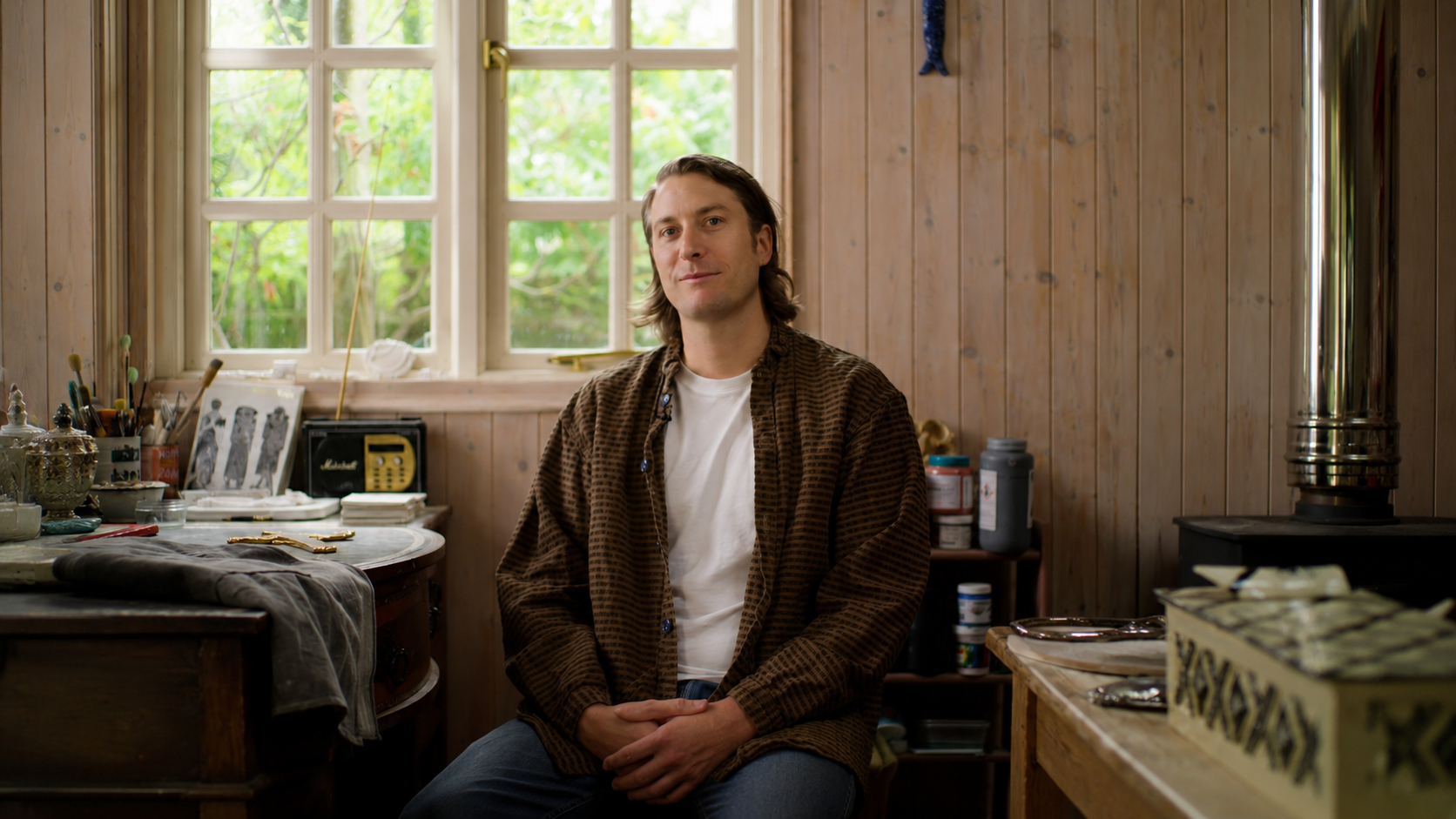
I’m a practising GP and a contemporary sculptor and I’m the person responsible for turning that sculptural practice into something financially viable: the strategist, the salesperson, the brand-builder (i.e. The business manager). Three roles, one life, and very little separation between them. If that sounds unusual, the data suggests it’s becoming the new normal.
According to the Office for National Statistics, more than 1.2 million people in the UK now work multiple jobs, a figure that’s grown steadily over the past decade. Research from IPSE, the association for independent professionals, shows that portfolio careers have risen consistently as more people choose to diversify what they do rather than anchor everything to a single role. The “one career for life” model is fading.
I didn’t set out to build a portfolio career. Medicine came first; the vocation. Sculpture developed alongside it, not as an escape from medicine but as something equally necessary. A different kind of attention. A different language for the things I was thinking about.
For a long time, I kept the two worlds fairly separate, at least in my own mind. The clinic was the clinic. The studio was the studio. But the more seriously I took the sculptural work, the more I understood that producing it was only ever half the task. The other half, the part nobody romanticises, was everything that needed to happen after the work was made.
The myth of the artist in isolation
There’s a persistent image of the artist as someone solitary, unbothered by commerce, focused only on the work. It might describe some people’s experience. It has never described mine.
Making the work is the easy part. What I wasn’t prepared for was the discipline required to bring the work into the world effectively. To build relationships with galleries. To understand how collectors think and what they’re looking for. To find the right framing for pieces that resist easy categorisation; work that requires a degree of context before its meaning fully lands. To think about pricing, about timing, about where and how the work should be seen and by whom. This, I came to realise, is a career in itself. Not an adjunct to the creative practice, but something that runs alongside it.
What medicine taught me about all of it
Working as a GP shapes how you think in ways that are difficult to fully articulate until you notice them operating somewhere else. You learn to hold complexity without needing to resolve it too quickly. You learn that the presenting problem is rarely the whole story. You develop a tolerance for uncertainty, and a discipline around listening carefully before drawing conclusions.
I don’t operate across three roles because I’m especially disciplined or because I’ve cracked some productivity formula. I do it because each part of what I do feeds the others in ways I didn’t fully anticipate. The creativity I bring to the studio informs how I engage with patients. The rigour of medicine keeps the artistic work grounded. The commercial thinking sharpens both.
Why this is the direction things are heading
I notice more people building working lives that look like mine; not identical, but structurally similar. The old architecture of a career (one profession that gives you an identity) is quietly giving way to the plural career. This isn’t a fringe movement anymore. It’s a structural shift in how people are choosing to work, driven not just by financial necessity but by a growing appetite for autonomy, variety, and the sense that a single role rarely contains the full range of what someone has to contribute.
That shift brings real challenges. Time is the obvious one, but it’s not actually the hardest part. The hardest part is the mental flexibility required to move between modes; to be clinically precise one day and creatively open another; to think about a patient’s history and a gallery relationship in the same week. There are days when the transitions feel seamless. There are days when they don’t, but they also inform each other in unexpected ways.
What I’ve learned is that the friction is worth it. Not despite the complexity, but partly because of it. Each role keeps me genuinely curious. None of them has become routine, because none of them exists in isolation, they push against each other in ways that keep all three alive.
What I’d tell anyone considering something similar
The question I get asked most often, usually by people in medicine who have quietly harboured other ambitions alongside their clinical work, is some version of: is it sustainable? Can you really do more than one thing seriously?
My honest answer is that it depends entirely on what “seriously” means to you. If it means full professional commitment, rigorous standards, and a refusal to treat the second or third thing as merely decorative, then yes, I think it’s not only possible but, for certain people, necessary. Some of us simply don’t fit the singular model.
What it requires, more than time or talent, is a willingness to invest in the infrastructure around each thing you do. The work is never just the work. There’s always the layer of communication, relationship-building, and positioning that determines whether what you’re doing is actually seen, understood, and valued. In the art world, that’s unusually visible. In most fields, it’s equally present and equally important.
The portfolio career gets talked about a lot right now, often in terms of income diversification or professional risk management. Those things matter. But for me, the more fundamental truth is simpler: I needed more than one way to be useful in the world. And it turns out I’m far from the only one.Joseph Dupré is next exhibiting in New York this September, as part of a group show curated by internationally renowned photographer and art director Szilveszter Makó.