

National Comprehensive Cancer Network Oncology Policy Summit featured leading voices from NCI, CDC, and more.
WASHINGTON, Oct. 6, 2026 /PRNewswire/ — The National Comprehensive Cancer Network® (NCCN®) hosted a two-day summit focused on expanding access to life-saving cancer prevention and screening. The event examined policy solutions at both the population and individual levels, with particular attention to equity, innovation, and access. It took place October 5–6, 2026, at the National Press Club in Washington, D.C.
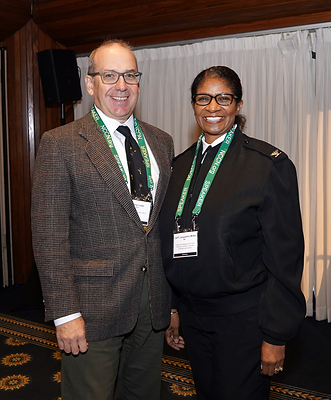
The summit featured keynote presentations from Anthony Letai, MD, PhD, Director of the National Cancer Institute, and Captain Jacqueline Miller, MD, Acting Division Director of the CDC Division of Cancer Prevention and Control, along with perspectives from patients, providers, payers, advocates, and other experts.
Attendees were able to pick up copies of NCCN Guidelines for Patients® on screening and prevention. These free resources feature easy-to-follow information to help people talk confidently with their care teams and make informed decisions about screening and treatment. Topics include Breast Cancer Screening and Diagnosis, Colorectal Screening, Genetic Testing, Lung Cancer Screening, and Prostate Cancer Screening. All are available in both English and Spanish at NCCN.org/patients through funding from the National Comprehensive Cancer Network Foundation.
Framing the urgency of the conversation, Chyke Doubeni, MD, MPH, Chief Health Equity Officer, The Ohio State University Wexner Medical Center explained: “Established prevention and screening strategies have the power to eliminate nearly half of all cancer deaths. Yet, barriers continue to prevent many Americans from accessing these life-saving opportunities. New screening technologies have the potential to transform cancer detection, but their potential value will not be realized equitably unless we address the fragmented delivery processes that risk deepening existing disparities..”
Darcie Green, Executive Director of Latinas Contra Cancer, added: “We know more than we ever have about how to prevent cancer, lower cancer risk, and find cancer earlier; but there is still too much distance between what we know and what people are actually able to access and benefit from. We need to close that distance by bringing excellent care and patient navigation within reach, by engaging the patients and communities to shape the systems meant to serve them.”
Jody Hoyos, MHA, Chief Executive Officer of the Prevent Cancer Foundation, underscored how rapidly the field is evolving: “Cancer prevention is no longer just about avoiding risk—it’s about using better science, smarter screening, and earlier detection to find cancer before it becomes life-threatening. The paradigm is shifting from reacting to cancer after diagnosis to proactively identifying risk and disease earlier, when we have the greatest chance to save lives, but we have to be willing to accept that patients are demanding less invasive and more accessible options if we want to increase uptake.”
Mishellene McKinney, MHA, RN, OCN, Vice President of Clinical Programs, Kaiser Foundation Health Plan and Hospitals, explained, “Value-based care models are an effective way to proactively engage people in cancer prevention and screening through personalized outreach and evidence-based approaches. As both the health plan and care provider, Kaiser Permanente recognizes that preventing cancer is a critical part of overall care. That’s why we’re committed to making cancer screening more accessible, equitable, and effective for our members and the communities we serve.”
Day one focused on broad strategies to improve prevention and screening, from infrastructure and tobacco cessation to vaccines, blood-based tests, and AI-driven efficiencies.
The second day of the summit turned to system-level solutions for meeting individual screening needs, especially among higher-risk populations. That includes hereditary risk, follow-up diagnostics, out-of-pocket costs, and continuity of care across the cancer journey.
“Cancer risk is not one-size-fits-all. Age, family history, genetics, and environmental and lifestyle factors all influence an individual’s risk of disease,” pointed out Lisa Schlager, Vice President, Public Policy for FORCE: Facing Our Risk of Cancer Empowered. “Screening and prevention strategies should be tailored to ensure patients receive the most appropriate care based on their risk profile. Public policies must evolve so patients can access the right interventions for them at the right time. This will improve outcomes, save lives, and reduce healthcare costs.”
“One of the biggest challenges that we are all trying to solve is ensuring continuity of care for patients, from getting them in the door for screening, to follow-up diagnostics, treatment, and survivorship care,” said Brandon Leonard, MA, Vice President of Government Affairs at LUNGevity Foundation. “From a policy perspective, we need to eliminate access barriers by making sure that screening and diagnostics are covered for all eligible patients without burdensome cost-sharing or utilization management requirements.”
Molly Guthrie of Susan G. Komen agreed: “Early detection doesn’t look the same for everyone. Susan G. Komen’s Center for Public Policy has led the introduction and helped pass dozens of state bills to remove barriers that stand in the way of affordable, accessible breast imaging—but gaps remain. Laws must evolve so that all patients can access the breast screening they need without financial burden; and that requires collective action at the state and federal levels.”
Persistent disparities in screening access and experience were also discussed. According to Scout, PhD, Executive Director of The LGBTQIA+ Cancer Network: “One of the biggest screening barriers for LGBTQIA+ people is medical mistrust. Unfortunately, our latest data show this barrier has gotten notably worse for 75% of us in the last 18 months alone. If a medical office isn’t actively countering this with simple steps like welcoming signage or badges, they perpetuate these disparities.”
Tuya Pal, MD, Professor/Clinical Geneticist, Vanderbilt University Medical Center/Vanderbilt-Ingram Cancer Center, Vice-Chair, NCCN Clinical Practice Guidelines in Oncology (NCCN Guidelines®) Panel for Genetic/Familial High-Risk Assessment: Breast, Ovarian, and Pancreatic Panel, emphasized that access after testing is critical. “People with inherited genes that put them at a higher risk for cancer have tremendous potential to benefit from screening. While we often talk about expanding access to genetic testing, we should remember that it isn’t testing alone that improves outcomes but rather accessing appropriate care based on the results. To reap the benefits of genetic testing, we must ensure that all individuals have access to recommended screening and preventive measures.”
Speakers also highlighted the importance of translating scientific progress into practical care. Ernest Hawk, MD, MPH, Head of Cancer Prevention & Population Science, The University of Texas MD Anderson Cancer Center, said: “The science of cancer prevention and screening has advanced remarkably, and the translation of that evidence into improved clinical tools for risk assessment, evidence-based screening programs, and practice standards has helped save countless lives. As future innovations, such as multicancer detection tests, move closer to clinical practice, our responsibility is to balance our enthusiasm for their potential with the careful consideration of their potential harms, costs, and implications for population health, until rigorous evidence demonstrates meaningful improvements in outcomes.”
“When giving folks their cancer risk information, I hear ‘what can I do to reduce my risk?’ People don’t just want to hear their risk score or percentage. They want actionable information on what they can do to help protect themselves from developing cancer,” noted Elisa M. Rodriguez, PhD, MS, Vice President/Director, Community Engagement Resource, Department of Cancer Prevention & Control, Roswell Park Comprehensive Cancer Center.
The summit also featured remarks from NCCN’s Chief Medical Officer, Renuka Iyer, MD, and Chief Scientific Officer, Nancy L. Lewis, MD, MBS, FACP. The panels were moderated by Clifford Goodman, PhD, Consultant, Health Care Technology and Policy. A series of presentations showcased effective screening and prevention strategies in action.
Next up, NCCN is hosting its annual Patient Advocacy Summit on December 3, 2026, also in Washington, D.C. The event will focus on advancing family-centered cancer care, with a look at gaps in government support, awareness of assistance programs, and caregiver information. Learn more and register at NCCN.org/summits.
About the National Comprehensive Cancer Network
The National Comprehensive Cancer Network® (NCCN®) is a not-for-profit alliance of leading cancer centers devoted to patient care, research, and education. NCCN is dedicated to defining and advancing quality, effective, equitable, and accessible cancer care and prevention so all people can live better lives. The NCCN Clinical Practice Guidelines in Oncology (NCCN Guidelines®) provide transparent, evidence-based, expert consensus-driven recommendations for cancer treatment, prevention, and supportive services; they are the recognized standard for clinical direction and policy in cancer management and the most thorough and frequently-updated clinical practice guidelines available in any area of medicine. The NCCN Guidelines for Patients® provide expert cancer treatment information to inform and empower patients and caregivers, through support from the National Comprehensive Cancer Network Foundation (NCCNF). NCCN also advances continuing education, global initiatives, policy, and research collaboration and publication in oncology. Visit NCCN.org for more information.
Media Contact:
Rachel Darwin
267-622-6624
darwin@nccn.org

 View original content to download multimedia:https://www.prnewswire.com/news-releases/cancer-prevention-and-screening-takes-center-stage-during-dc-summit-convened-by-nccn-302900103.html
SOURCE National Comprehensive Cancer Network
