
BOGOTA, Colombia, June 16, 2026 /PRNewswire/ — A delegation of leading North American consumer goods and food companies, including GoodLight Candles, Counter [Beauty], Empire Company Limited, Dunkin’, and Yum! Brands, as well as non-profit Cheyenne Mountain Zoo, recently travelled to the Ecuadorian Amazon to explore the on-the-ground realities faced by independent oil palm smallholders in the region. Organised by the Roundtable on Sustainable Palm Oil (RSPO), in collaboration with Conservation International (CI), this field trip helped to highlight the broader efforts taking place across Latin America to advance more inclusive and resilient sustainable palm oil supply chains.
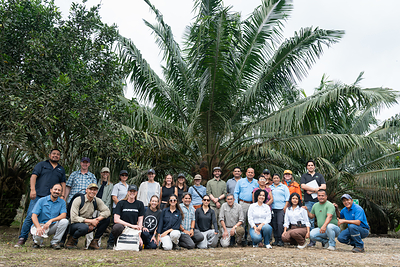
During visits to smallholders from ANCUPA (Asociación Nacional de Cultivadores de Palma Aceitera), Ecuador’s national oil palm growers association, and independent smallholders in the province of Orellana, participants were given direct exposure to the challenges and opportunities of palm oil production in the Ecuadorian Amazon. Despite ongoing socio-economic, technical, and environmental challenges faced by many independent producers in the region, these Ecuadorian smallholders are implementing practices aimed at improving productivity, maintaining deforestation-free production, and strengthening the long-term resilience of their livelihoods and communities. The visit showcased the value of holistic approaches that support smallholders across diverse contexts, including those seeking pathways to regain RSPO certification and those not yet part of formal certification systems.
Participants also toured Grupo Danec’s RSPO certified mill, home to the recently inaugurated largest boiler in Ecuador, gaining firsthand insight into the company’s industrial capacity, operational innovation, and its role as one of the country’s leading palm oil producers. The visit also included Grupo Danec’s ecological reserve, ACUS La Pantera, a protected area with more than 500 hectares of conserved forest, reflecting the company’s long-term commitment to biodiversity conservation and sustainable development. Through these initiatives, Grupo Danec showcased how sustainability, technological advancement, environmental responsibility, and smallholder inclusion can work together to strengthen the future of sustainable palm oil production in Ecuador.
“This visit showed that deforestation-free production is possible through good agricultural practices, collaboration, and long-term commitment. Private sector engagement plays a critical role in supporting smallholders and advancing the conservation of the Ecuadorian Amazon,” said Carolina Rosero, Vice President and Executive Director of Conservation International Ecuador.
Through direct engagement with producers and local stakeholders, participating companies gained greater understanding of the human element of global supply chains and the realities faced by farming communities working toward more sustainable production models. “Listening to local farmers and communities gives us a better understanding of the realities of agricultural production and underscores how alignment across producers, companies and local stakeholders can drive more meaningful impact at a regional level,” said Yum! Chief Sustainability Officer Jon Hixson. “It was great to learn of the innovations, commitment and challenges from producers, highlighting the important role companies like Yum! can play by investing in sustainable palm oil production that helps protect forests, strengthens local livelihoods and drives long-term progress.”
As Latin America continues to emerge as one of the fastest-growing regions for sustainable palm oil production, and North America strengthens its role as a key market for sustainably sourced palm oil and palm-derived products, initiatives like this demonstrate the growing opportunity to build supply chains that are more inclusive, resilient, and connected to the realities of producers on the ground. “North America is a global leader in sustainable palm oil purchasing, with many of member companies having already achieved 100% RSPO sourcing for their supply chains. Yet, our most committed members recognize that while certification has tremendous impact, there is potential for deeper engagement. By joining trips like this one to Ecuador, they are taking the next step, engaging directly with smallholders, supporting conservation initiatives, and investing in local communities across Latin America. This level of hands-on commitment goes beyond purchasing targets and reflects the kind of leadership that truly defines what it means to be an RSPO member in this region.” – Cameron Plese, Head of Government Affairs & North America, RSPO.
Building on the momentum generated by RSPO’s 2025 Peru field trip, which connected buyers with certified independent smallholders in the Peruvian Amazon, this field visit to Ecuador reinforces the importance of continued dialogue, collaboration, and shared learning across the sustainable palm oil value chain.
About the RSPO:
The Roundtable on Sustainable Palm Oil (RSPO) is a global partnership to make palm oil sustainable. Formed in 2004, the RSPO is a multi-stakeholder non-profit organisation that unites members from across the palm oil value chain, including oil palm producers, palm oil processors and traders, consumer goods manufacturers, retailers, banks and investors, environmental or nature conservation non-governmental organisations (NGOs), and social or developmental NGOs. As a partnership for progress and positive impact, the RSPO facilitates global change to make the production and consumption of palm oil sustainable. To inspire change, we communicate the environmental and social benefits. To make progress, we catalyse collaboration. To provide assurance, we set the standards of certification. The RSPO is registered as an international association in Zurich, Switzerland, with main offices in Malaysia and Indonesia, and offices in China, Colombia, Netherlands, United Kingdom and the United States.
About Conservation International:
Founded in 1987, Conservation International is a global nonprofit organization that works to protect the nature that people depend on for food, freshwater, livelihoods, and a stable climate. Through science, policy, partnerships, and field-based action, Conservation International supports sustainable development solutions that benefit both people and nature. In Ecuador, Conservation International works alongside Indigenous Peoples, local communities, government institutions, and private sector partners to promote sustainable landscapes, strengthen resilient livelihoods, and conserve critical ecosystems such as the Amazon, the Galápagos Islands, páramos, and coastal-marine regions. For more information, visit Conservation International.
 View original content to download multimedia:https://www.prnewswire.com/news-releases/advancing-inclusive-sustainable-palm-oil-supply-chains-the-rspo-and-conservation-international-bring-north-american-buyers-to-the-ecuadorian-amazon-302799553.html
SOURCE Roundtable On Sustainable Palm Oil
