


Forty-eight teams. Sixteen cities. Three countries. One summer that will change the way the world watches football. The 2026 FIFA World Cup is the most ambitious tournament ever staged, and planning it requires knowing a great deal more than just the fixture list.
There has never been a World Cup quite like this one. The 2026 tournament, which runs from 11 June to 19 July across the United States, Canada and Mexico, is the first to feature 48 teams, the first to span three countries simultaneously, and the first to ask fans and players alike to navigate a continent rather than a single host nation. Previous tournaments in Brazil and Russia involved significant travel between venues. This one will involve a different order of magnitude entirely, with host cities stretching from Vancouver on the Pacific coast to New York on the Atlantic, and the distance between them measured not in hours of driving but in time zones.
The scale is the point. And the scale requires a plan.
The Teams Who Will Travel the Most and What It Means
One of the less-discussed dimensions of a 48-team, multi-country tournament is what the travel demands mean for the teams themselves. Analysis from Sports Illustrated of every group-stage schedule reveals a striking disparity: some nations will travel barely three hundred miles across their entire group stage, while others will log nearly three thousand miles before they have even reached the knockout rounds.
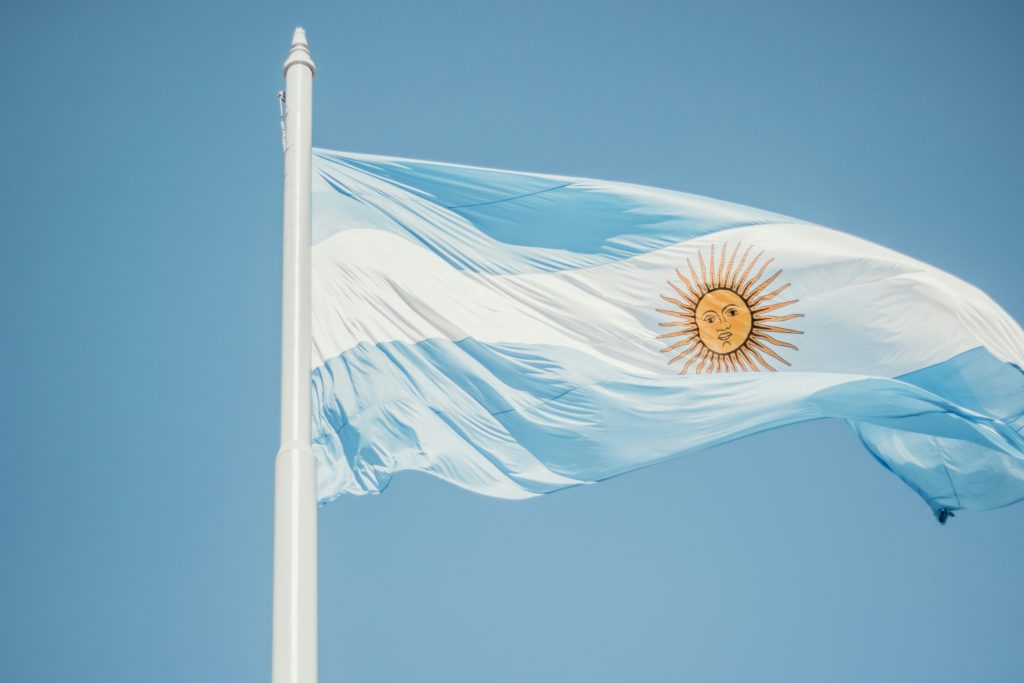
France, one of the pre-tournament favourites, has drawn perhaps the most favourable travel schedule of any serious contender, covering just 334 miles across their group fixtures as they remain anchored on the eastern seaboard. Argentina, the reigning world champions, face similarly compact travel between Dallas and Kansas City, totalling just 461 miles. Both nations arrive at the knockout stages relatively fresh. At the other end of the spectrum, Bosnia and Herzegovina face a group-stage travel burden of over 3,100 miles, while Algeria will log nearly 3,000. European teams generally, accustomed to the compact geography of top-flight football on that continent, face a genuine adjustment to what distance means in North America.
England will travel 1,721 miles during the group stage, with fixtures in the Dallas area, Miami and Atlanta, a schedule that is demanding by European standards but manageable by tournament standards. The more interesting question for England supporters, who have a long and enthusiastic tradition of following the team abroad, is where to base themselves for maximum coverage with minimum chaos.
The Fans Who Travel Furthest and Why It Matters
Short-term rental data gathered by AirDNA from previous World Cup tournaments offers a revealing picture of which fan bases travel in the greatest numbers. Brazilian supporters consistently emerge as among the most mobile in world football, booking accommodation across multiple host cities rather than clustering around any single venue. Fans travelling from Brazil, Argentina, Germany, Spain, France, and across Africa and Asia have different expectations and needs compared to domestic travellers, Jurny and the demand data already reflects this. Guadalajara is already tracking 1,500% year-on-year growth in short-term rental bookings, Jurny driven significantly by international arrivals planning around the group-stage fixtures scheduled there.
Airbnb data shows that guests from the United States, United Kingdom and Canada are currently driving the most searches for stays surrounding match dates, Airbnb Newsroom which reflects both the size of those fan bases and their proximity to the host nations. More striking is the longer-tail data: travellers from Argentina are taking the longest trips of any country, while travellers from Germany are visiting the most destinations of any country during their trips. Airbnb Newsroom German supporters, it appears, have decided that a tournament spanning three countries across a continent is also a road trip.
Over five million fans are expected to attend, with global television audiences expected to exceed five billion. Jurny The accommodation implications of those numbers are already visible in the booking data. AirDNA shows group-stage demand is already up more than 200% year on year across host cities, months before the first match. Jurny
The Cities Worth Building a Trip Around
The 2026 World Cup is, for many international visitors, also the first serious opportunity to experience North American cities that rarely feature on European travel itineraries. The host cities span a remarkable range of cultural and geographical character, and the smartest approach to planning is to think in clusters rather than treating each fixture in isolation.
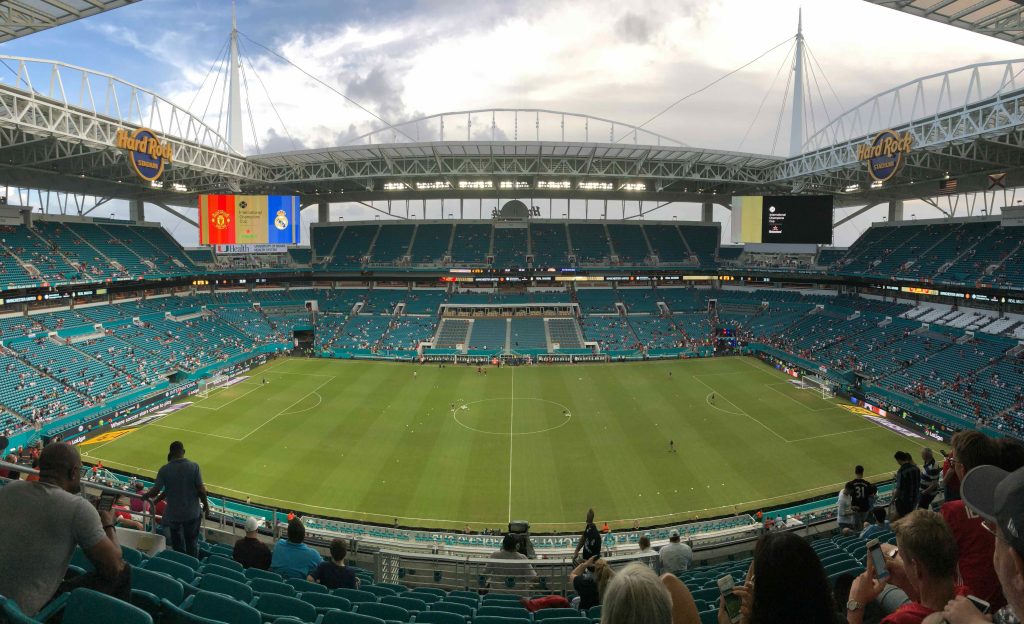
The northeastern corridor, anchored by New York and New Jersey, which hosts the final on 19 July at MetLife Stadium in East Rutherford, is the natural base for fans who want to combine football with a city experience of genuine density and spectacle. Boston, Philadelphia and the wider northeast are within manageable reach. Miami, hosting group-stage fixtures at Hard Rock Stadium, offers a different proposition entirely: a city with a significant Latin American population and a cultural atmosphere that will likely feel closer to a South American derby than a standard European away day.
Dallas, hosting the final and multiple high-profile group fixtures at AT&T Stadium, sits at the geographic centre of the tournament’s American footprint. Los Angeles brings the spectacle of a global city and fixtures at SoFi Stadium, alongside a population diverse enough to guarantee that almost any team’s supporters will find their people. Seattle, where the USMNT play their group-stage fixture against Australia, is compact, walkable and considerably cooler in summer than the southern cities.
In Canada, Toronto and Vancouver offer the clean infrastructure and multicultural energy that make both cities consistently rank among the world’s most liveable. Vancouver in particular, hosting Canada’s group stage in its entirety, will become something of a self-contained tournament hub for the opening weeks.
And then there is Mexico. Mexico City’s Estadio Azteca, which has hosted a World Cup final before and carries a kind of football gravitas that no American stadium can yet match, opens the tournament with Mexico versus South Africa. The atmosphere around El Tri’s home fixtures will be unlike anything available elsewhere in the tournament. For supporters willing to navigate a border crossing, it represents the most purely football experience the 2026 edition has to offer.
The Practical Reality of Planning a Multi-City Trip
The single most important thing to understand about attending the 2026 World Cup is that North America does not move the way Europe does. There is no Eurostar equivalent between Dallas and Miami. The distances that look manageable on a map are rarely manageable by ground transport. The tournament is, in practical terms, a series of short-haul flights, and planning accordingly from the beginning will save significant time and money.
Book accommodation early and book it around match clusters rather than individual fixtures. The pricing data is already clear: properties in host cities are commanding significant premiums on match days, and the gap between booking now and booking in June is substantial. For fans attending multiple fixtures across different cities, the most efficient approach is to identify a base city for each cluster of matches and work outward from there rather than trying to move every day.
Visa requirements vary by nationality across all three host countries, and they do not automatically align. A visa that grants entry to the United States does not guarantee entry to Canada or Mexico, and border crossings during a major international sporting event carry their own logistical considerations. Checking requirements for all three countries, regardless of which fixtures are on the itinerary, is a sensible precaution well in advance of travel.
What This Tournament Actually Is
Beyond the fixtures and the logistics, the 2026 World Cup represents something genuinely unusual in modern sport: a tournament large enough and geographically ambitious enough that attending it, even partially, becomes an experience that is as much about travel as it is about football. The fans who will remember it most vividly will not necessarily be the ones who saw the most matches. They will be the ones who understood that sixteen cities across three countries in one summer is, at its core, an invitation to move through the world in a different way.
The football will be extraordinary. The World Cup always is. But the America it unfolds across, from the Pacific to the Atlantic, from the Mexican capital to the Canadian coast, is the backdrop that no other tournament has ever offered. That, as much as anything on the pitch, is worth planning for.