

Global winners highlight how religious buildings and sacred places are being reimagined to meet evolving community needs while advancing excellence in liturgical architecture, design and art
PHILADELPHIA, March 31, 2026 /PRNewswire/ — Today Partners for Sacred Places announced the winners of the 2026 Faith & Form International Awards for Religious Architecture & Art, a program founded in 1978 to honor excellence and innovation in architecture, design and art for religious places. With projects that include the creation, restoration and re-use of religious buildings, landscapes and artworks, this year’s 12 winners reflect the depth and breadth of complex societal needs religious places must fulfill today.

“These projects stand at the forefront of religious art and architecture. They were shaped by professionals who understand design as an act of service–both to faith communities and also the wider social fabric these communities help to sustain. As shining examples, these exciting, award-winning projects light a path for other congregations and religious property owners to follow,” Kevin Block, director of special initiatives, explained.
Why Religious Places are Critically Relevant to Contemporary Life
Religious buildings and spaces have long served as guardians of local stories, migration histories and communal milestones. They are inclusive and intergenerational places that cut across class, ethnicity and faith communities and to serve the public good. From polling places and meeting spaces to supporting soup kitchens, classes, childcare and health programs, they function as infrastructure of everyday care that sustains civic life. Yet communities often recognize their full value only when these places are lost.
For faith communities, the question is no longer simply how to preserve buildings, landscapes and art created for another era or how to create new ones. Instead, congregations must determine how to reimagine sacred places and their attendant liturgical art—whether existing or new—to support current worship patterns, community needs and financial realities.
Given these dynamics, the Faith & Form International Awards for Religious Architecture & Art are more critical than ever as congregations pursue projects that respond to evolving needs and changing climate. The program received 75 entries for 2026 from nine countries, underscoring growing global momentum in sacred design.
“This year’s entries represented a cross-section of place and spiritual connection and were significant for the remarkable solutions they offered their congregations,” noted Joshua Zinder, AIA, chair of the award’s five-person jury. “From the smallest entryway to the reinvention of city-scaled interventions, the projects address critical issues of our time through adaptive reuse, historic restoration and thoughtful insertions that create new and transcendent spaces.”
Why the Faith & Form International Awards Matter
The Faith & Form International Awards play a defining role in elevating sacred architecture, design and art by showcasing what is possible at the highest levels of creativity and purpose. “The entries this year were remarkable, a cross section of place and spiritual connection,” said Jury Chair Joshua Zinder, AIA, LEED AP, NCARB. “From the smallest entryway to wholescale reinvention of city-scaled interventions, the projects illustrated critical issues of our time, adaptive reuse, historic restoration, thoughtful insertions, creating new and transcendent spaces and places. The entries spanned the globe and showed that despite our different backgrounds and cultures, architecture and art can elevate us all. It was a pleasure to see such talent and skill from so many different faith traditions and creative minds.”
At the same time, the awards serve as a bridge between faith communities, architects, artists and preservationists, offering a shared platform for collaboration and learning. They establish standards, spark new ideas and provide a roadmap for congregations and institutions considering their own projects.
About the 2026 Faith & Form International Awards Winners
The 2026 awardees represent leading examples of innovation in religious architecture, restoration, landscape design and liturgical art across diverse geographies, traditions and project scales. Winners will be recognized by Partners for Sacred Places and Interfaith Design, a knowledge community of the American Institute of Architects, at the AIA Conference on Architecture 2026 in San Diego, CA. Additional information about the winning projects, including photos, drawings and jury comments, can be found at https://sacredplaces.org/news/2026-religious-architecture-art-award-winners.
Awardees were selected by a panel of five jurors representing the design, preservation and faith communities. It included Joshua Zinder, AIA, LEED AP, NCARB, principal of Joshua Zinder Architecture + Design, Landau|Zinder Architecture as jury chair; Lisa J. DeBoer, professor of art history at Westmont College; Rev. Drew Henry of Immanuel Presbyterian Church; Erica Ruggiero, Associate AIA, principal and historic preservation specialist at McGuire Igleski & Associates; and Edward Torrez, AIA, LEED AP, NCARB, president at Arda Design.
Awardees are as follows:
Honor Award, Religious Architecture: Renovation
Saint James Cathedral Portico; Seattle, Washington; Gerrick Office
This project restores and reactivates a historic cathedral entry sequence, strengthening the connection between the church and the surrounding urban fabric. The redesigned portico enhances accessibility and visibility while preserving the architectural integrity of a landmark sacred space.
Honor Award, Religious Architecture: Restoration
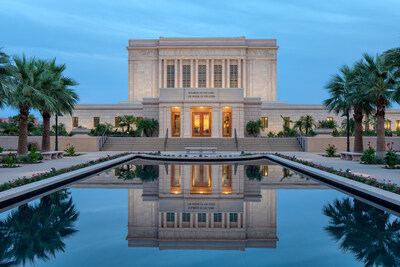
The Church of Jesus Christ of Latter-day Saints, Mesa Arizona Temple; Mesa, Arizona; GSBS Architects
This restoration revitalizes a significant temple through meticulous preservation and sensitive modernization. The project balances historic craftsmanship with updated systems to support contemporary use and long-term stewardship.
San Esteban Parish Church; Arguedas, Navarre, Spain; Cherrez y Cantera Arquitectos
The project restores a historic parish church while introducing contemporary architectural elements that clarify spatial organization. It demonstrates how modern interventions can coexist with heritage structures to enhance both function and meaning.
Honor Award, Sacred Landscape
Ganen Gomado, Osaka, Japan, UA Architects
This urban sanctuary creates a contemplative landscape that offers refuge within a dense city environment. The design integrates ritual, movement and stillness to support prayer, reflection and community gathering.
Liturgical/Interior Design
Immaculate Conception Chapel at St. Charles Borromeo Seminary; Ambler, Pennsylvania; Voith & Mactavish Architects LLP
The interior design of the chapel, on the relocated campus of a historic seminary, elevates liturgical experience through careful attention to material, light and proportion. It creates a cohesive sacred environment that supports worship, formation and spiritual focus.
Religious Architecture: New Facilities
The Chapel of St. Ignatius and the Gayle and Tom Benson Jesuit Center; New Orleans, Louisiana; Trahan Architects
This new facility integrates chapel and community functions into a unified architectural expression rooted in Jesuit values. The design emphasizes light, landscape and materiality to foster reflection and engagement.
Religious Architecture: Renovation
Kol Rinah Synagogue; St. Louis, Missouri; Patterhn Ives, LLC
The renovation transforms an existing synagogue into a more flexible and welcoming environment for worship and community use. It prioritizes adaptability, accessibility and contemporary programming needs.
North Shore Congregation Israel: Frank Memorial Hall and Rebecca K. Crown Social Hall; Glencoe, Illinois; Eckenhoff Saunders
This project reimagines key communal spaces to support gathering, education and celebration. The design strengthens connections between indoor and outdoor areas while enhancing functionality for diverse uses.
San Francisco Zen Center: Beginner’s Mind Temple; San Francisco, California: Studio Bondy Architecture
The temple creates a serene environment grounded in simplicity, proportion and material clarity. It reflects Zen principles while accommodating contemporary urban spiritual practice.
Scotland AME Zion Church; Potomac, Maryland; Antunovich Associates
This project preserves and elevates a historically significant African American church site. It reinforces cultural memory while providing updated space for worship and community engagement.
Religious Architecture: Restoration
The First Church of Christ, Scientist; Boston, Massachusetts; Finegold Alexander Architects + Simpson Gumpertz & Heger
The restoration addresses complex structural and preservation challenges in a major historic religious complex. It ensures the long-term viability of the building while maintaining its architectural and spiritual significance.
Sacred Landscape
Marian Gardens at Christ Cathedral; Garden Grove, California; Domusstudio architecture
The gardens create a contemplative outdoor environment that supports pilgrimage, prayer and reflection. The design integrates landscape, symbolism and circulation to enrich the spiritual experience.
Submissions for the 2027 Faith & Form International Awards for Religious Architecture & Art will be accepted from August 3 to October 9, 2026, at https://faithandformawards.untap.us/.
About Partners for Sacred Places: Partners is the only nonsectarian nonprofit organization dedicated to the sound stewardship and active community use of older sacred places across America. Through grant-funded programs and consulting, Partners provides fundraising, building stewardship, space-sharing and community engagement services so that sacred places can live into their roles as vital community assets in neighborhoods and across society. To learn more, visit sacredplaces.org.
Media Contact:
Miguel Alfonso
malfonso@purposebrand.com
 View original content to download multimedia:https://www.prnewswire.com/news-releases/winners-of-the-2026-faith–form-international-awards-for-religious-architecture–art-announced-302729566.html
SOURCE Partners for Sacred Places
