

Five-year clinical study results show this revolutionary one-time treatment allowed 94% of patients to stop routine factor IX prophylaxis
DETROIT, March 23, 2026 /PRNewswire/ — The Barbara Ann Karmanos Cancer Institute has become the first and only independent cancer center in the U.S. to provide a new hemophilia treatment. Etranacogene dezaparvovec-drlb, also known by its brand name Hemegenix®, is a one-time gene therapy approved by the U.S. Food and Drug Administration (FDA) for the treatment of adults with hemophilia B. Steve W. of Clinton Township was the first patient to receive the therapy at Karmanos Cancer Center in Detroit on Oct. 28, 2025. In the U.S., Steve is the 52nd patient treated after clinical studies.
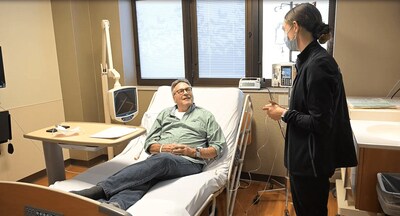
“I’m just very blessed to be in the right spot at the right time with the right people,” Steve expressed. “And it’s working. I didn’t have any problems the first few days… I did have some days where I was just tired, but about a week after the infusion, I was good.”
What is Hemophilia B?
Hemophilia B is a rare blood-clotting disorder caused by a deficiency of factor IX, a clotting protein. As a result, hemophilia B patients may have excessive bleeding after injury or surgery. Severe deficiency can result in spontaneous bleeding, particularly to the joints. Hemophilia B can be a life-threatening disease in the case of severe injury or surgery without proper therapy.
“Although most hemophilia is hereditary, sometimes patients can be diagnosed with this disease without a family history. An official diagnosis of this condition usually happens when a newborn is circumcised, or later in life when a patient experiences excessive bleeding, potentially after a procedure, and in severe cases, spontaneous bleeding,” explained Indryas Woldie, M.D., a hematologist and medical oncologist who specializes in benign hematological diseases. Dr. Woldie also leads the Hemophilia and Other Bleeding Disorders Clinic and is a member of the Hematology Oncology Multidisciplinary Team at Karmanos.
Hemophilia B predominantly occurs in males.
“Males inherit the X chromosome from their mothers, and if it is hemophilic, they will have hemophilia. Although female carriers may not have severe disease manifestations, they can still have bleeding, particularly during menstrual cycles. In addition, they will need to be properly treated during surgery and in the event of injuries. Depending on the factor IX level, females can also have mild and occasionally moderate hemophilia,” explained Dr. Woldie.
Hemophilia B requires consistent medical care. The current standard of care is lifelong, routine infusions of factor IX replacement therapy (prophylaxis) to help reduce bleeding risk. Before the gene therapy, Steve would have to inject himself once a week with prophylaxis to increase his factor IX count in his blood. Now, after receiving the treatment, he doesn’t have to treat himself routinely, unless he needs a procedure.
“I think it’s exciting for him. It’s a thing – the kitchen table on Saturday mornings, he’d rub it down with alcohol and spread out all his gear,” shared Alison, Steve’s wife. “Now, he doesn’t have to do that unless he has to have surgery or was in an accident that causes trauma.”
Learn more about hemophilia here.
How Does the Gene Therapy Work?
“The gene coding for factor IX is placed into a vector containing an inactive viral capsid. We then infuse it into the patient intravenously, where the vector preferentially travels to the liver and helps it make the deficient protein, factor IX,” said Dr. Woldie.
Patients are monitored during and after the infusion for at least three hours to ensure there are no infusion-related reactions. Potential symptoms during this time may include:
- Elevated levels of a specific blood enzyme.
- Fatigue.
- Feeling unwell.
- Flu-like symptoms.
- Headache.
- Infusion-related reactions.
- Liver enzyme elevations.
- Nausea.
“Patients will start making their own factor IX from the first few weeks of infusion up to six months and longer,” Dr. Woldie explained. “There have been good long-term results of patients having a factor level that precludes the use of prophylaxis.”
According to CSL, the company that makes Hemgenix, 94% of patients in the international clinical trial discontinued their routine factor IX prophylaxis. At the five-year mark after treatment, 94% of those patients maintained mild to normal factor IX levels.
Learn more about Hemgenix here.
Leading Up to the Treatment Day
“My team is excited to be able to offer this gene therapy for patients,” said Surender Kanaparthi, R.Ph., MBA, DPLA, FACHE, chief pharmacy officer at Karmanos Cancer Hospital. “Our mission has always been to expand access to the most advanced treatments available, and gene therapy is the future of hematology and oncology care.”
About six months before Karmanos became a site for this new hemophilia B gene therapy, health care teams, including pharmacists, physicians and nurses, had to complete rigorous training to ensure safe and effective infusion administration. Once Steve was identified as a potential patient for this treatment, the team had to ensure he was truly eligible.
“When we see our patients, we talk to them about new treatments approved by the FDA, as well as available clinical trials. If they are interested in any of those options, we give them more information and spend time discussing the pros, cons and adverse effects that could occur, as well as eligibility criteria,” said Dr. Woldie.
“There are many testing requirements before offering Hemgenix to ensure patients are eligible and that their liver is functioning properly. For the patient, once it is determined that they are eligible, administering it is relatively simple,” explained Kanaparthi.
Who is Eligible for This Gene Therapy?
Hemophilia B patients who are eligible to receive this one-time therapy must currently use factor IX prophylaxis therapy, have current or historical life-threatening bleeding, or have repeated, severe spontaneous bleeding episodes.
For more information, visit karmanos.org/hemgenix or call 1-800-KARMANOS.
About the Barbara Ann Karmanos Cancer Institute
Karmanos Cancer Institute is a leader in transformative cancer care, research and education through courage, commitment and compassion. The Karmanos vision is a world free of cancer. As part of McLaren Health Care, Karmanos is the largest provider of cancer care and research in Michigan. For more than 75 years, the administrative and research headquarters, along with the premier specialty cancer hospital, have been located in downtown Detroit. With multiple network sites, Karmanos delivers world-renowned care and access to clinical trials throughout Michigan and northern Ohio. The National Cancer Institute recognizes Karmanos as one of the best cancer centers in the nation with a comprehensive cancer center designation. Its academic partnership with the Wayne State University School of Medicine provides the framework for cancer research and education – defining new standards of care and improving survivorship. For more information, call 1-800-KARMANOS (800-527-6266) or visit karmanos.org. Follow Karmanos on Facebook, LinkedIn and YouTube.
Download VO, SOTs and a photo for news purposes. Please use the courtesy of Karmanos Cancer Institute.
- VO
- SOTs
- Steve W., Hemophilia B Patient
- Indryas Woldie, M.D., hematologist, Karmanos Cancer Institute
- Surender Kanaparthi, R.Ph., MBA, DPLA, FACHE, Chief Pharmacy Officer, Karmanos Cancer Institute
- Steve W. and Alison, Hemophilia B Patient and wife
- Photo

 View original content to download multimedia:https://www.prnewswire.com/news-releases/karmanos-cancer-institute-becomes-first-and-only-free-standing-cancer-center-to-treat-hemophilia-b-with-new-gene-therapy-302720315.html
SOURCE Karmanos Cancer Institute
