
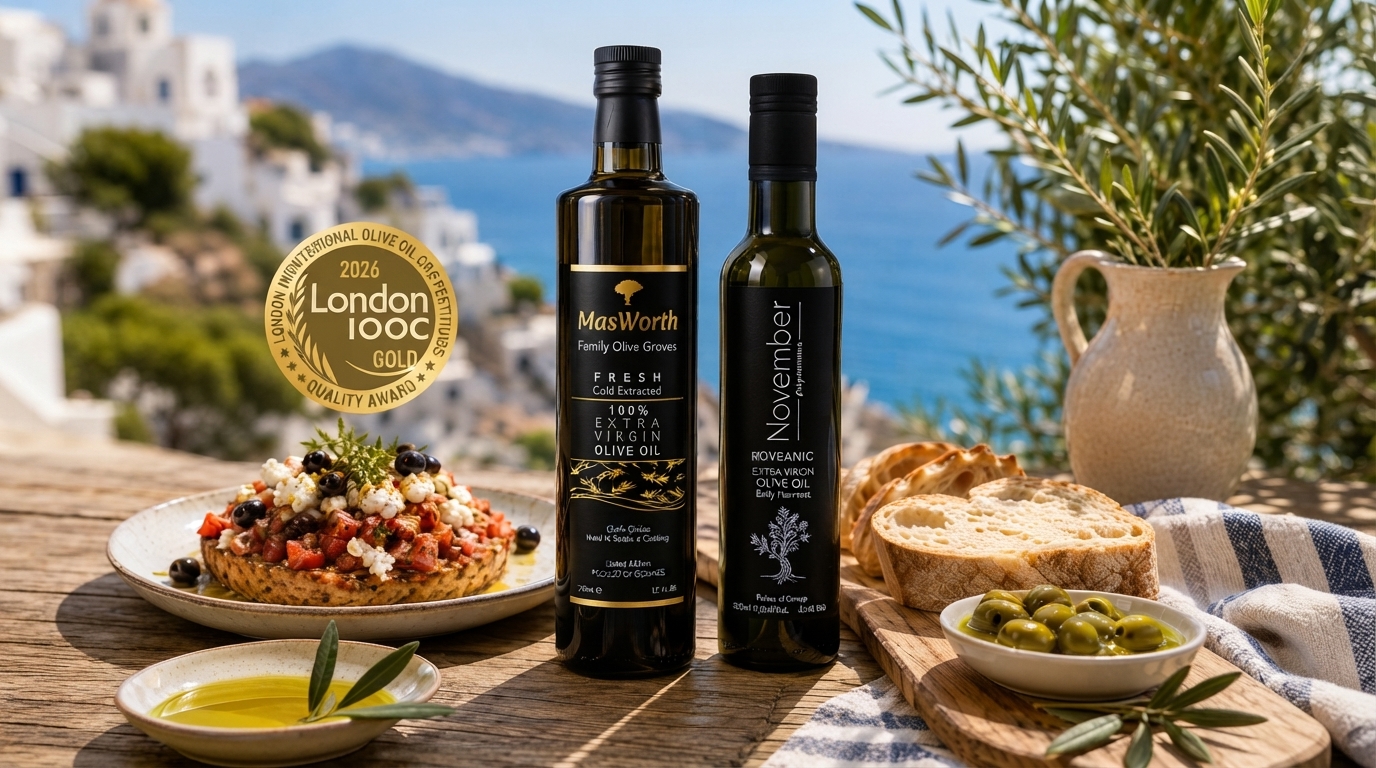
For thousands of years, olive oil has been woven into Mediterranean life. It has been cooked with, drizzled over food, shared around the table and even used in traditional beauty rituals.
Now though, researchers are looking into whether natural compounds found in high quality Extra Virgin Olive Oil (EVOO) could have wider benefits for our overall health, including our brain health, skin health and us living for longer.
The research is interesting, with most of it being based around olive oil’s naturally occurring polyphenols, but as it’s still at such young stages of research we still have to make sure to differentiate promising findings from proven health effects and benefits. Much of the evidence is still developing.
So, can EVOO help us age better and live longer?
One of the biggest questions around olive oil, and something being researched, is whether regularly consuming it could actually help us live longer.
Some of the strongest research outcomes come from researchers at Harvard T.H. Chan School of Public Health, who followed more than 92,000 adults for up to 28 years. A 2022 study published in the Journal of the American College of Cardiology (JACC) found that people who consumed more than half a tablespoon of olive oil each day had a 19% lower risk of dying from any cause than those who rarely or never consumed it. This included deaths from heart disease, cancer, neurodegenerative conditions and respiratory illness.
A second 2024 study published in JAMA Network Open looked specifically at dementia-related mortality. It found that consuming around 7g of olive oil per day was associated with a 28% lower risk of dying from dementia-related causes.
These findings are of course optimistic, but they do not prove that olive oil itself causes people to live longer. The studies were observational, meaning researchers looked at associations between people’s diets and health outcomes rather than assigning people to consume olive oil in a controlled experiment.
The Harvard researchers suggested several possible reasons for the associations, including olive oil’s oleic acid, polyphenols and antioxidant and anti-inflammatory properties.
The health benefits of olive oil depend on what it replaces in your diet. For example, swapping out butter, margarine, or processed fats for olive oil can have a bigger impact than just adding more oil without changing anything else in your diet. And, you don’t need huge amounts. Around 7g to15g, or roughly half to one tablespoon a day, is all you need, so it can easily become part of a normal day to day routine.
Could the type of olive oil matter for brain health?
Not all olive oil is the same. Refined, virgin or even extra virgin olive oil are different from a special category of premium extra virgin olive oils, that are characterised by high level of polyphenols levels, which naturally contains compounds including hydroxytyrosol, oleuropein derivatives and oleocanthal.
These polyphenols have antioxidant and anti-inflammatory properties, which is why researchers are interested in whether oils containing higher levels could have different effects on the brain.
A 2022 randomised trial by Kaddoumi et al. involved 26 people with mild cognitive impairment. Participants consumed either EVOO or refined olive oil. The EVOO group showed improvements in some cognitive and behavioural measures, alongside changes in brain connectivity. However, the study was very small, so the findings should be considered an early indication rather than proof.
More recent research has looked directly at the difference between virgin and refined oils.
Ni et al. (2026) followed 656 adults aged between 55 and 75 for two years. Higher virgin olive oil consumption was associated with better-preserved cognitive function and greater gut microbiome diversity compared with consumption of mainly refined and pomace oils. But again, as this was an observational study, it cannot establish cause and effect.
Gutiérrez-Romero et al. (2026) took a different approach and watched as nine healthy adults consumed polyphenol-rich EVOO for one month and regular olive oil for another month. They found changes in brain activity after the polyphenol-rich EVOO period, along with increased levels of olive oil polyphenols in urine, suggesting absorption. But as the sample was so small, more research on this is needed.
Finally, Simão et al. (2026) combined five randomised trials involving 747 older adults with mild cognitive impairment or dementia. The researchers found small improvements in some cognitive scores, but rated the overall evidence as low certainty.
Taken together, the studies suggest that EVOO and particularly its polyphenols could be relevant to brain health. But currently there is not enough evidence to say that high-polyphenol EVOO prevents dementia or cognitive decline.
What about olive oil and skin health?
Olive oil and skin health goes back thousands of years, right back to the very start of olive oil where it was used in ancient Greece, in cosmetics, moisturisers, face masks and many other beauty rituals.
Modern researchers are now exploring whether compounds in EVOO, including oleic acid, squalene, tocopherols and polyphenols, could influence skin health, but as with all new data, the results are a bit mixed.
A 2013 study from researchers at the University of Sheffield Medical School found that applying olive oil directly to the skin increased moisture loss over four weeks but suggested that the high oleic acid content could weaken the skin’s natural protective barrier.
In 2025, a study published in the Journal of Clinical Medicine reported more positive findings but differences between studies and unique skin types means there’s no simple answer.
Researchers have also investigated skin cell renewal. A 2025 trial from Granada found that applying EVOO to the skin changed the types of cells present, including a higher proportion of younger, earlier-stage cells, but, the study didn’t demonstrate that olive oil reduces wrinkles.
For everyday skincare, EVOO can still work like other facial oils, creating a light layer on the skin that can help lock in moisture and leave skin feeling soft and smooth.
Does the quality of EVOO matter?
In short, yes. All extra virgin olive oil isn’t made equally and if hoping to achieve any benefit, it’s the one with high polyphenols you want to look out for.
High Polyphenols olive oil is a very unique category of EVOO that requires very high standards of cultivation, early harvesting and storage.
When choosing EVOO, look for a published, certified polyphenol figure and harvest date, rather than choosing one with ‘extra virgin’ on the label. And, when you get it home, make sure to keep it in a cool, dark place.
What’s the big picture?
The research around EVOO is developing and long-term studies are suggesting that olive oil consumption is associated with lower mortality, including dementia-related mortality. Emerging research is beginning to ask whether the type of olive oil and its polyphenol content might influence brain health, while skincare research is exploring how EVOO interacts with the skin.
None of this makes EVOO a miracle food or a magic treatment, but it does help explain why extra virgin olive oil continues to attract scientific study.
If you’re interested in EVOO, the best way to use it is to enjoy it as part of a balanced diet and sample the traditional roles it’s had in skincare, as after being so heavily placed within the Mediterranean lifestyle for thousands, research now is only just scratching the surface.
Scientific & Nutritional Information / Disclaimer
The information on this website is provided for educational and informational purposes only and summarises published scientific research and general nutritional information relating to olive oil and olive polyphenols. It is not intended as medical, nutritional or dietary advice and should not be relied upon as a substitute for advice from your doctor, registered dietitian or other qualified healthcare professional.
Scientific studies reflect the findings of their respective authors and should not be interpreted as evidence that the same results will occur for every individual or from the consumption of any particular product.
Any health claims made in relation to our products are limited to those expressly authorised under applicable UK and EU nutrition and health claims legislation.