

Landmark paper introduces patented BLUM framework with breakthrough implications for AI efficiency, explainability, and brain-health applications
COLUMBIA, S.C., Feb. 17, 2026 /PRNewswire/ — For the first time, researchers have used human brain lesion data to decode how large language models process language. The breakthrough arrives as the AI industry confronts mounting challenges around efficiency, explainability, and the lack of any biological grounding for how these systems work.

In the foundational paper, “Stroke Lesions as a Rosetta Stone for Language Model Interpretability,” ALLT.AI’s research team at the University of South Carolina introduces the Brain-LLM Unified Model (BLUM), a patented framework that links artificial intelligence systems to validated models of human brain organization.
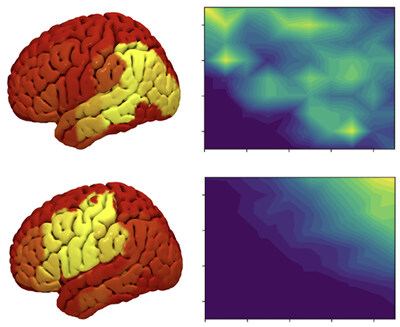
The study demonstrates that when language models are systematically disrupted, they fail in patterns that mirror how language breaks down in the human brain after stroke. When AI error patterns are projected into human brain space using BLUM’s patented methodology, predicted lesion locations correspond to actual human lesions associated with meaning and sound processing, aligning with the well-established dual-stream model of language neuroscience.
The findings address three central challenges in artificial intelligence: efficiency, explainability, and clinical relevance. Modern language models operate at enormous scale, yet their internal organization remains only partially understood. Interpretability methods lack external biological validation. And these systems have no grounding in how language is structured in the human brain.
BLUM introduces what the field has not previously had: an independent, biologically grounded reference for evaluating how AI systems process language.
Clinical neuroscience solved an analogous problem more than 150 years ago through lesion-symptom mapping: examining how language breaks down when specific brain regions are damaged. ALLT.AI is now the first to apply this validated scientific framework to AI.
“For the first time, we have an external, biologically grounded reference for understanding AI language processing,” said Julius Fridriksson, CEO and Chief Scientific Officer of ALLT.AI and one of the world’s leading clinical neuroscientists. “We can disrupt a model, observe how it breaks down, and map those breakdowns onto the causal architecture of human language. No one has done this before. It completely changes what questions we can ask and answer about these systems.”
The Core Finding: AI Models Fail Like Human Brains
The research team systematically disrupted a large language model and analyzed the errors it produced. Those error patterns were compared with data from patients with chronic post-stroke aphasia, drawn from one of the largest datasets of its kind (N=410) that has been accumulated over two decades. Both the AI model and the human patients received identical clinical language assessments, and responses were classified using the same error categories.
The correspondence was statistically robust. When AI error patterns were projected into human brain space using BLUM’s patented methodology, predicted lesion locations matched actual human lesions in routine clinical tests (picture naming and sentence completion) at levels far exceeding chance (p < 10⁻²³ and p < 10⁻⁶¹, respectively).
Anatomical specificity further strengthened the findings. Meaning-based errors (such as calling a “horse” a “dog”) mapped to ventral-stream regions associated with semantic processing. Sound-based errors (such as producing “gat” instead of “cat”) aligned with dorsal-stream regions implicated in phonological processing. The model was not explicitly trained on these neural pathways, yet its breakdown patterns aligned with the anatomical organization of the dual-stream model.
In short, the AI failed like a human brain. That correspondence provides new insight into how these systems process language.
Why It Matters Now: Efficiency, Explainability, and Medical Hope
True Compression, Not Brute-Force Scale. Model compression today is largely empirical: engineers remove parameters or components and measure performance changes, but there is no externally validated framework explaining which parts are truly essential or why. BLUM offers a principled alternative. By identifying which model components produce human-aligned breakdown patterns when disrupted and which do not, researchers gain a biologically grounded basis for determining what is functionally essential. Even modest, targeted compression guided by this framework could translate into meaningful reductions in compute, energy, and cost.
Clarity Inside the Black Box. As AI systems are deployed in high-stakes domains such as healthcare, law, finance, and national security, the demand for interpretability continues to grow. Today’s models produce outputs, including hallucinations, that no one can fully trace or explain. BLUM provides external validation against a well-understood biological system. When disrupting a model component produces error patterns that map onto known brain regions, it offers functional insight. When it does not, that divergence is informative. For the first time, there is an external reference structure for understanding how these systems process language.
Digital Twins and Medical Hope. The framework also opens a new research direction: patient-specific digital twins for conditions such as aphasia and dementia. By identifying AI disruption patterns that replicate individual patient error profiles, researchers could simulate patient-specific deficits, model disease progression, and computationally explore treatment strategies. For the millions of people worldwide affected by brain-based disorders, this direction represents a meaningful intersection of AI and clinical neuroscience.
“Brain-based AI is the future. This paper is proof of concept, and that proof of concept works,” said Jeff Charney, President and Chief Operating Officer of ALLT.AI and one of our generation’s most accomplished Fortune 100 marketing executives. “We have shown that the bridge between human neuroscience and AI can be built. The potential applications, from true model compression to digital twins for neurological patients, are significant. We are looking for visionary partners who recognize the magnitude of this breakthrough, can complement our team and our vast dataset, and can scale quickly. The timing couldn’t be better, and these findings point toward our fundamentally different path for AI development.”
The Team Behind BLUM
BLUM was developed with minimal resources by ALLT.AI’s research team at the University of South Carolina, supported by faculty advisors with expertise in AI, neuroimaging, clinical neuroscience, and linguistics.
What this team has accomplished demonstrates the power of the scientific foundation underlying ALLT.AI: two decades of clinical research, hundreds of peer-reviewed publications, proprietary datasets that would take any competitor more than a decade to replicate, and the kind of interdisciplinary expertise that cannot be purchased or quickly assembled.
With the BLUM foundation now validated, ALLT.AI is building ALLT-1: both a dedicated engineering environment and a working philosophy. ALLT-1 brings together AI researchers, neuroscience experts, neurologists, linguists, and mathematicians under a single operating goal: work from first principles and take fundamentally different approaches to the field’s hardest problems. ALLT-1 is where BLUM’s foundational insights become engineered capabilities.
With the publication of this work, ALLT.AI’s founders are actively seeking strategic partners who share their vision to use AI to improve people’s lives. The symptom-to-lesion mapping methodology is protected under U.S. Patent US-10916348-B2. A patent for the BLUM pipeline is pending (No. 63/974,622).
About the Research
The full paper is available on arXiv. Technical briefings and partnership discussions are available upon request through partnerships@allt.ai.
About ALLT.AI
ALLT.AI develops patented frameworks that bridge clinical neuroscience and artificial intelligence. Based at the University of South Carolina, the research lab leverages decades of lesion-symptom mapping data to improve AI efficiency and interpretability, and advances computational tools to understand and treat brain-based disorders.
ALLT.AI was co-founded by Julius Fridriksson and Jeff Charney. Dr. Fridriksson is the most-cited researcher worldwide on aphasia, with nearly $60 million in federal research funding and more than 260 peer-reviewed publications. His work includes foundational contributions to the neuroscience of aphasia and the neurobiology of language, including the dual-stream model, the dominant framework in this field. Charney is a two-time CMO of the Year and developer of iconic brand campaigns, including Progressive’s Flo and Dr. Rick, as well as the Aflac Duck. He has managed more than $2 billion in annual media investment and has spent the past three years building AI-powered companies focused on applying artificial intelligence to creative and clinical domains.
ALLT means “everything” in Icelandic, reflecting the founders’ vision that AI grounded in the human brain can transform how we build, understand, and benefit from artificial intelligence.
Media Contact:
(803) 530-6793
partnerships@ALLT.AI
 View original content to download multimedia:https://www.prnewswire.com/news-releases/alltai-publishes-first-ever-study-using-brain-lesion-data-to-decode-how-ai-processes-language-302688395.html
SOURCE ALLT.AI