



The snakes were never real. The shamrock story is embellished. There may even have been two of him. This St Patrick’s Day, here is what actually happened and how to celebrate it properly.
Every year on the seventeenth of March, a significant portion of the world turns green. Chicago dyes its river. Dublin fills its streets. New York throws a parade that dates back to 1762, making it older than the United States itself. Somewhere in all of this, draped in emerald and raising a glass of Guinness, is the man the whole occasion is supposedly about. The only problem is that almost everything most people believe about Saint Patrick is either legend, embellishment, or the result of a very successful piece of seventh-century ecclesiastical spin.
This does not make the day less worth celebrating. If anything, the real story is considerably more interesting than the official one.
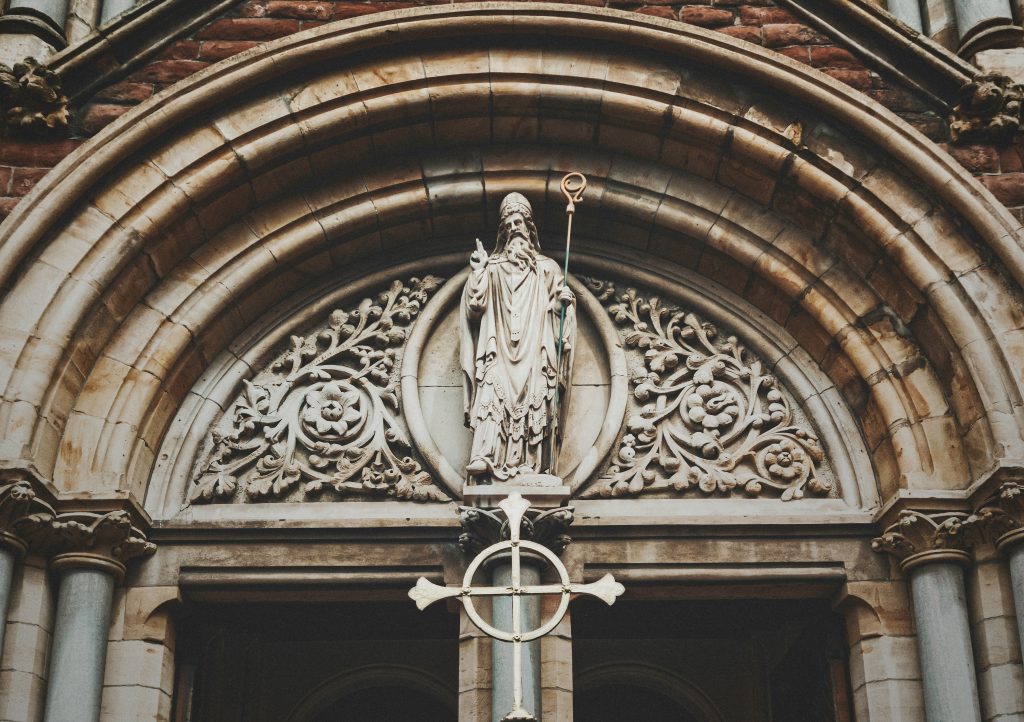
The Man Behind the Myth
Patrick was not Irish. This much is agreed upon. He was born in Roman Britain, probably around 390 AD, the son of a Christian deacon, somewhere that historians have variously placed in modern-day Wales, Scotland, or the west coast of England. His given name, most likely, was not Patrick at all. Several accounts suggest he was born Maewyn Succat, a Celtic name, and was later given the Latin name Patricius, meaning man of noble rank, upon his consecration as a bishop.
At sixteen, he was captured by Irish raiders and taken across the sea into slavery, where he spent six years tending livestock, most likely in the north of Ireland. His own writings, the Confessio and the Letter to the Soldiers of Coroticus, two documents that survive to this day and are considered historically authentic, describe a profound religious awakening during those years of captivity. Eventually, he escaped and made his way back to his family. And then, compelled by what he described as a recurring dream in which the Irish people called him to return, he went back.
The snakes he famously banished from Ireland were, almost certainly, never there. Ireland has been an island since the end of the last glacial period, entirely surrounded by water, and there is no geological or archaeological evidence that snakes ever inhabited it. The banishing of snakes is understood by most scholars as metaphor, a symbolic representation of his driving out paganism and the old beliefs. The shamrock story, meanwhile, the three-leafed clover used to explain the Holy Trinity to the pagan Irish, is not mentioned anywhere in Patrick’s own writings. It appears much later, and in considerably more embellished form.The Mystery of the Second Patrick
Here is where it becomes genuinely complicated, and genuinely fascinating. There is credible historical evidence that the Saint Patrick celebrated every March may, in fact, be two men whose stories were folded into one.
In AD 431, the year before Patrick is said to have arrived in Ireland, Pope Celestine sent a bishop named Palladius to minister to Irish Christians, suggesting there were already enough of them to warrant a formal ecclesiastical appointment. Contemporary chronicler Prosper of Aquitaine recorded this mission, and his account is considered among the most reliable sources of the period precisely because he had no particular Irish or British cause to advance. The following year, the annals record Patrick’s own arrival.
What complicates matters further is a series of ancient texts that refer to two distinct figures both associated with the name Patricius, or Patrick. The Martyrology of Tallaght, an eighth or ninth century calendar of saints’ feast days, records August 24th as the commemorative date for “Old Patrick, beloved foster father.” The Annals of Ulster record “the repose of the elder Patrick, as some books state” in the year 457. And a later entry in the ninth century Book of Armagh states, with a certain bluntness, that Palladius was “Patrick by another name.”
The transition from two men to one official Patrick, historians now believe, was largely the work of the ecclesiastical authorities at Armagh in the late seventh century. Armagh was an ambitious and powerful Christian establishment seeking control over all Irish churches. Its propagandists, most notably a writer called Muirchú, enhanced Armagh’s authority by weaving all available Patrician traditions into a single cohesive narrative, complete with a feast day on the seventeenth of March and a suitably dramatic legend. The official Patrick, snakes and all, was as much a political creation as a historical one.
None of this diminishes him. The Confessio is a remarkable document, written in rough Latin by a man who was acutely aware of his own lack of formal education and used the plainness of his writing as evidence of his sincerity. He describes himself as rustic, as the least of all the faithful, as someone who was doubted and challenged throughout his ministry. He is, in his own words, a more recognisably human figure than the legend that grew around him.How to Celebrate It Properly
If the mythology of St Patrick’s Day is more complicated than the parade would suggest, the pleasures of observing it are straightforward and genuinely worth entering into.
The drink most associated with the day is, of course, Guinness. The stout was first brewed in Dublin in 1759, and while it has become a global brand of considerable commercial power, a well-poured pint remains one of the more reliable pleasures available on a March evening. It should, if you are doing things properly, be poured in two stages, allowed to settle, and finished at the bar. Alongside it, Irish whiskey has enjoyed a significant cultural rehabilitation in recent years, with craft distilleries producing bottles of genuine quality and complexity. Teeling, Redbreast, and Green Spot are all worth seeking out if you want something beyond the ubiquitous Jameson.

As for food, the corned beef and cabbage that has become synonymous with the day in America is, to be precise, an Irish-American invention. In Ireland, the equivalent dish is bacon and cabbage, specifically a cut of loin bacon slowly cooked with whole cabbage leaves and served with a parsley sauce and floury potatoes. It is quieter than its American counterpart and considerably better. A Guinness stew, meanwhile, with beef and root vegetables slow-cooked in the stout until the liquid becomes something closer to silk, is one of those dishes that rewards patience in a way that very few things do. Irish soda bread, made with buttermilk and bicarbonate of soda and requiring no yeast and no proving time, is the thing you make while the stew is doing its work.
What the Day Is Actually For
The seventeenth of March became a public holiday in Ireland in 1903, though the celebrations that now surround it globally are largely a product of the Irish diaspora, particularly in America, where the first recorded St Patrick’s Day parade took place in Boston in 1737. For much of Irish history, the day was observed as a religious feast, with pubs in Ireland actually closed by law until 1970. The transformation of a quiet Catholic feast day into a global festival of green beer and river dyeing is, in itself, a remarkable piece of cultural history.What endures, beneath the noise of it, is something real. The story of a man taken from his home, enslaved, and transformed by the experience; who returned to the place of his captivity not in vengeance but in service; who wrote, in late middle age, in a language that was not his own, about doubt and faith and the profound strangeness of a life that had not gone according to any plan he had made. Whatever the legend has added and obscured, that story is worth something. It is worth, at the very least, a well-poured pint and a bowl of something slow-cooked and good.
Sláinte.