



Palliative care nurses hear the same things, over and over, at the end of life. Not about money. Not about careers. About the people they loved and the things they never said.
There is a particular kind of clarity that arrives, by most accounts, only at the end. Not the clarity of resolution or peace, though that comes too for some, but the clarity of perspective. The sudden, irreversible ability to see which things actually mattered and which things only felt urgent at the time.
Palliative care nurses and hospice workers are, in a quiet way, the most honest researchers we have on the subject of a life well lived. They sit with people who have run out of time to perform or deflect, and what they hear, consistently, across cultures and circumstances and income levels, is not what the culture that preceded those final weeks would have predicted.
Nobody, it turns out, wishes they had earned more. Nobody wishes they had worked harder or owned a bigger house or driven a better car. The German philosopher Schopenhauer spent a great deal of his career describing humanity’s exhausting cycle of desire, the striving, the brief satisfaction, the restlessness, the next want already forming before the last one is fulfilled. At the end of a life, that cycle is visible for what it always was. A distraction from the things that were actually worth having.
What people regret is almost always about other people.
The Work That Cost Them Everything Else
The most frequently reported regret among men in hospice care is not complicated. It is this: I worked too hard. Not worked hard and regret it in the abstract, but worked too hard and missed the specific, irretrievable texture of the years that passed while they were somewhere else. A child’s early years. A partner’s daily life. The accumulation of ordinary evenings that, in retrospect, were not ordinary at all.This is worth sitting with, because the culture that surrounds working life does not frame overwork as loss. It frames it as investment, as commitment, as the responsible thing. The people at the end of their lives who are describing it as their greatest regret experienced it that way too, at the time. The loss only became visible when it was too late to go back.
The Things That Were Never Said
The second pattern that emerges, with striking consistency, is the regret of unexpressed feeling. Not dramatic confessions or revelations, but the ordinary, daily failure to say the things that were true. I love you. Thank you. I noticed what you did and it mattered to me. I am proud of you. I am sorry.
People die having assumed that the people closest to them already knew. Sometimes they did. But the knowing is not the same as the hearing, and the hearing is not the same as the being told, regularly, by someone who chose to say it out loud rather than assuming it was understood.
The regret is not usually about grand gestures that were never made. It is about the small ones that were never made either, the accumulated silence of a life in which feeling was present but unexpressed, and the sudden understanding, too late, that expression was the point.
The Friendships That Faded Without Anyone Deciding They Should
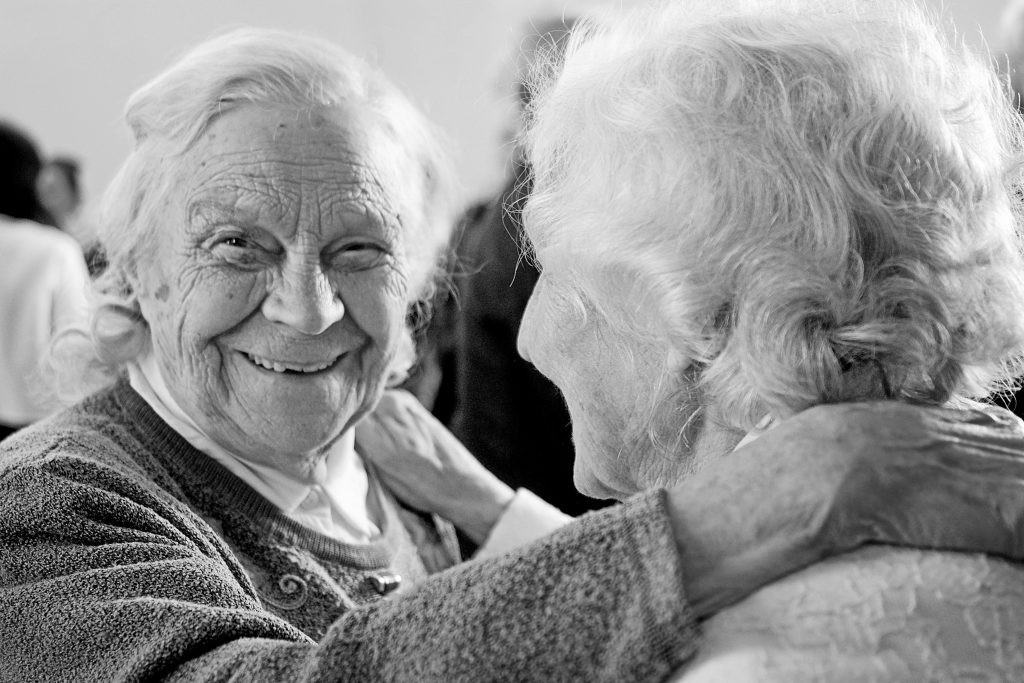
Most lost friendships do not end. They simply slow, and then stop, without either person making a decision. A call that was not returned becomes a month, becomes a year, becomes a decade of Christmas cards that eventually stop too. People at the end of their lives describe this pattern with a specific kind of grief, not the grief of a relationship that broke, but the grief of one that dissolved while nobody was paying attention.
The busyness that allowed this to happen felt real and necessary at the time. It was. But so was the friendship, and one of them survived and one of them did not, and the surviving one is the one that is harder to justify from a deathbed.The Conflicts That Were Never Resolved
Pride is expensive. This is one of the things that becomes clear at the end of a life, when the years that were lost to an unresolved argument, a withheld apology, a position that was maintained past the point of any real principle, become calculable in a way they never were before. People describe relationships that could have been repaired and were not, decades of distance that began with something neither person can fully remember, the stubborn refusal to move first that cost them years of connection they now understand they could not afford to waste.
The conversations that were avoided were, in most cases, not as difficult as they seemed at the time. They seemed impossible then. They seem incomprehensible now.
The Self That Was Never Quite Shown
There is a version of a life lived in response to what other people expected, and there is a version lived from something more interior and true. Many people, at the end, realise they lived more of the first version than they intended to. Not through cowardice exactly, but through the accumulating weight of small accommodations, the slightly softened opinion, the interest abandoned because it did not fit the expected shape of a person, the relationship performed rather than inhabited.
The irony, which arrives too late to be useful, is that authenticity tends to produce the deeper connections that the performance was trying to secure. The things people concealed to be accepted were often the things that would have made them genuinely known.
What This Actually Asks of the Living
The regrets that hospice workers hear do not contain surprises. They contain things that most people, reading them now, already understand to be true. The challenge is not understanding. The challenge is the gap between understanding and living accordingly, which is the gap that, for most people, remains open until it closes for good.
Marcus Aurelius, writing in the second century, put it with his characteristic lack of ceremony. It is not death that a person should fear, he wrote, but the prospect of never having really begun to live. The people at the end of their lives who carry the heaviest regrets are not, in most accounts, people who made terrible decisions. They are people who meant to get to the important things and kept finding reasons to put them off.
The important things, it turns out, were always the people.