

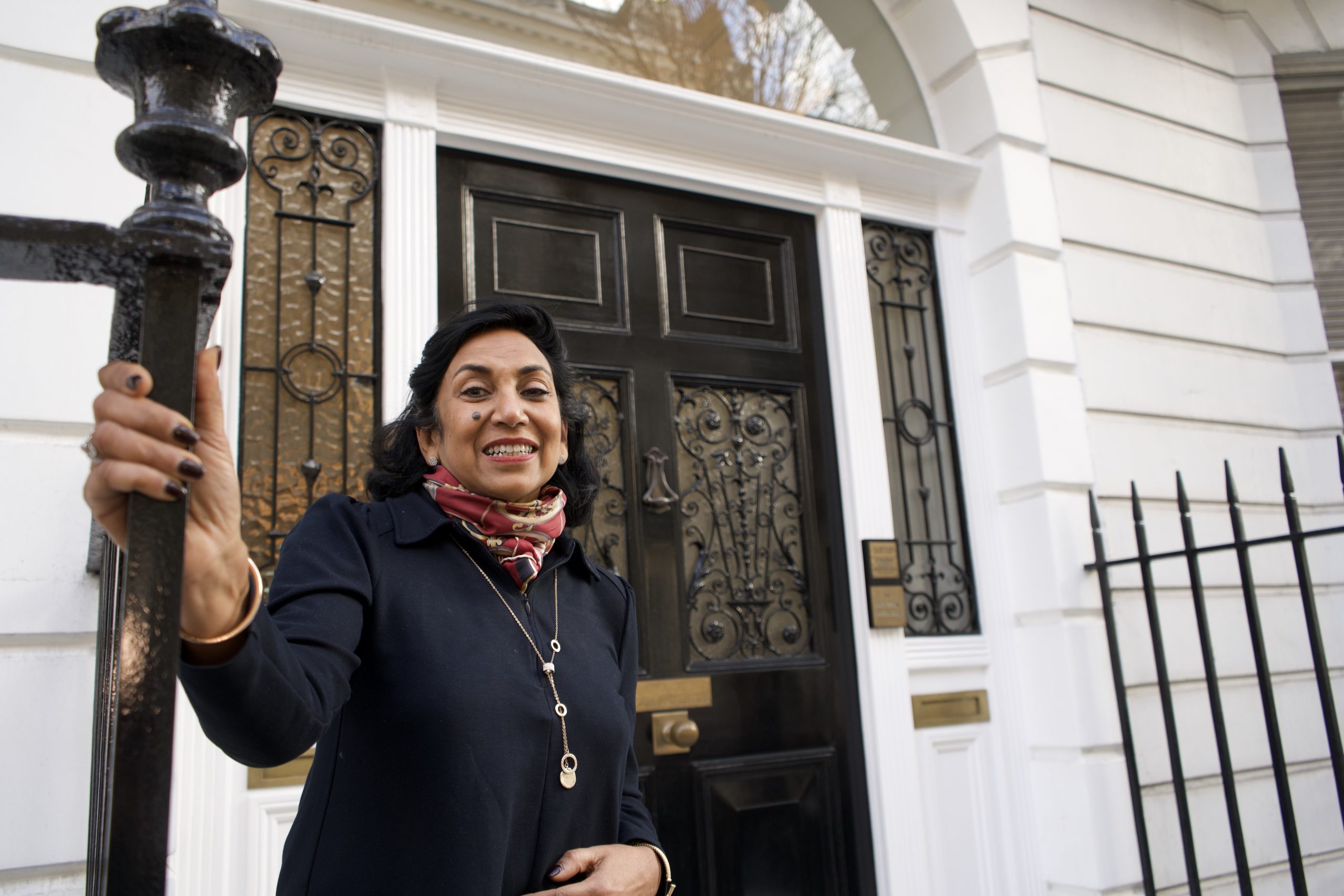
Dr Fazeela Khan-Osborne tells us why a smile is still the most attractive thing in the world
Science confirms what most of us have quietly suspected: within milliseconds of meeting someone new, the human brain has already formed lasting impressions based largely on your smile.It is instant, largely unconscious, and, for many people, a source of considerable private pain. Every advertisement, every red carpet, every Instagram grid delivers the same silent message: a bright, symmetrical smile is not just attractive, it is somehow a marker of success, health, discipline and worth. The gap between what we see and what we see in the mirror has never felt wider, and the psychological toll of that gap is something dental professionals are beginning to take seriously.
Dr Fazeela Khan-Osborne is one of London’s leading implant and restorative dentists, practising from the One to One Dental Clinic on Harley Street. She holds an MSc in Restorative Dentistry from the Royal London Hospital School of Dentistry and has dedicated much of her career to full mouth restorations, rebuilding smiles that have been broken down by disease, trauma, age or years of neglect. What she has also come to understand, with great clarity, is that dentistry is never just about teeth.
“Dentistry is a really emotional thing,” she says. “Our smile is our fingerprint. It’s like how we can recognise famous people by their smile, sometimes you don’t have to even see their face to know it’s them.”
For those who feel proud of their smile, it becomes a form of confidence expressed without effort. For those who do not, it can quietly become a source of shame that reshapes how they move through the world. Falling short of the perceived standards, brilliant white, even teeth, can lead to depression, anxiety and long-term low self-esteem. For some, this anxiety seeps into everyday interactions, making them hesitant to smile, laugh or speak openly.
The judgements people make based on dental appearance are more far-reaching than most of us would care to admit. Studies show that people with straighter, whiter teeth are perceived as more trustworthy, intelligent and successful, often within the first few seconds of interaction. These assessments happen entirely unconsciously. Neither the person being judged nor the person doing the judging is aware it is occurring. Attractive smiles also create stronger neural pathways in memory formation, meaning people are more likely to remember you positively when your smile is healthy and confident.
Dr Khan-Osborne has watched this dynamic play out in her clinic countless times. “If you feel attractive in yourself, you tend to appear more attractive,” she says. “People are attracted to smiley, happy people.” The reverse, she notes, is also true. Those who feel self-conscious about their teeth often unconsciously cover their mouths, turn away when they laugh, or smile with their lips closed, and these habits, however understandable, register as negative body language in social situations, creating a cycle that compounds the original insecurity.
“A lot of this is down to how you feel you present yourself to the world,” she explains. “If you feel good about yourself, you tend to carry yourself in a different light and smile more, coming across as more open and extroverted.”
Dr Khan-Osborne recognises this tension acutely. “Because we are constantly bombarded by images of beautiful, smiling people,” she says, “most of us feel that is so far away from ourselves that we don’t seek to achieve it.” This is perhaps the most quietly damaging effect of our cultural obsession with perfect teeth, not that it drives people to over-treat, but that it drives many more to do nothing at all. The gap between Instagram and reality feels so enormous that the idea of closing it can seem futile before it has even begun.
The good news, and it is genuinely good news, is that the threshold for meaningful change is far lower than most people assume. Dr Khan-Osborne is insistent on this point. She describes a full spectrum of options, from the barely-there to the truly transformative, and argues that even the smallest intervention can shift how a person feels about themselves in ways that ripple far beyond the dental chair.
“It doesn’t have to be a really invasive treatment,” she says, “but something simple that makes your teeth healthy can also make you feel more confident, leading you to smile more and have better body language. This confidence can make you feel and look more attractive.” At the most accessible end of the scale, she cites simple hygiene treatment and a little whitening as enough to address halitosis and restore a sense of freshness. “If you’re looking at the least invasive dental procedures, then whitening, a little bit of bonding or a little bit of orthodontic alignment with clear aligners can help straighten out your teeth.”
Moving further along that spectrum, veneers and crowns can address staining, alignment or discomfort, and at the most significant level, full mouth rehabilitation or implant work can, as she puts it, take a patient “from one extreme to the other in a day.”
“That comes with a personal investment,” she acknowledges. “Not just finance and time, but with your ability to be brave and get things done and to want to improve your health. That can really change your life.”
What Dr Khan-Osborne is describing is not vanity. It is something considerably more fundamental, the relationship between physical self-perception and psychological wellbeing, and how one quietly governs the other. When you feel good about your smile, you are more likely to smile more often, which in turn leads to increased feelings of happiness and wellbeing.
Smiling is not just the expression of happiness, it is also one of its causes. Which means that anything which makes a person more willing to smile freely, openly and without self-consciousness is, in a very real sense, a contribution to their mental health.
“Whereas in reality,” Dr Khan-Osborne says with characteristic pragmatism, “any improvement which doesn’t have to be staggering, can actually improve the way we feel and therefore improve our confidence. And that’s what makes us human.”
Your smile is not a vanity project. It is, quite literally, how the world first meets you, and how you first meet yourself each morning. Treating it with care is not indulgence. It is, as one of London’s finest dental minds would have it, simply good medicine.
Dr Fazeela Khan-Osborne is a leading implant and restorative dental surgeon based at One to One Dental Clinic, Harley Street, London. She holds an MSc in Restorative Dentistry and an Advanced Certificate in Implant, Restorative and Surgical Dentistry from the Royal College of Surgeons.