


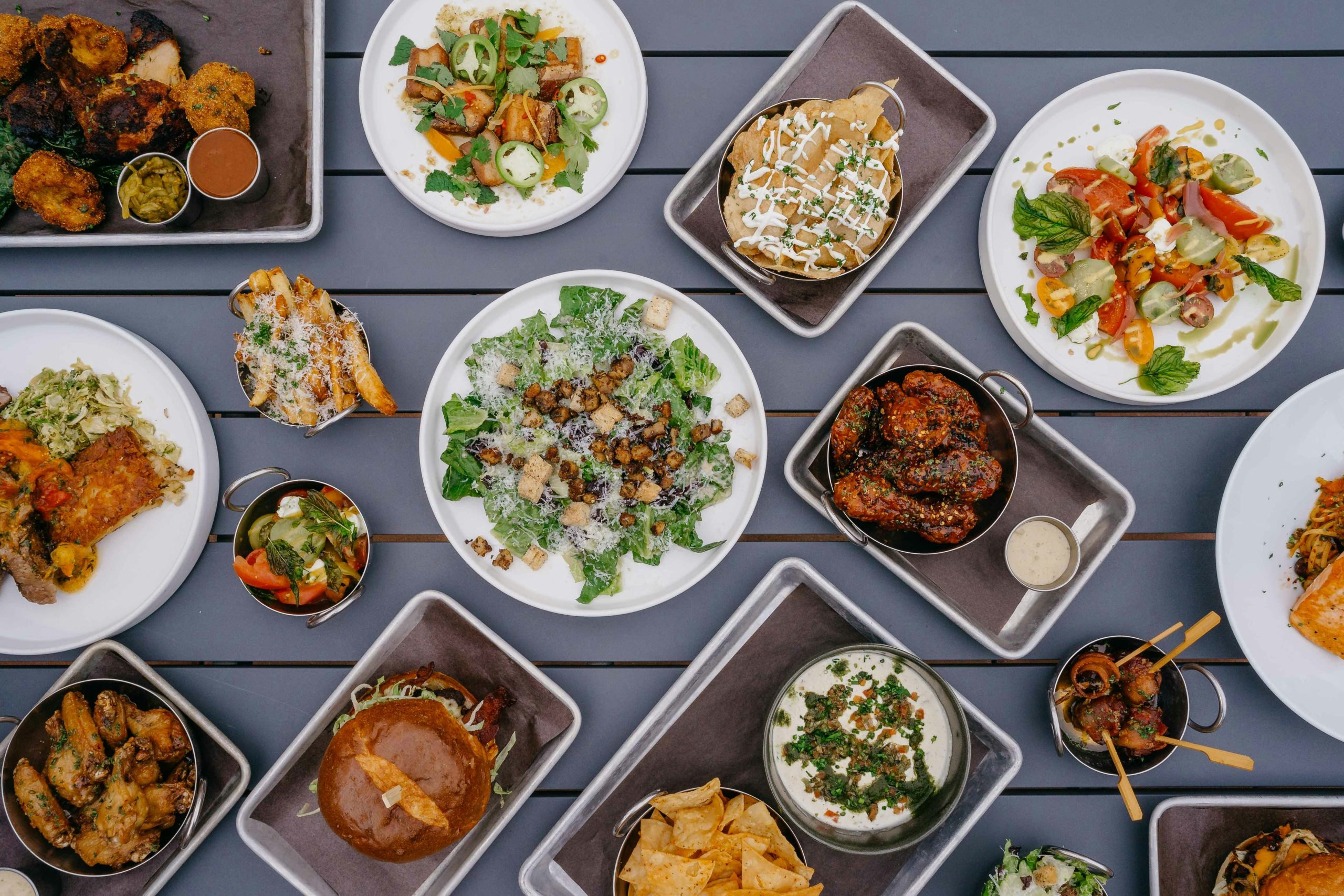

The way we approach food reveals who we are and what we value: our anxieties, identities, and aspirations. Yet in today’s world, where traditions and customs are fading, we’ve gradually lost our bearings when it comes to food and nutrition.
Never before have we had so much information about what we eat. We track every bite, turning meals into streams of data that promise to make eating smarter.
For many, eating has now become an act of constant negotiation between competing priorities, such as health versus convenience, or work versus family.
Studies by the U.S. Nutrition for Precision Health initiative- launched in 2023 with $170 million USD in funding, and involving 10,000 participants- show how genes, microbiomes, and other factors influence individual responses to food.
Through such initiatives, we are seeking a deeper understanding of how the food we eat impacts our bodies. But, as we quantify every bite, do we risk losing the intuitive, social and cultural dimensions of dining?
The pressures of modern life
The pressures of modern life have changed the way we eat. With less time to cook, many turn to eating on the go. And, for workers, long hours and irregular schedules make home-cooked meals feel out of reach.
As explained by Stefano Pedrazzi, co-founder and co-CEO of Robomagister, the company that created the AI-assisted cooking robot Liffo:
“Modern life has completely rewritten the rhythms of our day. We no longer eat at fixed times, in fixed places, or with fixed groups. Remote work, smaller households, and on-demand services have made flexibility the new norm, but they have also created new challenges.”
“Many people feel they must choose between eating well and saving time,” he added.
Technology has stepped up, promising to simplify daily routines while preserving the pleasures of cooking.
Liffo, for instance, Robomagister’s first AI-powered cooking robot, is designed to reduce the effort of meal preparation. It offers personalized assistance, remembering the user’s favourite recipes and adjusting to their habits over time.
Pedrazzi sees cooking as “a moment of self-care, creativity, or even mindfulness.” For him, technology is not meant to replace the pleasures of cooking, but rather to design systems that return people control over their time and health, while keeping cooking enjoyable.
Making lives easier for home cooks while preserving the sensory and social joys of meal preparation requires a delicate balance, which entrepreneurs are ready to try out.
How science is transforming the food we eat
From infant formula to cultivated meat, science is continually transforming the food we eat to fit our modern lifestyles.
Harmony Baby Nutrition, a company that created a toddler and infant formula inspired by human milk, aims to address the challenges many mothers face.
“While we all know that breastfeeding is ideal, U.S. families increasingly find it difficult to sustain. For instance, although over 80 % of infants begin life receiving breast milk, only about 55.8 % receive any breast milk at 6 months, and just 24.9 % are exclusively breastfed at 6 months,” Wendel Alfonso, founder and CEO of Harmony, explained.
The company’s unique formula, made with clean, natural ingredients and composed of elements that are 50% similar to human milk, offers families a viable alternative.
As parents seek trustworthy and high-quality nutrition for their children, however, consumers around the world are increasingly turning to sustainable and cruelty–free alternatives to meat.
Globally, 1.5 billion people around the world have entirely cut meat from their diets, citing ethical, environmental, and health concerns.
Daan Luining, co-founder of Dutch company Meatable, outlined how their approach reimagines meat production. Meatable grows real muscle and fat cells from a single cell- without harming animals.
“The Meatable process centers around the use of pluripotent stem cells (PSC) with our patented, proprietary opti-ox technology, which enables those cells to multiply and differentiate into mature muscle and fat cells – the ingredients for real meat in a fast and cost-efficient process,” he noted.
For Luining, the goal is simple: creating a product that delivers flavour and quality.
“We are methodically taking a hybrid approach [which] delivers a truly superior flavor experience over plant-based alternatives to satisfy the quality that meat-eating consumers recognize and expect,” he told Pulse2.
All over Europe, the cultivated meat sector is taking off. In France, Gourmey, a company developing cultivated foie gras, and Vital Meat, which produces cell-grown chicken and duck, recently came together under a new umbrella company, Parima.
Their aim, according to the group’s new CEO Nicolas Morin-Forest, is to create a European champion with international ambitions:
“By uniting two pioneering teams, we’re strengthening Europe’s ability to lead the global shift toward efficient and sustainable animal production through innovation,” he explained.
With chicken accounting for up to 78.7% of poultry meat consumed in France, the potential market is considerable. Yet, cultivated meat is not currently authorized for sale in the EU.
According to Morin-Forest, nine regulatory filings are currently under review, including the very first request ever submitted in the EU, filed by Gourmey.
It remains to be seen whether the EU will recognize the potential this scientific venture holds for sustainability and animal welfare.
Step by step, however, the choice between quality and sustainability- or quality and health- is becoming less of a trade-off. Innovations like science-based formulas and cultivated meat provide clarity and reliability in a market crowded with trends and conflicting advice.
“There’s a lot of noise in the market. Consumers are overwhelmed by claims and conflicting advice. Ultimately, it all comes down to trust and simplicity: people want to know what they’re giving their families, and they want to feel confident in that choice,” Alfonso said.
The shift toward precision nutrition
As new products and technologies seek to relieve the pressures of modern life, they all point toward a broader cultural shift: we are no longer just eating food: we want to understand its impact.
The surge in information and data is also fueling the rise of precision nutrition, guided by the fact that each individual responds differently to foods depending on their genetics, microbiome, and lifestyle.
Bryan Janeczko, founder of biotechnology and longevity platform ResetRx, explained that traditional nutritional tracking no longer works for today’s market.
“It’s no longer just about calories or macros; it’s about how nutrition impacts biomarkers like inflammation, blood sugar, and hormone balance. Technology is making this visible and measurable in a way that was impossible a decade ago,” he said.
Thanks to the sheer amount of data we accumulate, we can now better understand how each individual responds to food.
“AI and wearable integrations can now translate that data into guidance, helping someone see how a few nights of poor sleep or a high-sugar lunch affects their cortisol or glucose levels,” Janeczko added.
As anyone who’s tracked their sleep, blood pressure or steps knows, however, these metrics are not just reassuring. Often, they are also overwhelming, leading to confusion.
It’s harder than ever to turn this knowledge into actionable steps. The team at ResetRx uses the insights they draw from data to move from guesswork to precision through personalized nutrition plans that work for their users’ unique biology.
“The biggest challenge, I believe, is cutting through the noise,” says Janeczko. “Translating science into small, sustainable habits is where data becomes real progress.”
Even simple habits- like eating nutrient-dense foods, exercising regularly, or moderating alcohol- can extend life by a decade, but most adults struggle to sustain these habits consistently.
Reframing how we think about health is thus crucial to encouraging the implementation of simple and repeatable actions, from getting an extra hour of sleep to taking a daily 20-minute walk.
The next food revolution
What will the next food revolution look like, and how can tech and data work for us instead of against us?
If it looks anything like a world where dinner is prepared by a cooking robot, your diet is tailored to your biology, and infant formula is supported by science rather than guilt, the future is already here.
New food technologies are making this kind of personalized nutrition more accessible than ever.
“We’re taking the kind of precision data once reserved for elite athletes or the wealthy and making it accessible to anyone who wants to feel better and age well,” Janescko stressed.
In this new era, we are moving from a one-size-fits-all diet culture toward true nutritional intelligence, where the right foods depend on our biology, environment, and lifestyle.
The challenge lies in using these tools to build a healthier and more intuitive relationship to food- not to complicate it further. This is where innovators come in.